
Choosing the Right Tocopheryl Succinate for Cosmetic Formulations
To choose the right Tocopheryl Succinate for your cosmetic recipes, you need to know both the specific qualities of the ingredient and the goals you have for the product. As a steady ester of vitamin E, Tocopheryl Succinate provides excellent antioxidant protection while staying compatible with a wide range of formulation materials. Compared to regular tocopherol, this version is more stable on the shelf and better at penetrating skin, which makes it very useful for anti-aging skin care, protective serums, and UV defense products. When formulation scientists are looking at their choices, they should put purity standards, clear sourcing, and seller certifications that match legal needs across target markets at the top of their list.
Understanding Tocopheryl Succinate: Key Properties and Benefits
Chemical Structure and Stability Profile
As the hydroxyl group reacts with succinic acid, it changes into Tocopheryl Succinate, which is a changed form of alpha-tocopherol. This chemical change changes the way the molecule acts in products in a basic way. The esterified structure is much more resistant to oxidation than free tocopherol. This makes the ingredient last longer and the finished product more stable. This structure benefit is especially helpful when making goods that will be exposed to air, light, or heat during production and use.
What makes this vitamin E derivative connect with skin boundaries is its molecular weight and the fact that it likes fat. Researchers have found that when the substance is put on the skin, enzymes in the skin change the succinate ester back into active alpha-tocopherol. This gives cells protective benefits. This process for change makes sure that the drug is bioavailable and stays stable during storage.
Antioxidant Capacity and Skin Protection
When this ingredient is added to cosmetics, its main practical benefit comes from its powerful ability to remove free radicals. UV radiation, smog, and ozone exposure are all environmental triggers that make reactive oxygen species, which speed up the aging process. These harmful chemicals are stopped by Tocopheryl Succinate, which protects biological structures like DNA, proteins, and lipid membranes from oxidative damage.
This vitamin E product does more than just protect the skin; it also actively supports the skin. Studies show that it helps the skin make more collagen, speeds up the repair process of the epidermis, and improves the function of the skin layer. Because it has so many uses, it's a great active ingredient for high-end anti-aging goods, healing products after surgery, and daily protective skin care.
Formulation Compatibility Advantages
These days, making cosmetics requires using ingredients that work consistently in a range of product types and pH levels. Tocopheryl Succinate dissolves easily in oil, which makes it a good ingredient for emulsions, dry serums, and lipsticks. Its stability profile stays the same across pH levels that are common in skin care products, which makes manufacturing easier.
The ingredient works better with other antioxidants, making the defensive networks stronger. When mixed with ascorbic acid substitutes, ferulic acid, or resveratrol, it can increase its antioxidant power and fight multiple signs of age at the same time. Because of this, formulators can make complex goods with multiple uses that meet customer standards for performance and effectiveness.
Procurement Considerations for Bulk Buying Tocopheryl Succinate
Essential Supplier Certifications and Documentation
Verifying the qualifications of the supplier is the first step in quality security. A Good Manufacturing Practice (GMP) certification shows that a company keeps its production areas under control and uses approved methods, trained workers, and thorough quality systems. This license shows that you know how to do the job and are committed to producing regular results.
Cosmetic-specific certificates, like ISO 22716, cover the needs of making cosmetics, including keeping them clean, preventing pollution, and keeping track of them. When buying products for cosmetics, sellers with these certificates show that they know what quality standards are expected in the cosmetics business.
Each package should come with all the necessary paperwork, such as Certificates of Analysis proving that the product meets the requirements, Material Safety Data Sheets explaining how to handle the product safely, and allergy statements meeting the requirements for regulatory disclosure. Clear documentation standards should be written into buy agreements, and packages that don't have all the necessary papers should be turned down.
Pricing Structures and Minimum Order Quantities
The price of Tocopheryl Succinate on the market changes depending on the supply and demand of raw materials. The prices of natural vitamin E are especially affected by farming factors that affect the amounts of oil crops and the costs of processing them. Knowing how these markets work helps buying teams plan when to buy things and negotiate good terms.
Manufacturers usually set minimum order numbers that are based on the size of production batches and the amount of goods that can be bought cheaply. For specialty grades, these minimums could be as low as 25 kg and as high as 500 kg or more for product requirements. Before committing to full-scale orders, smaller brands or those making new goods should ask about sample amounts or smaller production lots to help with the early stages of development and market testing.
When there aren't enough supplies, volume agreements can often open up better price levels and priority allocation. Having reliable access to materials and giving suppliers information about your plans are both benefits of building relationships with suppliers through regular buying patterns and open discussion about what you expect to need.
Quality Control Protocols and Sample Testing
Independent checks of the materials provided are part of responsible buying. Setting up processes for new inspections that check important factors like identity, purity, and contamination levels helps prevent problems with specification drift or replacement. Third-party analytical testing is an objective way to prove what a seller says.
Requesting example samples lets formulation teams do stability studies and performance reviews under real product conditions before making big purchases. These tests might show problems or differences in speed that aren't clear from the specs alone. If you take the time to do a full review before you buy, you can avoid expensive problems with reformulation or product failures in the future.
Keeping an accepted seller list with qualified sources that have passed strict evaluation criteria makes buying things easier while still upholding quality standards. Re-qualification every so often makes sure that rules are being followed and gives you a chance to look at new providers who might offer better quality, service, or prices.
How to Choose the Right Tocopheryl Succinate Supplier for Your Formulation Needs
Evaluating Technical Capabilities and Support
In addition to providing products, great providers also act as expert partners who help make formulations work. Having access to expert application scientists who know about cosmetic chemistry and can help with formulation is very helpful, especially when coming up with new products or fixing problems with stability.
Product development processes can be sped up by suppliers who provide detailed technical paperwork such as formulation examples, stability data, and compatibility studies. This knowledge helps formulators stay away from common mistakes and make the most of the qualities of ingredients. The fact that these tools are available shows that a seller cares about the success of their customers in more ways than just a business relationship.
Consistency from batch to batch is an important but often overlooked supply skill. Color, smell, or small differences in the ingredients can make the recipe need to be changed or lead to inconsistent end products. Suppliers who have tight statistical process control and are open about any changes to specifications win trust and lower supply chain risk.
Assessing Manufacturing Scale and Reliability
Production capacity has a direct effect on how reliable the supply is. Finding out about a supplier's manufacturing size, product management, and order fulfillment skills can help you figure out if they can support your growth. When it comes to responding to volume increases or pressing orders, suppliers who use specialized vitamin E production lines with backup capacity are more flexible than those who rely on toll manufacturing or are running at full capacity.
Logistics and risk management are both affected by where things are located. Domestic providers might have faster lead times and make it easier to follow the rules, but they might charge more. International suppliers, especially Asian companies like Jiangsu CONAT Biological Products Co., Ltd., often offer low prices and advanced production capabilities, but they need more time to plan and more complicated processes to import.
After recent world problems, supply chain stability has become more important. Assessing supplier risk factors such as reliance on a single source, financial security, and the ability to plan for the worst helps protect against supply interruptions that could stop production or require expensive changes to the recipe to use different materials.
Alignment with Business Model and Collaboration Potential
Depending on the type of business, the source ties need to be different. Suppliers who keep secrets and offer exclusive deals or custom specs are good for brands that rely on their own recipes. Companies that want to work with suppliers on contract manufacturing or original equipment manufacturing (OEM) partnerships need suppliers that can support multiple production places and deliver similar materials everywhere.
Private label and ODM businesses need sellers who know about market trends and can suggest formulas that meet customer needs. These partnerships go beyond providing ingredients and include coming up with new product ideas. Suppliers' knowledge is used to speed up entry into new markets and make products stand out.
For distribution relationships to work, suppliers need to provide marketing tools, help with regulations, and advice on how to position themselves in the market. Suppliers who are real business partners put in the time and effort to understand your market's problems and offer answers that go beyond just selling you ingredients and include strategic business support.
Best Practices for Incorporating Tocopheryl Succinate in Cosmetic Formulations
Optimal Usage Levels and Concentration Guidelines
Effective concentration levels depend on the type of product and the benefits that are wanted. Tocopheryl Succinate levels in leave-on skin care products are usually between 0.5% and 5%. Higher amounts are only found in targeted treatments and intense repair products. These amounts provide measured antioxidant protection without changing the way the product tastes or looks.
Rinse-off products, like shampoos and cleansers, use smaller amounts, usually between 0.1% and 0.5%. This is enough to keep the formula stable against oxidation and provide mild protective effects while it's on the skin for a short time. Higher amounts don't work as well in these situations and make the cost of preparation go up for no reason.
Higher concentrations can be used in oil-based serums and face oils that don't contain water. In some intense repair formulas, concentrations can reach 8% to 10%. Since there is no water, there are no worries about breakdown, and lipophilic actives can be delivered more effectively. People who want the most powerful beauty products and are willing to spend a lot of money on them will like these high-end formulas.
Synergistic Ingredient Combinations
Strategically mixing ingredients boosts the benefits of each one while making products with unique performance profiles. When Tocopheryl Succinate and vitamin C molecules are mixed, they form a complementary antioxidant system. In this system, vitamin C repairs oxidized vitamin E, which increases its defensive power. This arrangement works especially well for skin brightening serums and products that help the environment.
When combined with peptides and growth factors, this vitamin E product makes anti-aging work better overall. These delicate active ingredients are protected from breaking down by antioxidants, which also support the cellular environment needed for the best peptide function. With this combination approach, brands can make broad age-defense claims that are backed up by more than one way their products work.
Green tea, resveratrol, and maritime pine bark are all botanical products that contain polyphenolic substances that work well with vitamin E. Many different types of free radicals and oxidative pathways are protected by these mixtures, which makes the recipes more effective at protecting than those made with just one ingredient.
Stability and Packaging Considerations
To keep the purity of the ingredients throughout the life of the product, care must be taken with the design of the package and the materials used. Light-sensitive mixtures with Tocopheryl Succinate are kept from breaking down by opaque containers or UV-blocking glass. Oxidation, which hurts both active ingredients and product stability, can't happen as much with airless pump carriers.
Formulation pH changes how quickly ester links in Tocopheryl Succinate break down. Stability is best achieved by keeping the pH between 5.5 and 7.5, which is also compatible with skin chemistry. Formulations that aren't in this range might need extra ways to keep them stable, or they might have to accept that their shelf life will be shorter.
Accelerated stable testing at high temperatures helps predict how something will work in the long run and find problems before it goes on sale. As time goes on, testing procedures should check for changes in color stability, odor development, pH drift, and the retention of active ingredients. These studies help set expiration dates and storage guidelines, which ensure that goods get to customers still working properly.
Conclusion
To choose the right Tocopheryl Succinate for beauty formulations, you need to look at the quality of the ingredients, the supplier's skills, and the needs of the formulation. Knowing what makes this vitamin E substance different from other options lets you make smart choices that are in line with your product positioning and performance goals. A good buying process strikes a balance between quality control, supply stability, and cost effectiveness, all while making sure that all target markets follow the rules. Tocopheryl Succinate is still an important part of products that protect against oxidation, reduce the signs of aging, and keep skin healthy. This is because more and more people want chemicals that work and are backed by science. Partnering with qualified providers who show technical know-how, excellent production, and a dedication to customer satisfaction lays the groundwork for new products and market differentiation.
FAQ
1. What distinguishes Tocopheryl Succinate from standard tocopherol in cosmetic applications?
The main difference lies in how stable they are and how they penetrate the skin. Tocopheryl Succinate is much better at resisting oxidation than free tocopherol, so it stays effective for a longer time after it's been made. When the succinate ester is put on the skin, enzymes change it into active alpha-tocopherol, which helps protect cells from damage. Standard tocopherol works right away, but it breaks down faster in mixtures that are exposed to air or light. Tocopheryl Succinate works better in long-lasting goods that need to keep working well for a long time.
2. Can I order custom grades or specifications for specific formulation needs?
Reliable makers can meet specific needs, such as calls for specific purity levels, particle size distributions, or carrier systems that are made to fit the needs of a particular formulation. Custom grades usually have minimum order numbers that are based on the cost of setting up production and the size of the batches. Giving suppliers clear specs early on in the procurement process lets them figure out if the job is possible and give accurate quotes. Custom development timelines are usually longer than standard product wait times, so product launches need to be planned ahead of time.
3. Which certifications verify supplier quality and reliability?
Some important certificates are GMP compliance, which shows that the factory environment is controlled, ISO 22716 standards for making cosmetics, and product-specific paperwork like Certificates of Analysis, Material Safety Data Sheets, and allergen statements. Depending on the brand's image and the people it's aimed at, extra approvals like Kosher, Halal, or organic may be useful. Independent surveys or tests by a third party give you more confidence in the supplier's skills and dedication to quality standards.
Partner with CONAT for Premium Tocopheryl Succinate Supply
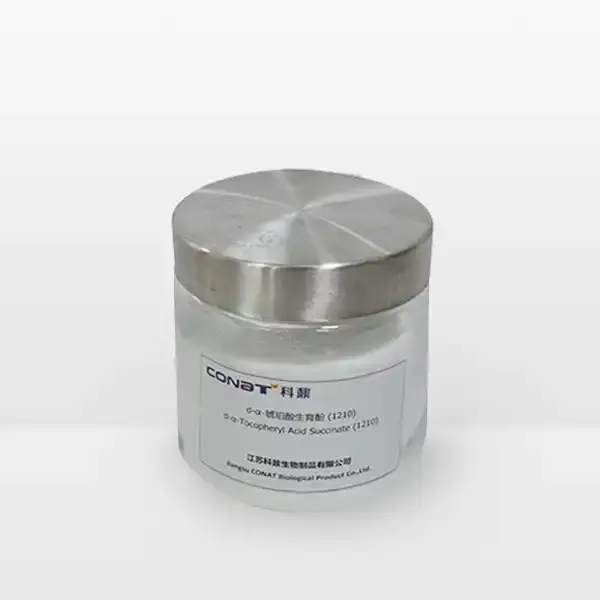
Jiangsu CONAT Biological Products Co., Ltd. is a specialist company that makes Tocopheryl Succinate and is committed to providing pharmaceutical-grade natural vitamin E products for high-end beauty uses. Our production methods are vertically integrated and include extraction, esterification, and purification. This makes sure that each batch is exactly the same and meets the highest levels of purity that are required by international regulations. We keep all of our certifications up to date, such as GMP, ISO9001, and ISO22000. These are backed up by full paperwork packages that make customs processing and regulatory compliance easy.
Our expert team has decades of experience helping to create new formulas for skin care, hair care, and color cosmetics. We offer free samples so that you can fully evaluate our products before committing to buying in bulk. We also have cheap pricing for large orders, and our MOQ choices are open so that brands at different stages of growth can use them. If you're making new anti-aging serums, daily skincare that protects, or dermatologically specific formulas, CONAT has the high-quality ingredients and technical support you need to be successful on the market. Get in touch with our purchasing experts at sales@conat.cn to talk about your unique needs and find out how our Tocopheryl Succinate supplier services can improve your product designs.
References
1. Thiele, J.J., & Ekanayake-Mudiyanselage, S. (2007). "Vitamin E in Human Skin: Organ-Specific Physiology and Considerations for Its Use in Dermatology." Molecular Aspects of Medicine, 28(5-6), 646-667.
2. Nachbar, F., & Korting, H.C. (1995). "The Role of Vitamin E in Normal and Damaged Skin." Journal of Molecular Medicine, 73(1), 7-17.
3. Burke, K.E. (2007). "Interaction of Vitamins C and E as Better Cosmeceuticals." Dermatologic Therapy, 20(5), 314-321.
4. Stamford, N.P. (2012). "Stability, Transdermal Penetration, and Cutaneous Effects of Ascorbic Acid and Its Derivatives." Journal of Cosmetic Dermatology, 11(4), 310-317.
5. Keen, M.A., & Hassan, I. (2016). "Vitamin E in Dermatology." Indian Dermatology Online Journal, 7(4), 311-315.
6. Draelos, Z.D. (2018). "The Science Behind Skin Care: Moisturizers." Journal of Cosmetic Dermatology, 17(2), 138-144.
YOU MAY LIKE