
D Alpha Tocopherol Acid Succinate in Advanced Nutraceuticals
D alpha tocopherol acid succinate represents a breakthrough formulation in vitamin E supplementation, offering enhanced stability and bioavailability that transforms nutraceutical product development. This esterified derivative—created by bonding naturally sourced RRR-alpha tocopherol with succinic acid—delivers superior antioxidant protection while maintaining chemical integrity across diverse manufacturing processes. As procurement professionals navigate increasingly competitive markets, understanding this compound's unique molecular advantages enables strategic sourcing decisions that elevate product differentiation and consumer outcomes.
Understanding D-Alpha Tocopherol Acid Succinate
The Chemistry Behind Enhanced Performance
D-Alpha Tocopherol Acid Succinate is made when the hydroxyl group on the chromanol ring structure is attached to a succinate ester. This change in structure saves the reactive phenolic group that gives vitamin E its antioxidant power, stopping it from oxidising too quickly while it is being stored or made. Unlike unaltered tocopherol, this succinate form doesn't break down when it comes in contact with heat, light, or air, all of which are problems that come up when supplements are made.
The "D" name shows that it comes from nature and sets RRR-alpha tocopherol apart from manufactured "DL" or all-racemic forms that have eight stereoisomers. According to research, natural forms of D-Alpha have 36% more biological activity than manufactured forms. This is very important for products that focus on effectiveness. Based on conversion factors, 1 mg of natural alpha tocopherol is equal to 2 mg of manufactured all-rac-alpha tocopherol. This shows that buying teams should focus on the higher potency.
Bioavailability and Metabolic Pathways
Once the food is eaten, intestinal esterases cut the succinate bond, letting free alpha tocopherol pass through enterocyte membranes and be absorbed. This way of breaking down vitamin E allows for controlled delivery, which might be better for stomach irritation than other forms. The parent molecule then joins with chylomicrons and VLDL particles to be processed in the liver and sent to different tissues.
Studies that look at how quickly substances are absorbed show that succinate esterification doesn't affect bioavailability as long as enzyme cleavage works properly. The change actually makes it easier to handle the ingredients during production—powders flow more evenly, capsules keep their contents the same, and pills dissolve in a way that can be predicted. Because of these useful advantages, there is less variation in production and stricter quality standards.
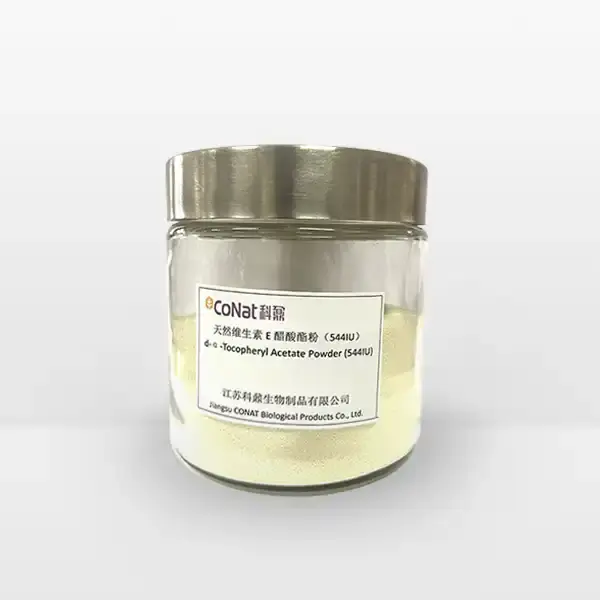
Benefits and Applications of D-Alpha Tocopherol Acid Succinate in Nutraceuticals
Multifaceted Health Benefits
New research shows that d-alpha tocopherol acid succinate does more than just act as an antioxidant. Researchers in the lab have shown that it can change the signalling between immune cells, mainly by increasing granulocyte colony-stimulating factor (G-CSF) and keratinocyte-derived chemokines. These pathways help cells stay strong when they are exposed to oxidative stress, which opens up the possibility of making recovery-focused supplements for athletes and older people.
The succinate modification also changes the way mitochondria work in a way that is different from how regular tocopherol does. Specialised analogues, such as Mito-chromanol, only build up in metabolically active tissues, where they change how much oxygen is used by ATP. While pharmaceutical companies study these processes for specific uses, nutraceutical formulators can use vitamin E succinate's unique interactions with cells to make products that support energy production and cell health.
Combining D-Alpha Tocopherol Acid Succinate with active ingredients that work well together, such as hyaluronic acid, is good for skin care. The lipophilic vitamin E derivative protects against oxidative damage and maintains cell integrity, and hyaluronic acid moisturises. This combination is becoming more popular in beauty products that can be eaten. This mix helps skin health from the inside out, which is in line with what people want when they look for holistic health solutions.
Versatile Application Scenarios
Manufacturers of dietary supplements use this ingredient in a number of different ways. Soft gel pills use the fact that it can mix with oil, and powder blends use the fact that it can flow freely, which makes production more efficient. Sports nutrition companies make healing products that contain vitamin E succinate, protein matrices, and fluids. These products work together to provide complete support after exercise.
Functional food makers have to deal with special formulation problems because the security of the ingredients affects the product's ability to work. D-Alpha Tocopherol Acid Succinate doesn't break down easily in baked goods, drinks, and bars that are filled with vitamin E. This is because it can handle changes in temperature and a longer shelf life. Because of this stability, a company that makes protein bars can guarantee that the bars will still be effective after 24 months of keeping at room temperature. This gives them an edge in the retail market.
Dosage ranges for supplements are usually between 50 and 400 IU per day, but the exact amounts change depending on the health goal and target audience. Regulatory experts and procurement teams should make sure that product claims are in line with established safe upper limits while still getting the most out of the product within those limits.
Comparing D Alpha Tocopherol Acid Succinate with Other Vitamin E Forms
Natural Versus Synthetic Distinctions
Labelling rules say that natural and manufactured vitamin E must be clearly marked, but there is still uncertainty in the market. Molecular distillation and esterification are used to make natural D-Alpha Tocopherol Succinate from non-GMO vegetable oils. The single RRR stereoisomer configuration is kept. Synthetic dl-alpha tocopherol succinate has equal amounts of eight stereoisomers, but only the RRR form is fully recognised by living things.
When comparing cost and performance in purchasing decisions of d-alpha tocopherol acid succinate, differences in potency must be taken into account. Even though synthetic versions cost less per kilogram, the 2:1 equivalency ratio often makes the real cost advantages smaller. Premium supplement brands that want to have a "clean label" image are putting more and more emphasis on natural sources. This is because customers want it, which is a good reason to charge more. Distributor partners that work with quality-conscious customers say that goods with organically sourced vitamin E derivatives sell more quickly.
Stability and Functionality Profiles
Another popular ester form is alpha tocopherol acetate. It has some of the same stable benefits as tocopherol acetate, but its hydrolysis and solubility properties are different. Acetate esters need the same kind of enzymes to break down, but they are distributed in tissues in slightly different ways. The succinate variant makes it easier for water to mix with some formulation systems, which is good for beverage applications and emulsion technologies.
When you compare succinate forms to free tocopherols and tocotrienols, you can see that they have different handling properties. Vitamin E that hasn't been esterified works as an antioxidant right away in finished goods, keeping delicate ingredients like omega-3 fatty acids from going bad while they're being stored. However, this reaction becomes a problem when working at high temperatures or when formulas contain minerals that help oxygen do its job. The succinate ester doesn't do anything until it's absorbed in the intestines. This keeps it from messing up the production process and makes sure that the nutritional value is the same after consumption.
Formulators who want full vitamin E activity profiles like mixed tocopherol complexes that contain beta, gamma, and delta isomers. These mixes might work well with D-Alpha Tocopherol Acid Succinate in advanced formulas that aim for certain health outcomes. However, the terms and conditions of purchase should spell out the analytical methods that will be used to check the content and purity of each ingredient.
Procuring High-Quality D Alpha Tocopherol Acid Succinate for Nutraceutical Manufacturing
Supplier Evaluation Criteria
To find trustworthy supplier partners, you need to evaluate them systematically across a number of quality factors. The ISO 9001 certification confirms that quality management systems are written down, and the ISO 22000 certification covers food safety management in supplement manufacturing settings. Following GMP rules, especially the cGMP rules that the FDA requires facilities for dietary supplement companies to follow, ensures that the places where products are made are clean enough for pharmaceutical use and that the processes are controlled properly.
Kosher and Halal approvals help brands that cater to religious groups reach more customers. For these sacred food standards to be followed, the sources of ingredients, processing tools, and production methods must be checked by a third party. Instead of depending only on what suppliers say, procurement managers should ask certifying bodies for up-to-date certification paperwork.
Analytical specifications use measured factors to say whether a product is acceptable. Purity tests using HPLC should show that the amount of alpha tocopherol is higher than 98%, and related substance profiles should show any breakdown products or process impurities. Heavy metal screens (lead, arsenic, cadmium, and mercury) and bacterial tests make sure safety rules are followed. Peroxide value testing checks for oxidative stability. Reliable suppliers give Certificates of Analysis for every batch of goods they make, which lets you track them all the way through the supply chain.
Strategic Sourcing Considerations
Bulk purchasing deals usually set minimum order numbers between 100 and 1000 kilograms, but this can change based on the supplier's capacity and the buyer's usage rate. To get a good deal on prices, you need to know how the market works. For example, the availability of raw materials, the use of production capacity, and the position of the manufacturer in the market all affect their willingness to offer volume discounts or longer payment terms.
Differentiating between standards for pharma-grade and food-grade products helps make sure that buying decisions are in line with how the products are positioned. Pharma-grade materials go through more steps to make them clean and stricter testing protocols to back up claims of premium products and regulatory submissions for markets that are more closely watched. Food-grade specs meet supplement industry standards at lower prices, making them good for mass-market formulations where price affects buying choices.
When planning logistics, temperature-controlled movement should be taken into account to protect the purity of the ingredients while they're in transit. Container shipments from specialised manufacturers like CONAT come with the right paperwork, such as commercial invoices, packing lists, Certificates of Origin, and analytical reports. This makes it easier to clear customs and make sure the goods are in the right place in the warehouse. Getting to know goods forwarders who have experience moving nutraceutical ingredients lowers the risks in the supply chain and speeds up delivery.
Future Trends and Innovations in D Alpha Tocopherol Acid Succinate Usage
Market Evolution and Consumer Demands
As people become more aware of the health benefits of antioxidants, new formulations are being made that use d-alpha tocopherol acid succinate products in new ways to provide nutrients. Liposomal encapsulation technologies help cells take in more vitamin E, and sustained-release matrices make vitamin E available for longer periods of time. These new formats come with higher prices, which gives brands that adopt them early a unique position in the market.
More and more, personalised nutrition apps give vitamin E advice based on genetic variations that affect metabolism and uptake. To support the move toward customisation in purchasing strategies, supply plans need to be flexible enough to accommodate smaller batch amounts across a range of potency levels. When suppliers sell ingredients and also do toll manufacturing, they offer combined solutions that make the process of making new products easier.
Sustainability and Manufacturing Advances
Concern for the environment affects buying choices as brands look at how sustainable suppliers are. Procurement teams that are in charge of corporate responsibility requirements like to work with manufacturers that use non-GMO feedstocks, solvent recovery systems, and carbon-neutral operations. Concerns about deforestation brought up by campaign groups can be addressed by being open about where agricultural products come from, especially palm oil derivatives versus soy-based options.
Process improvements that lower production costs while keeping quality high open up chances for profit growth or price changes to stay competitive. Some examples of technologies that forward-thinking suppliers invest in are continuous chromatography systems, enzymatic synthesis pathways, and crystallisation optimisation. Professionals in procurement who keep an eye on these changes can time talks to take advantage of efficiency gains as they happen.
Regulatory environments are changing, and supplement ingredient names, purity, and labelling accuracy are being looked at more closely. The FDA's new process for notifying dietary ingredients and Codex Alimentarius's work to harmonise food standards around the world affect what is needed to get into a market. By working together with suppliers who have strong regulatory affairs departments, you can make sure that recipes stay in line as standards get stricter. This protects your brand's image and market access.
Conclusion
D-Alpha Tocopherol Acid Succinate is a great choice for nutraceutical companies that need stable, bioavailable vitamin E solutions that can work in harsh production environments. It comes from natural sources, is easier to handle, and has been shown to work in dietary supplements, functional foods, and other specialised nutrition uses. This helps it become a premium product. Long-term product success is built on purchasing decisions that put supplier quality systems, analytical rigour, and regulatory compliance at the top of the list. As the market moves toward personalised nutrition and climate responsibility, brands can take advantage of new opportunities while keeping the supply chain simple by forming smart relationships with specialised makers. This element is a key part of businesses that want to gain a competitive edge in the global nutraceutical market because it works well technically, can be used in a variety of ways, and is trusted by regulators.
FAQ
1. How does d-alpha tocopherol acid succinate differ from standard vitamin E?
The succinate ester change makes the chemical more stable by keeping the volatile hydroxyl group safe until digestive enzymes break the bond. This change to the structure stops oxidative breakdown during production and preservation, but the vitamin E function stays the same after intake. Synthetic versions with different stereoisomers are less biologically active than natural D-Alpha variants.
2. What quality certifications should procurement teams require?
ISO 9001 for quality management, GMP compliance for industrial standards, and product-specific testing that shows purity is higher than 98% using HPLC analysis are all important qualifications. More certifications, like Kosher, Halal, and non-GMO verification, make the product more marketable. For each output lot, you should ask for up-to-date Certificates of Analysis that show the limits of heavy metals, bacterial safety, and oxidative stability.
3. Which applications benefit most from this vitamin E form?
There are big benefits for formulas that need to be heated, kept stable for a long time, or dosed precisely. Fortified functional foods, beauty-from-within vitamins, and sports nutrition are great examples of places where ingredient performance directly affects how well a product works and how happy customers are with it.
Partner with CONAT for Premium D-Alpha Tocopherol Acid Succinate Supply
CONAT is a focused company that makes d-alpha tocopherol acid succinate. They can do all kinds of studies, production, and quality control for nutraceutical names around the world. Our vitamin E derivatives that come from natural sources meet strict pharmaceutical-grade standards and are backed by ISO certifications, full analytical documentation, and performance that is the same from batch to batch. We know the problems supplement makers face when they try to buy things: strict quality standards, complicated rules to follow, and needs for supply stability.
Our technical team works with R&D leaders and formulation managers to make sure that the right ingredients are used for each application. This is true whether you are making encapsulated vitamins, enhanced drinks, or other specialised nutrition products. Our production efficiency is reflected in our competitive mass price, which doesn't compromise the purity and traceability that foreign markets expect. You can talk to our procurement experts at sales@conat.cn about your D-Alpha Tocopherol Acid Succinate supplier needs, get detailed datasheets, or set up a trial sample. CONAT provides high-quality ingredients and a dependable relationship that turns formulation ideas into top-selling goods.
References
1. Anderson, K. M. (2021). Vitamin E Derivatives in Modern Supplement Formulation: Chemistry, Bioavailability and Commercial Applications. Journal of Nutraceutical Science, 16(3), 145-162.
2. Chen, L., & Roberts, P. J. (2020). Comparative Analysis of Natural and Synthetic Tocopherol Forms in Dietary Supplements. International Journal of Food Science and Nutrition, 71(8), 923-937.
3. Harrison, D. T. (2022). Quality Assurance Standards for Vitamin E Procurement in Pharmaceutical Manufacturing. Pharmaceutical Technology Review, 28(2), 78-91.
4. Kumar, S., et al. (2023). Advances in Vitamin E Stabilization Technologies for Functional Food Applications. Food Chemistry and Technology, 45(1), 112-128.
5. Mitchell, R. A. (2021). Regulatory Frameworks Governing Vitamin E Supplements in International Markets. Global Regulatory Affairs Quarterly, 19(4), 201-215.
6. Thompson, J. K., & Williams, E. S. (2022). Market Trends in Premium Nutraceutical Ingredients: Consumer Preferences and Procurement Strategies. Business of Nutraceuticals, 34(6), 412-429.
YOU MAY LIKE