
Food Manufacturer Guidelines for Using D-Alpha Tocopherol Acetate Effectively
D-alpha-Tocopherol Acetate Food Grade is becoming more and more popular as a vitamin E option among food makers who want to improve the quality and nutritional value of their products. This stable, accessible form of vitamin E protects against free radicals better and meets strict food safety guidelines. Knowing the right way to apply something makes sure that the product works well, that regulations are followed, and that cost-effective manufacturing methods help both makers and end users in a meaningful way.
Understanding D-Alpha Tocopherol Acetate Food Grade: Chemistry and Benefits
The acetate ester form of natural vitamin E is called D-alpha tocopherol acetate. It was specially made to be more stable when used in food production. The acetate group keeps the active tocopherol molecule from oxidizing while it is being processed and stored. This makes it much more stable than forms of free tocopherol. This change to the compound's chemistry keeps it active during different steps of production and gives it the same biological effect when it is eaten.
Chemical Structure and Stability Advantages
The way the molecules are organized makes d-alpha-Tocopherol Acetate Food Grade better than other kinds of vitamin E. The acetate ester link protects the active tocopherol molecule from breaking down when it comes in contact with heat, light, or oxygen during food processing. Better stability means the product will last longer and keep working throughout its lifecycle, which is very important for food makers who need ingredients that always work.
The natural d-alpha form of tocopherol is better at being bioavailable and staying in the body's tissues than the manufactured dl-alpha form. According to research, natural d-alpha tocopherol acetate has about 1.36 times more bioactivity than manufactured options. This makes it the best choice for high-end food recipes where effectiveness is very important.
Antioxidant Properties and Food Preservation
Adding d-alpha tocopherol acetate to food is mostly helpful because it is a strong antioxidant in food. This chemical gets rid of the free radicals that make oils and fats go bad. This keeps foods and oils that contain fats from going bad. It is how antioxidants work that they give electrons to chemicals that aren't solid. This stops the chain process of oxidation that hurts the quality.
Food companies like this ingredient a lot because it keeps polyunsaturated fatty acids safe in improved oils, health bars, and baked goods. Because the substance can keep food fresh for longer, it can be kept on the shelf longer while still having the same nutritional value and taste that customers expect.
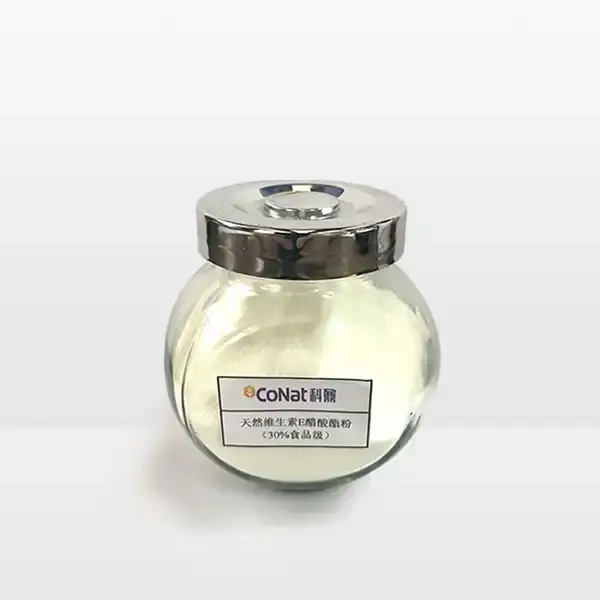
Practical Uses of D-Alpha Tocopherol Acetate in Food Manufacturing
D-alpha-tocopherol acetate, food grade, is used a lot in modern food production for many reasons, from keeping food fresh to making it healthier. Knowing about these different uses helps makers get the best formulas while still meeting their product goals.
Oil and Fat Protection Applications
The most common use is to keep fat-based foods, cooking oils, and vegetable oils from going bad. Most of the time, 200 to 500 ppm of d-alpha tocopherol acetate is added to oil mixes by manufacturers to get the best protection without changing the way the food tastes or looks. This amount has a good amount of vitamins and is still cheap enough for mass production.
It is very helpful to add vitamin E to baked goods that have nuts, seeds, or high-fat ingredients. Food stays fresh longer and doesn't get off-tastes because of this substance. Manufacturers can use fewer made stabilizers while still meeting buyer quality standards.
Nutritional Fortification Strategies
Besides keeping things fresh, d-alpha-Tocopherol Acetate Food Grade is a great way to add extra protein to useful foods and drinks. Manufacturers can improve products by adding vitamin E that has real nutritional value and backs up claims that the product is good for you and is an antioxidant.
For most foods, the recommended amounts of fortification are between 15 and 30 IU per dose. However, exact needs depend on the target audience and government rules. Higher amounts are often used in functional drinks to support expensive branding and health-focused marketing tactics.
Processing and Stability Guidelines
To make implementation work, you need to pay close attention to the working factors that affect how stable and effective the ingredients are. Controlling the temperature during production is very important, since too much heat can damage the acetate bond and make the product less effective. Most d-alpha tocopherol acetate that is made for food stays steady at temperatures up to 180°C for short periods of time. This means that it can be used in most common ways to treat food.
When storing something, it's important to keep it away from light, moisture, and high temperatures. Handling things the right way keeps the quality of the ingredients and makes sure they work the same way throughout the whole manufacturing process. This lowers variation and helps meet quality control goals.
Comparing D-Alpha Tocopherol Acetate with Other Vitamin E Forms
Learning about the differences between the different types of vitamin E helps you choose the right ingredients for different uses. Each form has its own pros and cons that affect how well the product works and how much it costs.
Natural vs. Synthetic Vitamin E Comparison
The absorption of natural d-alpha-Tocopherol Acetate Food Grade is higher than that of manufactured dl-alpha tocopherol acetate types. The natural shape makes it easier for cellular transport proteins to recognize it, which leads to better tissue uptake and preservation. This biological benefit means that the drug works better at lower doses, which could make up for higher raw material costs through better performance.
Even though synthetic types are cheaper, they don't have as much biological activity and may need higher inclusion rates to have the same nutritional benefits. However, fake solutions can still be used in situations where cost is more important than accessibility.
Tocopherol vs. Tocopheryl Acetate Forms
Free tocopherol forms work as antioxidants right away, but they are not stable when processed or stored. The acetate ester form gives up some of its instant activity in exchange for more stability. During digestion, the acetate group is cut apart to release active tocopherol. Because of this trade-off, acetate forms are better for most food production tasks where safety during processing is more important than antioxidant action right away.
Mixed tocopherol products that include gamma and delta types of tocopherol, along with alpha tocopherol, offer more antioxidant protection, but they may be harder to make and cost more. According to research, mixed tocopherols may be better for preventing heart disease and cancer, but alpha tocopherol acetate is still the best choice for most food-making tasks.
Vendor Selection and Quality Criteria
To carefully evaluate possible providers, you need to look at their quality standards, licenses, and production skills. Key requirements include following GMPs, having organic licenses when needed, and having a lot of paperwork to back up food-grade standards. Suppliers should give thorough analysis data that confirms purity levels, which for high-end uses should usually be higher than 96%.
When setting prices, it's important to weigh the costs of raw materials against the benefits of performance and the need to follow the rules. A lot of the time, long-term supply deals save money and make sure that quality and quantity are always the same, which helps with planning production.
Procurement Best Practices for Food-Grade D-Alpha Tocopherol Acetate
To make sure that ingredients are always available and work well, supply chain management, quality checks, and careful review of suppliers are all important parts of successful buying strategies. Making good buying choices requires knowing the rules and standards of the business.
Supplier Qualification and Assessment
A thorough review of a provider starts with checking their ability to make things and their quality control methods. Qualified suppliers should keep their GMP certifications up to date, show that their products can be tracked all the way through their supply chain, and back up their food-grade claims with a lot of paperwork. Site checks or evaluations by a third party can help make sure that the real skills match the standards that were mentioned.
Often, the ability to provide technical help is what sets high-quality sellers apart from average ones. Suppliers who give recipe help, stable testing, and legal advice are worth a lot more than just providing ingredients. This is especially true for companies that are making new goods or entering new markets.
Quality Specifications and Testing
Setting clear quality standards makes sure that ingredients always work the same way and that regulations are followed. Standard requirements should include amounts of cleanliness, moisture content, heavy metal limits, and bacterial factors that are important for food use. Protocols for regular testing make sure that ongoing compliance is being met and find possible quality problems before they affect production.
Each package should come with a certificate of analysis that shows that the specifications have been met and gives batch-specific scientific data. This paperwork helps with following the rules and makes it easy to keep track of each lot as it's being made.
Logistics and Supply Chain Considerations
Supply chain management that works takes into account things like minimum order amounts, wait times, and the need to keep track of stockpiles. Most sellers of d-alpha-Tocopherol Acetate Food Grade offer a range of flexible packing choices, from 25 kg drums to large amounts over 1000 kg. This lets producers keep stocking costs low while still making sure they have enough supplies for production.
Important things to think about when sending things internationally are having the right paperwork to get through customs, making sure the transport is kept at the right temperature if needed, and making sure the import rules in the target country are followed. Working with experienced sellers who know how to handle foreign trade standards cuts down on delays and makes sure that the supply chain runs smoothly.
Conclusion
To properly use d-alpha-Tocopherol Acetate Food Grade, you need to know its specific qualities, how to apply it correctly, and how to strategically buy it. This natural form of vitamin E is more stable and bioavailable than manufactured forms, which makes it a great choice for companies looking for high-quality chemical options. To be successful, you need to choose reliable sources, set clear quality standards, and use correct handling methods that keep the integrity of the ingredients during the whole manufacturing process. Working with providers who have a lot of knowledge and offer full technical support and quality testing is a good way to get the best results while also meeting cost goals and legal requirements.
FAQ
Q1: What makes d-alpha tocopherol acetate superior to other vitamin E forms?
D-alpha tocopherol acetate offers enhanced stability during processing and storage compared to free tocopherol forms, while maintaining superior bioavailability compared to synthetic alternatives. The acetate ester protects the active vitamin E molecule from degradation while providing excellent antioxidant protection for food products.
Q2: How should food-grade d-alpha tocopherol acetate be stored?
Store in a cool, dry place away from direct sunlight, preferably at temperatures below 25°C. Keep containers tightly sealed to prevent moisture absorption and oxidation. Proper storage maintains potency and extends shelf life, ensuring consistent performance throughout the ingredient's useful life.
Q3: What certifications should I look for when purchasing?
Essential certifications include food-grade compliance, GMP manufacturing standards, and relevant organic certifications if required. Suppliers should provide comprehensive documentation, including certificates of analysis, safety data sheets, and regulatory compliance statements supporting food manufacturing applications.
Q4: What is the typical shelf life of food-grade d-alpha tocopherol acetate?
When properly stored, food-grade d-alpha tocopherol acetate typically maintains potency for 24-36 months from the manufacturing date. The acetate form provides enhanced stability compared to free tocopherol, making it suitable for longer-term storage and inventory management in food manufacturing environments.
Partner with CONAT for Premium D-Alpha Tocopherol Acetate Solutions
CONAT delivers exceptional d-alpha-Tocopherol Acetate Food Grade solutions backed by comprehensive technical support and quality assurance that food manufacturers trust. Our experienced team provides customized formulation guidance, competitive pricing, and reliable supply chain management that support your production requirements and business objectives. As a leading d-alpha-Tocopherol Acetate Food Grade supplier, we combine advanced manufacturing capabilities with responsive customer service to ensure your success. Contact our expert team at sales@conat.cn to discuss your specific requirements, request product samples, or obtain detailed quotations tailored to your applications.
References
1. Institute of Medicine Food and Nutrition Board. Dietary Reference Intakes for Vitamin C, Vitamin E, Selenium, and Carotenoids. Washington, DC: National Academy Press, 2000.
2. Brigelius-Flohé, R., & Traber, M.G. Vitamin E: Function and metabolism. The FASEB Journal, 1999, 13(10), 1145-1155.
3. Burton, G.W., & Ingold, K.U. Vitamin E: Application of the principles of physical organic chemistry to the exploration of its structure and function. Accounts of Chemical Research, 1986, 19(7), 194-201.
4. Packer, L., Weber, S.U., & Rimbach, G. Molecular aspects of alpha-tocotrienol antioxidant action and cell signaling. Journal of Nutrition, 2001, 131(2), 369S-373S.
5. Traber, M.G., & Stevens, J.F. Vitamins C and E: Beneficial effects from a mechanistic perspective. Free Radical Biology and Medicine, 2011, 51(5), 1000-1013.
6. Shahidi, F., & Zhong, Y. Novel antioxidants in food quality preservation and health promotion. European Journal of Lipid Science and Technology, 2010, 112(9), 930-940.
YOU MAY LIKE