
How D-Alpha-Tocopheryl Acetate Powder (Food Grade) Supports Fortification
D-alpha-Tocopheryl Acetate Powder(Food Grade) serves as a cornerstone ingredient in modern fortification strategies, delivering stable vitamin E supplementation to functional foods, beverages, dietary supplements, and nutraceutical formulations. This powder form provides superior handling characteristics, precise dosing accuracy, and exceptional stability during processing compared to liquid alternatives. Its conversion efficiency in the human body, combined with regulatory acceptance across global markets, makes it an invaluable choice for manufacturers seeking to enhance nutritional profiles while maintaining clean-label integrity and consistent batch quality.
Understanding D-Alpha-Tocopheryl Acetate Powder (Food Grade)
Chemical Structure and Bioactivity
D-alpha-Tocopheryl Acetate Powder (Food Grade) is different from man-made DL-alpha versions because of the way its molecules are aligned. It has a natural stereoisomer orientation. This form lives in nature and is more likely to stay in human cells. In terms of international units per gram, a study in the journal Nutritional Biochemistry says that d-alpha forms are 1.36 times stronger than their drug-like counterparts. Since the tocopherol molecule is linked to an acetate ester, air can't break it down while it's being kept or used.
Nutritional Significance in Fortification
Vitamin E is a healthy nutrient that can be found in fat. It helps protect cells and keep the body's antioxidant shields strong. Every day, you should take 12 mg of alpha-tocopherol equivalents, which is the European normal amount. The most that is safe is 300 mg. When molecule weights are taken into account, most food-grade products give 500 IU per gram, which is the same as 335.6 mg of d-alpha-tocopherol. They can add good ingredients without adding too many poisons when the quantity is this high.
Regulatory Standards and Compliance
For other uses on European markets, the rules for food grade are the same as those in Directive 2002/46/EC and Regulation 1925/2006 for rich foods. Most of the time, the companies that make this item are certified with both ISO 9001 for quality control and ISO 22000 for food safety. GMP makes sure that there is no pollution and that every run is the same. Kosher and Halal certification can help goods that are made for certain groups of people reach more people. Claims about shelf life are backed up by stable data, allergen statements, and certificates of analysis that come with files.
Storage and Handling Best Practices
Powder mixes won't change much as long as you keep them away from water, direct sunlight, and hot places. Things should be kept below 25°C and in sealed containers with desiccant packs to keep them from sticking together. Tocopherols turn yellow over time when they are liquid. Tocopherols stay off-white for the normal amount of time when they are powdered, tho. When you handle things the right way, you can keep dust and cross-contamination risks at work to a minimum. As long as it is kept in a controlled setting, it should last between 24 and 36 months. This helps big buyers plan what to buy.
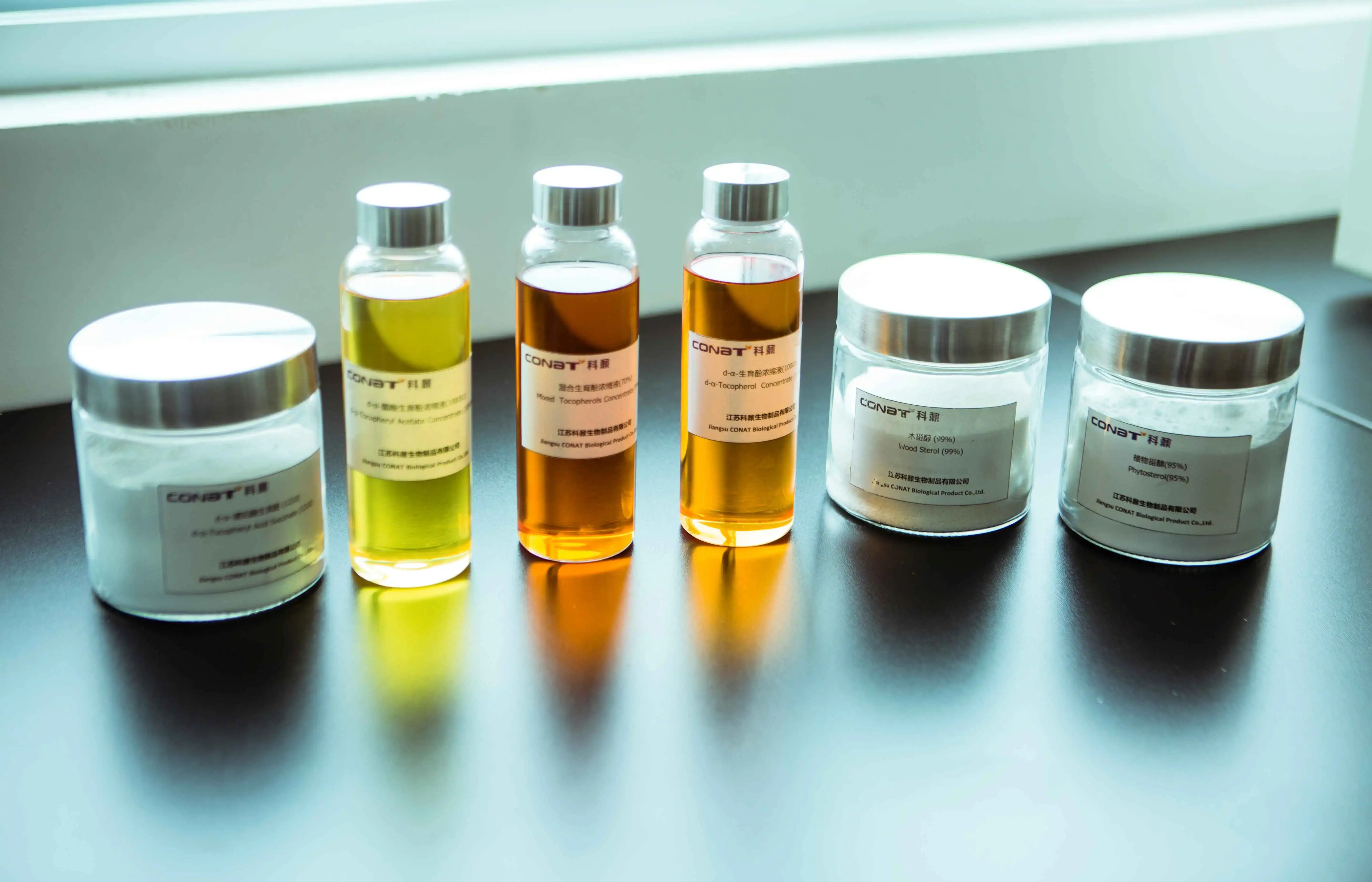
How D-Alpha-Tocopheryl Acetate Powder Enhances Food Fortification
Stability Advantages Over Liquid Forms
The powder form of d-alpha-Tocopheryl Acetate Powder(Food Grade) gets rid of the problems that come with oxidation in liquid vitamin E oils. The acetate ester link stays strong during heat processing steps like baking, extrusion, or spray drying, keeping the active tocopherol part safe. This steadiness keeps off-flavors, discoloration, and loss of strength from happening, which can lower the quality of liquid-fortified systems. Manufacturers of drinks value this trait a lot when they are making sour drinks or products that need to be heated up. When mixed with dry materials, the powder spreads out evenly and doesn't separate like oil-based additives do.
Bioavailability and Absorption Characteristics
Gut esterases cleave the acetate group after eating, allowing lipid transport systems to absorb free alpha-tocopherol. Studies on blood tocopherol levels reveal its effectiveness and tissue distribution. Nuts, butter, and dairy boost absorption. This alliance aids food companies in ingredient purity and nutrition. Unlike manufactured variants, the d-alpha stereoisomer remains in cell membranes better.
Application Success Across Product Categories
It boosts antioxidants in protein shakes, meal replacement drinks, and sports nutrition mixes. Fortified breads, cereals, and protein bars are baked using powder because it stays stable at high temperatures. Fat helps the body absorb vitamin E from dairy processor-fortified milk, yoghurt, and cheese. The powder is added to nut butters, trail mixes, and other tasty treats to make them healthier. Each application optimises ingredient flexibility and processing resistance.
Comparative Analysis Against Alternative Sources
Quality and testing distinguish food-grade d-alpha-Tocopheryl Acetate Powder from pharmaceutical-grade products, not molecular structure. In certain research, mixed tocopherols with gamma and delta isomers have better antioxidant activity than alpha-tocopherol, the most used vitamin E reference. A natural d-alpha source costs more than generated. Clear label and higher bioactivity. Tocotrienols are becoming more popular for some uses, although their regulatory frameworks and supply chains are less established than tocopherol.
Evaluating and Selecting the Right D-Alpha-Tocopheryl Acetate Powder
Purity and Quality Indicators
Assay values that show 50% active d-alpha-Tocopheryl Acetate Powder(Food Grade) content are typical of commercial preparations. The rest of the mixture is made up of food-grade carriers like modified starch and silicon dioxide anti-caking agents. Testing for heavy metals, microbial screening, and leftover solvent analysis are all important quality checks. The certificates of analysis should show the peroxide values that prove the stability against oxidation and the chromatographic profiles that prove the purity of the stereoisomer. Reliable manufacturers provide batch-specific documentation that helps keep track of products all the way through the supply chain.
Certification Requirements for Market Access
For international trade to happen, full approval files are needed. ISO certifications prove that food safety management and quality methods for production are working. Organic approvals help natural product makers reach more customers. Non-GMO verification appeals to groups of consumers who value agricultural transparency. Allergen-free statements allow formulations aimed at sensitive groups to be used. Export paperwork, like health certificates, customs declarations, and certificates of origin, makes shipping goods between countries easier. To avoid delays in clearance, procurement teams should make sure that suppliers can provide full paperwork packages.
Cost-Effectiveness in Bulk Procurement
Buying d-alpha-Tocopheryl Acetate Powder(Food Grade) in bulk takes advantage of savings of scale, and prices are usually set at 500 kg, 1000 kg, and container-load levels. Powder forms are cheaper to ship than liquid forms because they are lighter and easier to handle. When compared to less stable vitamin forms, stability means less waste from stock that has gone bad. Along with unit pricing, total cost calculations should take into account how efficiently materials are handled, how flexible formulations are, and how much less work is needed for quality control. Long-term supply deals often get better prices and faster distribution when supplies are low.
Supplier Evaluation Criteria
Manufacturers that have been around for a while and have specific lines for making vitamin E show that they are committed to quality control and supply predictability. Help with formulation, advice on stability testing, and regulatory advising are all examples of technical support services that add value to more than just product deals. Private label services let brands stand out by letting them choose their own particle sizes, carriers, and blends. Verification of production ability makes sure that providers can meet rising demand. Checking references with past customers confirms how well the delivery works, how consistent the quality is, and how quickly the company responds to technical questions.
Best Practices for Integrating D-Alpha-Tocopheryl Acetate Powder into Production
Formulation Techniques and Dosing Precision
When adding powder to dry mixes or reconstituted drinks, the right mixing steps are needed for uniform dispersion. Pre-blending with suitable carriers stops agglomeration and makes sure that the mixture is spread out evenly across the batch amounts. When figuring out how much to give, you have to take into account how much the carrier is diluted. For example, 50% preparations need twice as much weight as pure active ingredients. Nutritional labels use standard conversion factors to change IU values to milligram alpha-tocopherol equivalents. Overdosing margins make up for processing losses while staying within the upper limits set by regulators. Adding vitamins D and K together shows nutritional benefits that are backed up by new studies on how fat-soluble vitamins interact with each other.
Quality Control and Stability Testing
Before production starts, testing of incoming raw materials makes sure that seller certificates are correct. During the manufacturing process, vitamin E levels are checked at key control points using in-process monitoring. Label claims and legal compliance are confirmed by research of the finished product. Accelerated stability studies predict how long something will last in different storage situations, which helps with choosing the right packaging and setting the expiration date. Real-time stability systems make sure that products are stable over their entire lifecycles. Trending analysis finds formulation or process factors that affect vitamin retention, which makes it possible to keep making things better.
Regulatory Documentation and Audit Readiness
The master manufacturing records list the exact ingredients used, the process parameters, and the quality control checkpoints that show where the product came from. Up-to-date certifications, allergen declarations, and audit reports that show due diligence are kept in supplier qualification files. Label review processes make sure that health claims, nutrition fact panels, and ingredient lists are all legal in the country where the products are sold. To test traceability systems and communication methods, fake recall processes are used. Getting ready for an audit means gathering all the necessary paperwork, teaching employees what the rules are, and doing internal reviews to find ways to make things better before third-party checks happen.
Conclusion
The smart choice of d-alpha-Tocopheryl Acetate Powder(Food Grade) allows producers to provide real nutritional benefits while handling complicated regulatory environments and keeping operations running smoothly. It has been shown to be stable, bioavailable, and easy to process, which are all important qualities for formulating a wide range of products. Systematic evaluation frameworks help buyers find the right balance between quality standards, certification needs, cost concerns, and suppliers' abilities. As people become more aware of nutrition and fortification strategies change, working with experienced manufacturers makes sure you can get reliable ingredients that support innovation and market differentiation.
FAQ
1. Is d-alpha-tocopheryl acetate safe for all food applications?
d-alpha-Tocopheryl Acetate Powder(Food Grade) is still GRAS (Generally Recognized as Safe) in the US and is approved in all global markets as long as it is used within the limits set for fortification. Safety tests by governing bodies show that normal amounts of consumption have no negative effects. The ingredient can be safely added to a wide range of foods, such as drinks, baked goods, dairy products, and nutritional supplements. Processing stability keeps compounds from breaking down into harmful ones during normal manufacturing processes.
2. What distinguishes d-alpha from dl-alpha forms in fortification?
Biological action is based on the stereochemical configuration, and d-alpha forms that come from nature are better at retaining and working than synthetic dl-alpha mixes. Because of this bioactivity difference, regulatory agencies give higher vitamin E equivalency values to d-alpha isomers. Clean-label labeling favors natural d-alpha sources more and more, which is in line with what consumers want. The higher prices of d-alpha materials are usually supported by the fact that they need to be dosed less and have marketing benefits.
3. How should manufacturers store vitamin E powder to preserve quality?
The best way to store things is in covered cases that are kept cool and dry below 25°C and away from light. Controlling humidity stops moisture from absorbing and sticking or breaking down faster. Desiccant packets inside packages keep leftover moisture under control, which extends the shelf life. Rotation practices that follow the first-in, first-out rule help keep strength levels from dropping with age. Periodic testing of stored inventory makes sure that specifications are kept up throughout the shelf life.
Procurement Insights and How to Buy D-Alpha-Tocopheryl Acetate Powder Food Grade
Sourcing Certified Suppliers
Vitamin E is mostly made in places that already have a good infrastructure for making pharmaceuticals and nutraceuticals. Supplier directories kept up to date by industry groups are good places to start looking for qualified manufacturers. Trade shows and industry gatherings make it easier to talk to technical reps and quality testing teams in person. Online business-to-business (B2B) sites collect lists of suppliers, but it is still important to check their credentials and abilities. Request for quotation methods should make it clear what certifications are needed, how the goods should be packaged, when they should be delivered, and what kind of expert help is expected. This will make the evaluation process clearer.
Pricing Structures and Negotiation Strategies
The prices in the market for vitamin E are based on the costs of raw materials, the amount that is made, the licensing standards, and how competitive the market is. As buyers commit to bigger orders, prices become clearer because manufacturers spread out the costs of setup over more orders. Payment terms that balance cash flow needs with managing supplier risk usually range from upfront payments for new relationships to net-60 terms for long-term ones. When two countries do business together over long periods of time, currency exchange agreements protect both sides. Quality incentive clauses praise regular compliance with specifications and punish deviations that need to be fixed or thrown out.
Logistics and Delivery Considerations
Standard ways to package things include 25 kg fiber drums with polyethylene liners that keep the contents dry and clean. Palletized shipments make it easier to load containers and move things around in the warehouse. For foreign suppliers, the lead time from order approval to production, quality release, and international shipping is usually between 4 and 6 weeks. Even though it costs more, air freight speeds up arrival for urgent needs. Customs brokers know how to deal with import rules, tax codes, and inspection requirements so that clearance doesn't take too long. Carrying costs, wait times for purchases, and minimum order amounts are all taken into account by inventory management strategies.
We at CONAT know how hard it is for procurement teams to find high-quality d-alpha-Tocopheryl Acetate Powder(Food Grade) for large-scale fortification projects. Our specialized factory in Jiangsu has been making vitamin E for decades and has strict quality control systems that make sure every batch meets the highest international standards. Whether you need standard food-grade formulations or unique carrier setups, our expert team works closely with your R&D and quality departments to make sure that the ingredients work best in the ways that you need them to. You can talk to our sales team at sales@conat.cn about buying in bulk, getting detailed datasheets with full analytical profiles, or setting up a sample evaluation to show that we are dedicated to being the best d-alpha-Tocopheryl Acetate Powder(Food Grade) provider you can trust.
References
1. Schmölz, L., Birringer, M., Lorkowski, S., & Wallert, M. (2016). Complexity of vitamin E metabolism. World Journal of Biological Chemistry, 7(1), 14-43.
2. Ahsan, H., Ahad, A., Iqbal, J., & Siddiqui, W. A. (2014). Pharmacological potential of tocotrienols: a review. Nutrition & Metabolism, 11(1), 52.
3. Traber, M. G., & Atkinson, J. (2007). Vitamin E, antioxidant and nothing more. Free Radical Biology and Medicine, 43(1), 4-15.
4. Jiang, Q. (2014). Natural forms of vitamin E: metabolism, antioxidant, and anti-inflammatory activities and their role in disease prevention. Free Radical Biology and Medicine, 72, 76-90.
5. Peh, H. Y., Tan, W. S., Liao, W., & Wong, W. S. (2016). Vitamin E therapy beyond cancer: Tocopherol versus tocotrienol. Pharmacology & Therapeutics, 162, 152-169.
6. Brigelius-Flohé, R., & Traber, M. G. (1999). Vitamin E: function and metabolism. The FASEB Journal, 13(10), 1145-1155.
YOU MAY LIKE