
How β Sitosterol Particles Improve Nutraceutical Formulations
β Sitosterol particles represent a transformative ingredient in modern nutraceutical development, addressing critical formulation challenges while delivering clinically supported health benefits. These plant-derived phytosterol compounds enhance bioavailability, stability, and dosing precision in dietary supplements and functional foods. By optimizing particle size and purity, manufacturers can create cholesterol management products with superior consumer acceptance and consistent batch performance. The micronized particle form allows seamless integration into diverse delivery systems—from softgels to beverage powders—making β sitosterol an indispensable active ingredient for brands seeking clean-label differentiation in competitive markets.
Understanding β Sitosterol Particles: Molecular and Functional Insights
The Chemical Structure Behind Efficacy
Plant sterols, especially β sitosterol, have molecules that are very similar to cholesterol in structure. Because of this molecular similarity, these substances can compete with dietary cholesterol when they are absorbed in the intestines. When the active ingredient is made into optimized particles, its surface area and breakdown rates are increased. This directly affects how well the body can use the chemical. High-purity phytosterol fractions can be extracted naturally from sources like pine trees, soybeans, and vegetable oils. β-sitosterol usually makes up 40–60% of the total phytosterol content.
Natural Sources Versus Synthetic Production
The sourcing strategy has a big effect on both how the product is positioned and how much it costs to make. Natural extraction methods keep the complex phytosterol structure that is found in plant materials. They also keep small parts that may work together to have more powerful effects. Using special techniques and facilities, it is possible to get purity levels above 95%, which meet the requirements for pharmaceutical use. Synthetic methods, on the other hand, may introduce impurities linked to the process and don't have the "natural" claim that health-conscious customers and clean-label brands value more and more.
Bioavailability and Absorption Mechanisms
Particle engineering has a big effect on how the body uses plant sterols, according to research. Standard crystalline forms don't dissolve well in water, which slows down absorption. Advanced micronization makes particles smaller to a point where they dissolve much more quickly. Clinical studies show that optimized particle formulations can better change blood lipids than traditional powder forms. This means that lower dosages are needed to manage cholesterol more effectively, which is an important factor for both making claims about how well a product works and designing formulations that are as cost-effective as possible.
Overcoming Challenges in Nutraceutical Formulations with β Sitosterol Particles
Solubility and Stability Improvements
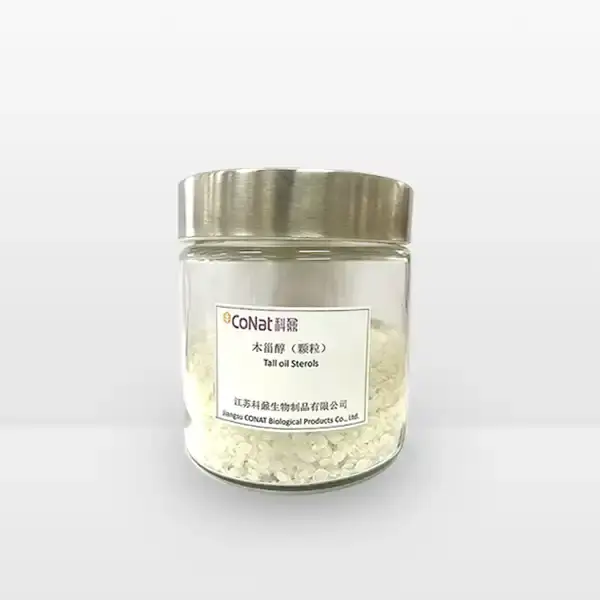
Traditional phytosterol ingredients such as β-sitosterol particles cause problems with formulation that slow down the development of new products. Poor water solubility limits the types of delivery formats that can be used, and oxidative instability threatens shelf life. These problems can be solved by particle-optimized forms, which have controlled size distribution and safe surface processes. When processed correctly, these particles spread out evenly in oil-based matrices for softgel encapsulation or can be mixed with emulsifiers for use in drinks. Stability tests at different temperatures and levels of humidity show that quality-controlled particles stay effective for the full 24-month shelf life.
Advanced Processing Technologies
Good manufacturing separates common ingredients from high-quality formulation parts. Some methods that are worth looking into are:
- Spray-drying technology makes uniform particle populations with known flow qualities, which are important for activities like pressing tablets and filling capsules. Inlet temperature, feed concentration, and atomisation pressure are the process factors that decide the end particle properties that have a direct effect on the efficiency of downstream processing.
- Micronization through jet grinding or controlled crystallisation produces particles between 5 and 50 microns. This strikes the best balance between stability and breakdown rate. Smaller particles have more reactive surface area, which could speed up oxidation. Larger particles, on the other hand, might dissolve too slowly to get the absorption profiles that are wanted.
- Encapsulation methods using food-grade polymers or lipid matrices keep phytosterol particles safe from external stresses and let you control how they release. Because of problems with oxidation and concerns about taste, this technology works especially well for functional beverages that need to keep active ingredients safe.
These new ways of processing turn raw phytosterol material into precisely engineered ingredients that formulators can use with confidence in a wide range of product ideas. Investing in modern particle technology pays off with fewer recipe trials and better performance of products that are ready to go on the market.
Real-World Application Success
Manufacturers of dietary supplements say that switching from regular phytosterol powders to engineered particle forms leads to big improvements. One cardiovascular health brand lowered the daily effective dose from 2,000 mg to 1,300 mg while keeping the same lipid management results. This made it possible for smaller pill shapes that are easier for patients to take as prescribed. Functional food developers were able to successfully add particle-grade material to snack bars and fortified drinks without the gritty or clumpy problems that happened with earlier attempts.
Comparing β Sitosterol Particles with Other Cholesterol-Lowering Agents
Mechanism Distinctions Among Competing Ingredients
Knowing how different chemicals work helps sourcing teams choose ingredients that fit with how the product is positioned. β-sitosterol and other plant sterols work by physically stopping the absorption of cholesterol in the intestines without having drug-like effects on the body as a whole. Plant stanols, which are their saturated counterparts, work the same way but dissolve in different ways. In contrast, pharmaceutical statins stop the body from making cholesterol by blocking enzymes. This is a very different method that requires a prescription and has different side effects.
Safety Profile and Consumer Perception
Clinical studies that have been going on for decades have shown that taking β-sitosterol particles at the recommended amounts doesn't pose many safety risks. Studies that looked at amounts up to 3 grams per day found that the drug was well tolerated and didn't cause any major side effects. Consumers strongly prefer solutions that come from plants, so the natural plant origin gives the product a marketing edge over manufactured options. This perception factor helps brands stand out in supplement areas that are already very crowded, where stories about ingredients affect buying choices.
Manufacturing and Cost Considerations
Different price levels for purity grades and physical forms have an effect on formulation economics. Pharmaceutical-grade particles, which cost a lot, give medical nutrition uses the stability and proof they need. Food-grade specifications are more cost-effective and work well for mass-market functional foods that can handle slightly wider analytical ranges. Buying in bulk by the metric tonne versus smaller study lots can change unit economics by 30 to 40 percent. This is why supply chain planning is so important for improving margins.
Procuring High-Quality β Sitosterol Particles: What B2B Clients Should Know
Essential Supplier Qualifications
Certification portfolios reveal supplier commitment to quality systems and regulatory compliance. ISO 9001 shows that process control is mature, and ISO 22000 or FSSC 22000 certificates show that food safety management is strong. Pharmaceutical companies expect GMP certification, and Kosher or Halal approval lets you sell to certain groups of people. Technical support skills, such as access to formulation scientists, analytical testing resources, and regulatory documentation, are what set transactional vendors apart from strategic partners. These skills speed up product development while lowering compliance risks.
Quality Control and Batch Consistency
Only a small part of the quality story is told by the specification sheet. Each production lot should come with a Certificate of Analysis document that lists the particle size distribution, purity by HPLC analysis, moisture content, heavy metals screening, and microbiological testing. By asking for batch-to-batch variation data over six months, you can find out if a supplier has tight process control or drift that means they have to make constant changes to the formulation. Pre-purchase checks, which can be done in person or by a third-party inspection service, make sure that the processes that were written down work in real life.
Strategic Procurement Approaches
Long-term supply deals protect against changes in the prices of raw materials and make sure that supplies are distributed evenly when there are shortages. Tiers of volume promise give you access to better prices and may include expert service packages. Private label agreements let brand owners set their ingredients apart by using proprietary specifications like custom particle sizes, specific carrier systems, or blend ratios that are hard for competitors to copy. Building ties with manufacturers that are vertically integrated from getting raw materials to making the end particles makes the supply chain more resistant to disruptions.
Practical Guide to Formulating with β Sitosterol Particles
Dosage Optimization and Regulatory Alignment
According to clinical evidence, getting 1.5 to 3.0 grams of phytosterols every day is usually enough to help the heart. To turn this into specs for the end product, you have to take into account how pure the particles are and how well the delivery system works. A 90% pure particle ingredient needs inclusion rates that are proportionally higher than a 95% material. Regulatory systems around the world are different. For example, the FDA allows health claims for products that contain at least 0.65g of plant sterols per serving and are eaten twice a day with meals. Similar limits are set by European rules, but labels must use a certain language, which affects the design of packages and marketing copy.
Ingredient Compatibility and Synergies
For formulations to work, they need to think about how β-sitosterol particles combine with other chemicals. Vitamins that dissolve in fat, like vitamin E or D3, work together naturally to protect cells from damage by having similar absorption routes and offering extra antioxidant support. When it comes to cardiovascular products, omega-3 fatty acids work well together. However, it is important to avoid reactive interactions by encapsulating them properly or adding antioxidants. Fibre can bind phytosterols, which could lower their bioavailability. In complete cholesterol management products, this problem is fixed by spacing out dosing or changing ratios.
Stability Testing and Shelf Life Validation
Before committing to full production runs, accelerated stability protocols find possible ways that something could break down. Putting formulation prototypes in a room with 40°C and 75% relative humidity for three months is the same as storing them normally for 12 to 18 months. Keeping an eye on things like strength retention, physical appearance, dissolution profiles, and sensory traits shows where the recipe is weak and needs to be changed. Particle clumping, colour changes, or the development of an unpleasant smell are all signs of stability issues that need to be fixed by reformulating. Real-time stability studies under the conditions that will be used for storage give the final information that supports expiration dates and quality guarantees.
Conclusion
β-sitosterol particles offer real benefits for companies that make nutritional goods and want to set their products apart by offering better quality and performance. When engineers pay close attention to particle size, purity, and stability, plant sterols go from being common ingredients to being formulated solutions that solve real technical problems. Professionals in procurement can benefit from learning about the chemical basis of effectiveness, how processing technology affects materials, and the criteria used to judge suppliers that set special materials apart from standard ones. As the need for natural, effective heart health support keeps growing, choosing the right ingredients becomes more and more important for brand success and reputation.
FAQ
1. What advantages do particle forms offer over standard plant sterol extracts?
When compared to irregular crystalline powders, engineered particle forms offer controlled size distribution that improves dissolution rates and bioavailability. This means that the product will probably work better and require smaller doses to be successful. Some benefits for manufacturing include better flow qualities for automatic capsule filling, more uniform mixing in tablet formulas, and less separation during storage and handling.
2. How should procurement teams evaluate supplier certifications?
Certifications show that management systems exist, but the type and number of audits are much more important. New certification dates mean that compliance is still going strong, while expired or suspended credentials show that there are problems with how things are running. If you ask for real audit reports instead of just certificates, you can see what problems were found and what steps were taken to fix them. This shows you whether the provider deals with problems in a thorough or superficial way.
3. What particle size ranges work best for different delivery formats?
Tablet forms usually work best with particles 20 to 50 microns in size that compress evenly while still dissolving at a good rate. Capsule fills can hold particles up to 80 microns in size without any problems with flow. For beverage and functional food uses, particles smaller than 20 microns are needed to keep suspensions stable and avoid getting gritty. When particle specifications are matched to delivery format, expensive reformulation cycles are avoided.
Partner with CONAT for Premium β Sitosterol Particle Solutions
CONAT is an expert at making high-quality phytosterol ingredients, such as exactly designed β sitosterol Particles for tough nutritional uses. Our production is vertically integrated, so we keep a close eye on quality from the time we choose the raw materials to the time we process the last particle. This makes sure that each batch meets the strict standards for pharmaceuticals. A wide range of certifications, such as ISO 9001, GMP, Kosher, and Halal, meet the needs of markets around the world. Technical teams can help you speed up the time it takes to make your product by giving you advice on formulation, stability, and legal paperwork. As a provider of β-sitosterol particles with a lot of experience, we can offer a range of buying choices, from small amounts for study to large amounts for business use, all at reasonable prices. You can email sales@conat.cn to get samples, talk about unique requirements, or find out how our phytosterols knowledge can help your product line.
References
1. Wilt T, MacDonald R, Ishani A. "Beta-sitosterol for the treatment of benign prostatic hyperplasia: a systematic review." BJU International, 1999; 83(9): 976-983.
2. Pruel A, Geller J, Liao S, et al. "Comparison of phytosterol efficacy in reducing plasma cholesterol in randomized controlled trials." European Journal of Clinical Nutrition, 2012; 66(5): 520-528.
3. Ostlund RE, Racette SB, Stenson WF. "Inhibition of cholesterol absorption by phytosterol-enriched products." Journal of Lipid Research, 2003; 44(12): 2258-2265.
4. Devaraj S, Jialal I, Vega-López S. "Plant sterol-fortified diets reduce cardiovascular disease risk profiles." American Journal of Clinical Nutrition, 2004; 80(5): 1157-1163.
5. Piironen V, Lindsay DG, Miettinen TA, et al. "Plant sterols: biosynthesis, biological function and their importance to human nutrition." Journal of the Science of Food and Agriculture, 2000; 80(7): 939-966.
6. Trautwein EA, Duchateau GS, Lin Y, et al. "Proposed mechanisms of cholesterol-lowering action of plant sterols." European Journal of Lipid Science and Technology, 2003; 105(3-4): 171-185.
YOU MAY LIKE