
To get the most out of d-alpha-tocopheryl acetate in skincare products, it's important to learn about its characteristics as a stabilized version of vitamin E found in nature. This potent antioxidant not only increases the product's stability and shelf life, but it also shields skin cells from environmental harm. Depending on the formulation type, pH levels, storage circumstances, and complementing active substances determine the optimal concentration, which may vary from 0.1% to 1%. The highest level of antioxidant protection and happy customers are the results of careful integration procedures.
Understanding d-alpha-Tocopheryl Acetate: Composition and Skin Benefits
One naturally occurring form of vitamin E is d-alpha-tocopheryl acetate, which is an acetate. Specifically, it was designed to prevent the breakdown of pure tocopherol. This chemical shift results in a potent antioxidant that maintains its protective effects on its ingredients both throughout production and storage. The d-alpha version of vitamin E is not absorbed by cells as quickly or as solubly as the natural form.
Molecular Structure and Stability Characteristics
The acetate ester bond in d-alpha-Tocopheryl Acetate makes it very resistant to oxidation, heat, and light. Improvements in industry are a direct result of this structural advantage. Manufacturers may now create products with extended shelf life without compromising the efficacy of the vitamins. Because of its lipophilicity, it dissolves readily in oils and other liquids.
Bioconversion and Skin Penetration Mechanisms
"Enzymatic hydrolysis" describes the process by which skin enzymes convert d-alpha-tocopheryl acetate to its active form, d-alpha-tocopherol. The lower dermal layers and stratum corneum are the sites of this bioconversion. This ensures that antioxidants continue to protect cells. Compared to just applying tocopherol, this conversion process prolongs the free radical scavenging effect, according to the research.
Comparing d-alpha-Tocopheryl Acetate with Other Vitamin E Forms for Optimal Formulation
What matters most for the product's efficacy, pricing, and consumer satisfaction is the vitamin E ingredient used. The various forms of vitamin E each have their own set of advantages that may be taken into account when formulating a product. Employees in charge of purchasing may strike a better balance between speed and cost when they are aware of these distinctions.
Natural versus Synthetic Vitamin E Derivatives
The biological activity of naturally occurring d-alpha-tocopheryl acetate is much higher than that of synthetic dl-alpha-tocopheryl acetate. Research shows that natural antioxidants work almost twice as well as synthetic ones. Cells can take in and use more of it more efficiently due to its stereochemical nature, which interacts well with human biology.
Performance Comparison with Mixed Tocopherols
Mixed tocopherols (a blend of alpha, beta, gamma, and delta tocopherols) are powerful antioxidants that protect several biological processes. Because of its potency and specificity as an antioxidant, d-alpha-tocopheryl acetate is superior to other options when free radical protection is of the utmost importance. The objectives of the formulation should dictate the selection from these options. Tocopherols in general are beneficial, but pure d-alpha kinds are the most effective when it comes to anti-aging.
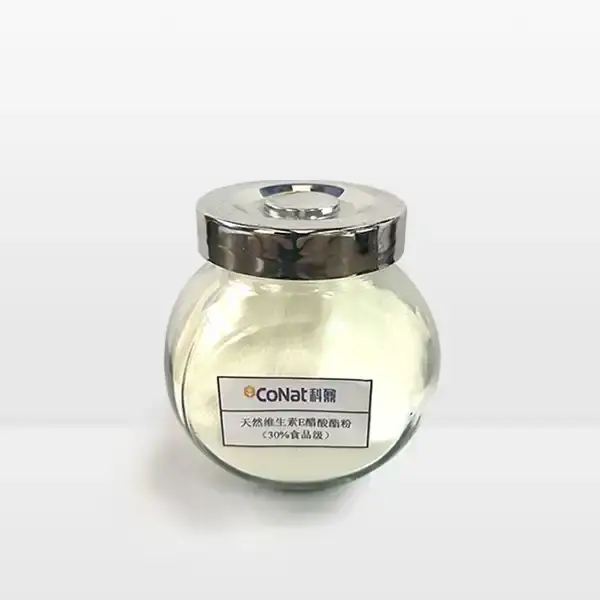
Best Practices for Incorporating d-alpha-Tocopheryl Acetate in Skincare Products
Be sure to carefully think about processing details, compatibility issues, and concentration levels before adding d-alpha-tocopheryl acetate to skincare formulas. All while keeping product stability and customer safety in mind, these formulation procedures bring forth the constituents' full potential.
Optimal Concentration Guidelines and Safety Considerations
The recommended dosage of d-alpha-tocopheryl acetate for intense antioxidant therapies is 1.0%, whereas for maintenance formulations it is often 0.1%. Larger doses may be more effective, but only after thorough testing for skin sensitivity and product stability can they be used. When determining a concentration, it is important to take into account the formulation's supplemental active substances, the anticipated use frequency, and the demographics of the target customers.
Synergistic Combinations with Complementary Actives
d-alpha-tocopheryl acetate has synergistic effects with niacinamide, ferulic acid, and vitamin C derivatives. All sides of the skin are protected by the powerful antioxidant networks formed by the synergistic actions of these substances. Vitamins E and C complement one another by protecting and regenerating one another, making them more stable and effective.
Processing and Storage Optimization Techniques
When manufacturing goods containing d-alpha-tocopheryl acetate, it is crucial to avoid heat exposure and oxygen contact. Every component is protected from degradation during manufacture by using cold processing, nitrogen blanketing, and appropriate mixing rates. Proper light shielding, temperature control, and moisture exclusion storage conditions are necessary for products to retain their stability and antioxidant efficacy over time.
Procurement Insights: Sourcing High-Quality d-alpha-Tocopheryl Acetate
To keep quality constant and the supply chain running smoothly, considerations other than unit cost should be considered when planning the procurement of d-alpha-tocopheryl acetate. An effective sourcing strategy will include building lasting partnerships, minimizing expenses, and guaranteeing quality.
Quality Certification and Testing Requirements
When they can get it, sellers of high-quality d-alpha-tocopheryl acetate have a lot of different quality certificates, like ISO 9001, GMP compliance, and kosher or halal certifications. The Certificate of Analysis needs to have information on the levels of cleanliness, wetness, and acidity, as well as the microbe details. Tests from an outside group that happen often support the seller's words and make sure that every batch is the same quality.
Supply Chain Considerations and Market Dynamics
The rules, the ability to make things, and the quantity of raw materials all affect global vitamin E markets. Long-term ties with suppliers, smart product management, and a range of providers are all important for good buying. Being able to plan ahead and find ways to save money is all about knowing how the market is changing.
CONAT: Your Trusted d-alpha-Tocopheryl Acetate Manufacturer
Jiangsu CONAT Biological Goods Co., Ltd. is a business that makes phytosterol and natural vitamin E goods. In the medical and beauty grades, they include d-alpha-tocopheryl acetate. We have a lot of experience making vitamin E, and our wide range of manufacturing skills includes tools for research, production, and testing.
Advanced Manufacturing and Quality Control
At every step of production, strict quality control is possible thanks to CONAT's state-of-the-art buildings. This makes the business follow the rules and standards that are used around the world. Our technical knowledge lets us come up with custom ways to meet a lot of different recipe needs, which helps with both small and big production projects.
Comprehensive Technical Support Services
Along with providing materials, CONAT gives customers a lot of professional advice to help them get the results they want from their products. Our team works closely with sourcing experts and formulators to come up with new ways to deal with certain problems in the market.
Conclusion
D-alpha-Tocopheryl acetate is a very important chemical in modern beauty items for protecting skin with vitamins. It's a great choice for many types of items because it's safe, dissolves easily, and is a good fit for them. To follow the plan, you need to know the best concentration levels, useful ingredient combinations, and good ways to do it all. If you focus on quality, source security, and expert help when you buy things, you can be sure that goods always work well and that customers are happy. Because they know a lot about natural vitamin E alternatives, CONAT can make great health products that fit the needs of a market that is always changing.
Frequently Asked Questions
Q1: What is the optimal concentration of d-alpha-tocopheryl acetate for anti-aging formulations?
A: For anti-aging applications, concentrations between 0.5% and 1.0% provide optimal antioxidant protection without causing skin irritation. This range delivers measurable free radical protection while maintaining formulation stability and consumer tolerance across different skin types.
Q2: How does d-alpha-tocopheryl acetate interact with vitamin C in skincare formulations?
A: d-alpha-Tocopheryl Acetate and vitamin C create a synergistic antioxidant network where each ingredient protects and regenerates the other. This combination enhances overall antioxidant efficacy while improving individual ingredient stability, making it highly effective for comprehensive skin protection formulations.
Q3: What storage conditions are required to maintain d-alpha-tocopheryl acetate stability?
A: Optimal storage requires cool temperatures (below 25°C), protection from direct light, and minimal oxygen exposure. Using nitrogen-flushed containers and moisture-resistant packaging maintains ingredient integrity and extends shelf life significantly compared to standard storage conditions.
Partner with CONAT for Premium d-alpha-Tocopheryl Acetate Supply
CONAT extends an invitation to the beauty industry and sourcing experts to see our unwavering dedication to maintaining our position as the leading provider of all-natural vitamin E products. Our complete technical assistance, consistent quality, and reliable supply chain management set us apart as a leading source of d-alpha-tocopheryl acetate. In order to cater to your specific requirements, our staff is well-versed in the production process of contemporary skincare products. Find out how our premium ingredients may inspire you to create innovative goods that will sell like hotcakes. Contact us at sales@conat.cn to discuss your formulation needs and explore our complete range of natural antioxidant ingredients designed for innovative skincare applications.
References
1. Thiele, J.J., Hsieh, S.N., & Ekanayake-Mudiyanselage, S. (2005). Vitamin E: Critical review of its current use in cosmetic and clinical dermatology. Dermatologic Surgery, 31(7), 805-813.
2. Burke, K.E. (2007). Interaction of vitamins C and E as better cosmeceuticals. Dermatologic Therapy, 20(5), 314-321.
3. Podda, M., & Grundmann-Kollmann, M. (2001). Low molecular weight antioxidants and their role in skin aging. Clinical and Experimental Dermatology, 26(7), 578-582.
4. Traber, M.G., & Stevens, J.F. (2011). Vitamins C and E: Beneficial effects from a mechanistic perspective. Free Radical Biology and Medicine, 51(5), 1000-1013.
5. Nachbar, F., & Korting, H.C. (1995). The role of vitamin E in normal and damaged skin. Journal of Molecular Medicine, 73(1), 7-17.
6. Brigelius-Flohé, R., & Traber, M.G. (1999). Vitamin E: Function and metabolism. The FASEB Journal, 13(10), 1145-1155.