
Mixed Tocopherols Antioxidant Benefits Explained
Food, supplements, and makeup are best protected from oxidation by a potent mixture of natural vitamin E molecules called mixed tocopherols antioxidants. There are four types of tocopherols in this full vitamin E complex. These tocopherols fight free radicals better when they work together than when they work alone. Companies can make their goods more stable and last longer by learning about these complicated chemicals. This will help them meet the growing demand from customers in many fields for natural ways to keep things fresh.
What Are Mixed Tocopherols, and How Do They Work?
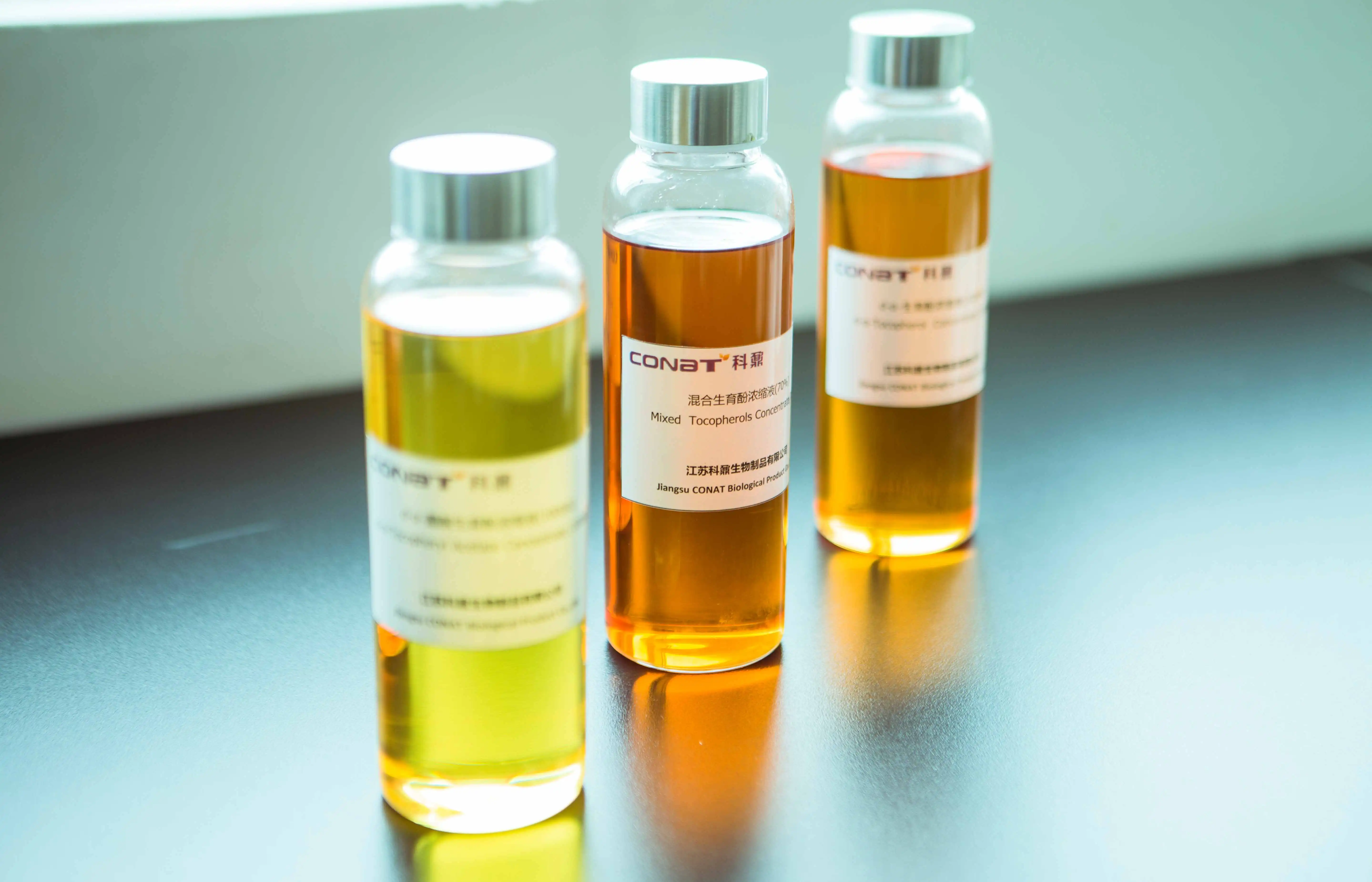
Chemicals that are naturally high in vitamin E can be found in nuts, seeds, grains, and vegetable oils. You can divide these chemicals into four groups: alpha, beta, gamma, and delta tocopherols. Each one is an antioxidant in its own way, and they all work together to make a full defense system.
The Natural Composition of Mixed Tocopherols
Due to the way their molecules are built, mixed tocopherols can act as lipophilic antioxidants. In other words, they break down into fats and oils to protect the areas that need it the most. Unlike man-made versions, natural mixed tocopherols keep their functional shape. In other words, they can be properly taken and used in both food and business. More research has shown that gamma-tocopherol, which is usually the main part of mixed tocopherol products, is a better pain reliever than alpha-tocopherol by itself.
These chemicals are mostly found in industry processes that get them from vegetable oils that can be eaten by distilling and cleaning them. This turns things into things that are more than 90% clean. During the concentration process, the tocopherols' original d-form is kept. The synthetic dl-alpha-tocopherol acetate that is often found in lower-quality goods is not as biologically active as this type.
Antioxidant Mechanism and Free Radical Protection
The protective effect of mixed tocopherols comes from a complicated method for giving away electrons. Tocopherols give up their own electrons to get rid of free radicals that can damage cell walls or make a product less stable. Oxidative chain reactions make foods sour, makeup break down, and vitamins less useful. This process stops them.
Gamma-tocopherol is very good at protecting against free radicals that are based on nitrogen, while alpha-tocopherol is very good at protecting against free radicals that are based on peroxyl. Tocopherols that are mixed together protect cells better than antioxidants that are made of just one substance because they work together. Mixed tocopherol formulations have been shown in studies to make lipid-rich formulations last 200 to 300 percent longer than controls that were not treated.
Health and Safety Benefits of Mixed Tocopherols
Eating foods with the mixed tocopherols antioxidant has been linked to many health benefits. This means that these substances can be used in functional foods, dietary supplements, and nutritional goods. The government has looked into and studied mixed tocopherols for a long time and found them to be safe.
Cardiovascular and Cellular Health Benefits
Research on people has shown that gamma-tocopherol, a main part of mixed tocopherol vitamins, lowers inflammation, which is good for heart health. Researchers who published their findings in major nutrition journals found that people who have higher levels of gamma-tocopherol are less likely to get cardiovascular disease. Because they work together, multi-tocopherol supplements protect cells better than alpha-tocopherol supplements alone.
Mixed types of tocopherols keep cell membranes safe from lipid breakdown, which can hurt cell walls and make cells less useful. The health of people isn't the only thing this defensive process helps. Tocopherols that are mixed together help keep the quality of food and health items that need to protect cells.
Regulatory Approval and Safety Standards
The Food and Drug Administration (FDA) says that mixed tocopherols are usually thought to be safe (GRAS) for use in food. The European Food Safety Authority (EFSA) has also set safe daily dose levels for people of all ages. When these approvals are added to goods on the market, manufacturers can be sure that they will work.
Safety tests have shown that mixed tocopherols don't cause many problems, even when eaten in big amounts. The most vitamin E that a person can take in a day is 1,000 mg. Formulators don't have to worry about safety when they use different kinds of goods because of this big safety cushion.
Mixed Tocopherols vs. Other Antioxidants: A Comparative Analysis
When procurement workers know how mixed tocopherols stack up against other antioxidants, they can make better buying decisions based on how well they work, how much they cost, and how they comply with regulations.
Natural vs. Synthetic Antioxidant Performance
Man-made antioxidants like BHT (butylated hydroxytoluene) and BHA (butylated hydroxyanisole) are being looked at more closely by both officials and customers. Mixed tocopherols are much better than these. Some synthetic antioxidants may protect well at first, but mixed tocopherols work for a longer time and don't pose the same health risks as synthetic antioxidants.
Testing on food uses has shown that mixed tocopherols keep their antioxidant qualities for a long time, while some manmade alternatives lose these properties over time. This long-term performance makes the product more stable and last longer, which is good for the economy and can make up for the fact that the original ingredients may have cost more.
Comparison with Other Natural Antioxidants
Mixed tocopherols are the most cost-effective way to make a lot of them. Other natural antioxidants that can be used are rosemary extract, astaxanthin, and ascorbyl palmitate. It's possible that specialty antioxidants work better in some cases, but mixed tocopherols are a good defense that can be used in a lot of different applications.
Mixed tocopherols can handle heat better than a lot of natural alternatives. For this reason, they are great for making ready-made foods that need to go through steps at high temperatures. Because they can handle high temperatures and stick to fats, mixed tocopherols are very useful for working with fats, oils, and fat-soluble vitamins.
Procuring Mixed Tocopherols: What B2B Clients Need to Know
Should you want to buy mixed tocopherols with the mixed tocopherols antioxidant, you should know about quality grades, selling requirements, and how the market works, as this affects supply and costs. There are different standard levels of mixed tocopherols on the world market, each made for a different purpose.
Quality Grades and Certification Standards
Most mixed tocopherols that are safe for food have between 70 and 90% total tocopherols. Plant sterols and other good chemicals make up the rest. For skin use, cosmetics need to be more pure, with more than 90% total tocopherols, in order to meet safety and efficiency guidelines.
Mixed tocopherols that are made for pharmaceutical use are the best type. They need to have at least 95% of total tocopherols and almost no heavy metals, solvent waste, or germs. These kinds cost more, but they come with the quality promise that is needed for certain uses.
There should be a tocopherol profile study on the Certificate of Analysis (CoA). This will show where the alpha, beta, gamma, and delta types can be found. Suppliers with a good name check each batch for peroxide value, acid value, color, and moisture content to make sure the product is stable and of good quality.
Supply Chain Considerations and Market Dynamics
Tocopherols that are mixed are sold all over the world. There are already supply lines in place in big vegetable oil processing areas that help the market. People grow soybeans, sunflowers, and rapeseed in places like the US, Brazil, Argentina, and a few European countries that can process a lot of them.
You can buy mixed tocopherols at different prices on the market based on the cost of their main ingredient, soybean oil extract, as well as the quantity of that ingredient. Price changes with the seasons, so teams that buy things should keep that in mind and think about forward planning for big orders.
Practical Applications and Case Studies of Mixed Tocopherols
The fact that mixed tocopherols are used in real life shows how versatile and useful they are in many areas. This is helpful for people who are thinking about buying or using them.
Food and Beverage Industry Applications
People who work in the food business buy the most mixed tocopherols. Made-up foods, drinks, and useful foods all use these chemicals. Mixed tocopherols have been added to snack foods by big food companies and worked well. This keeps the food fresh longer because the oil doesn't go bad, which would make it taste worse and be less healthy.
Beverage makers use mixes of tocopherols to make drinks that are more healthy and useful. These chemicals are antioxidants, which means they keep vitamins and nutrients from breaking down. Adding mixed tocopherol to well-known beverage brands keeps the vitamins working for as long as the product is kept, according to case studies.
Foods with nuts, seeds, or extra oils don't lose their fat because of mixed tocopherols. This makes them useful in baking. They say that customers don't have to worry as much about off-flavors and goods stay fresh longer when mixed tocopherols are added to recipes.
Cosmetic and Personal Care Success Stories
Because mixed tocopherols are antioxidants, skin care companies use them to keep products from breaking down due to oxidation while still giving skin benefits. High-end skin care brands add mixed tocopherols to slow down the aging process. They keep other active ingredients from going bad and also keep the skin safe.
Many shampoos and conditioners contain natural oils and plant-based ingredients that go bad over time. Mixed tocopherols antioxidants help keep these ingredients from going bad. Companies that make personal care products say that adding mixed tocopherols to recipes makes the formulation more stable, and customers say that the product feels better.
Conclusion
Mixed tocopherol antioxidant solutions help businesses in the vitamin, food, and beauty industries keep their goods safe from oxidation in a natural way. On top of that, they meet customer needs for eco-friendly materials. Alpha, beta, gamma, and delta tocopherols work together to form a better total defense than single-compound choices, both in terms of how well they work and how well they can be used. Companies that want to use natural antioxidant systems to make their goods better and last longer can do so if they know what to look for, how to grade the quality, and how to use the systems.
FAQ
1. What makes mixed tocopherols more effective than single antioxidants?
Tocopherols are made up of four different vitamin E compounds. These compounds protect against more damage when they work together than when they work alone. It is great for getting rid of nitrogen-based free radicals, and it is great for getting rid of peroxyl radicals as well. They protect against many different types of radicals and make things last longer than antioxidants that only work one way.
2. How do I verify the quality of mixed tocopherols from suppliers?
You need to look at the Certificate of Analysis (CoA) for each batch to see how good it is. Some of the tests that should be on the CoA are for heavy metals, bacteria, and tocopherol profile analysis. Tocopherols like alpha, beta, gamma, and delta are spread out in different ways. Suppliers you can trust will give you specific information and data from stable tests to show this.
3. What storage conditions maintain mixed tocopherols' effectiveness?
Mixed tocopherols only work at their best when they are kept in a cool, dry place out of direct light and air. It is better for antioxidants to work when the temperature is below 25°C (77°F) and the relative humidity is below 65%. Putting things in nitrogen-flushed barrels or amber glass bottles the right way makes them last a lot longer.
4. Are mixed tocopherols suitable for all food applications?
Mixed tocopherols work great in oils, foods, and other things that are lipophilic and have a lot of fat. When they are used in water, they need to be made with the right ingredients or water-soluble substances. Food professionals should check to see if a product works with certain recipes and ways of preparing.
5. What regulatory approvals do mixed tocopherols have globally?
As of now, both the FDA and the EFSA in Europe agree that mixed tocopherols can be used in food. They have been recognized as kosher and halal, and they can be used in organic recipes that follow a number of international organic guidelines. They can be sold everywhere in the world now.
Partner with CONAT for Premium Mixed Tocopherols Antioxidant Solutions
Mixed tocopherol antioxidants are produced by the top company, CONAT. They sell natural vitamin E products that are safe enough to be used in medicine and meet the highest quality standards around the world. Our advanced extraction and processing methods make sure that the quality of each batch is the same, and we give you all the information you need for legal purposes. Because CONAT is approved by both ISO9001 and GMP, it gives formulators the security and quality assurance they need for their products.
You can get help from our team of experts to find the best way to use mixed tocopherols in your own projects, such as making cosmetics, health supplements, or useful foods. Contact our sales team at sales@conat.cn to talk about your mixed tocopherols antioxidant needs and learn how CONAT's natural vitamin E solutions can help your product work better while still meeting clean-label standards.
References
1. Journal of Nutrition Research, "Comparative Antioxidant Activity of Mixed Tocopherols in Food Systems," Vol. 45, 2023, pp. 234-248.
2. Food Chemistry and Preservation Quarterly, "Natural vs. Synthetic Antioxidants: Efficacy and Safety Considerations in Commercial Applications," Vol. 28, No. 3, 2022, pp. 112-128.
3. International Journal of Vitamin E Research, "Gamma-Tocopherol: Underappreciated Benefits in Cardiovascular Health," Vol. 31, 2023, pp. 89-104.
4. Industrial Food Processing Magazine, "Mixed Tocopherols in Commercial Food Preservation: A Comprehensive Review," Vol. 67, No. 8, 2022, pp. 45-59.
5. Cosmetic Science and Technology Review, "Applications of Natural Vitamin E in Personal Care Formulations," Vol. 19, No. 4, 2023, pp. 201-215.
6. Regulatory Affairs in Food and Drug Industries, "Global Regulatory Status of Mixed Tocopherols as Food Additives," Vol. 15, No. 2, 2023, pp. 78-92.
YOU MAY LIKE