
Mixed Tocopherols Antioxidant in Feed Applications
Mixed tocopherols antioxidants are an important natural way to keep animal feed fresh and improve its nutritional value. These naturally occurring chemicals successfully stop oxidative breakdown in feed formulations. They also improve animal health through their powerful antioxidant qualities. Mixed tocopherols are a mix of gamma, delta, beta, and alpha tocopherols that are extracted from vegetable oils. They are a cheap way for nutritionists and feed manufacturers to keep feed quality high, make it last longer, and help animals do their best in a wide range of situations.
Understanding Mixed Tocopherols Antioxidant in Feed Applications
Tocopherols mixed together are strong natural vitamins that keep the nutritional value of animal food high. These chemicals stop free radicals from doing damage and keep fats, oils, and fat-soluble vitamins in feed from turning rancid. Giving hydrogen atoms to reactive oxygen species is how antioxidants work. This stops the chain reaction that causes food to go bad and nutrients to break down.
Natural Origin and Composition
The natural extraction method keeps the bioactive qualities of mixed tocopherols while making them a clean-label ingredient for use in feed. Unlike synthetic options, these compounds come from food oils that can be eaten and are concentrated to get the highest level of purity. The mixture usually has different amounts of different tocopherol isomers. In lipid-rich settings, gamma and delta tocopherols are the most powerful antioxidants.
Health Benefits for Livestock
Mixed tocopherols help animals' immune systems work better by keeping cell walls safe from oxidative stress, according to research. Animals that eat feeds that have these vitamins added to them grow faster, use their food more efficiently, and have better reproductive health. Natural tocopherols are more bioavailable than manufactured ones because transport proteins in the liver choose and send the natural forms to all parts of the body.
Regulatory Compliance and Safety
Regulatory bodies around the world agree that mixed tocopherols antioxidant are safe feed additives that can be used at certain levels for different animal types. These chemicals are safe enough to use in industrial feed production because they meet safety standards set by the FDA, EFSA, and other foreign groups. Safety data show that they are not harmful when used in the suggested dosage ranges, which supports their broad use in animal nutrition.
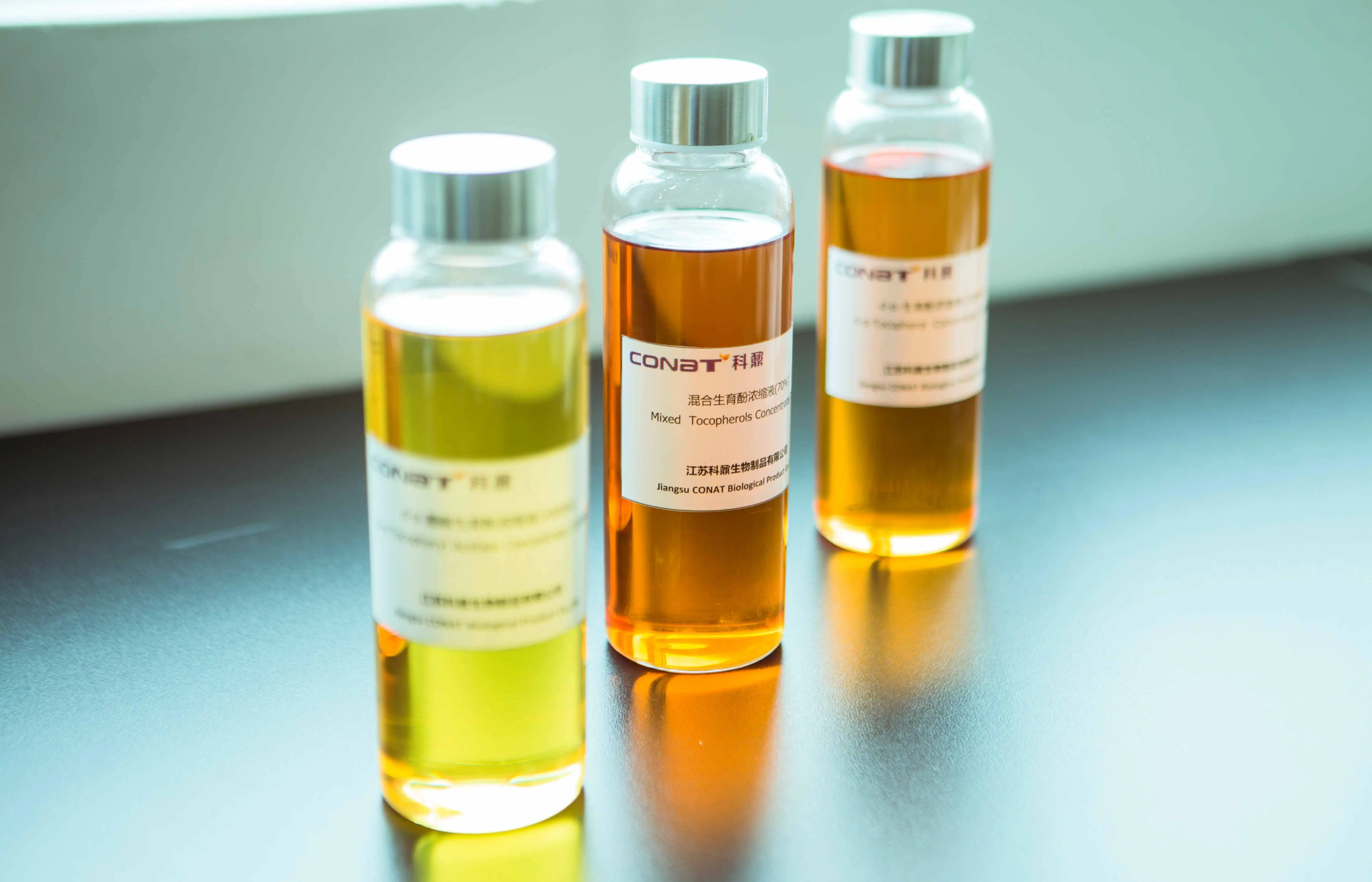
Advantages of Using Mixed Tocopherols Over Other Antioxidants in Feed
The better performance features of mixed tocopherols set them apart from other antioxidant options used in feed. When compared to single tocopherol forms or manufactured antioxidants, these compounds show big improvements in stability, effectiveness, and economic value.
Enhanced Antioxidant Spectrum
Mixed tocopherols protect against more free radicals than alpha-tocopherol alone. Multiple tocopherol isomers work together to make a stronger defense against different kinds of reactive processes. It has been shown that gamma and delta tocopherols defend polyunsaturated fatty acids very well, even though these acids are easily oxidized in feed formulations.
Cost-Effectiveness Analysis
Multiple economic studies have shown that mixed tocopherols antioxidant are more valuable than man-made antioxidants such as BHT or ethoxyquin. Cost savings can be seen for both feed makers and cattle farmers when feed has a longer shelf life, less waste, and better animal performance. The natural origin also lets the product stand out in markets that want clean-label feed ingredients.
Stability and Performance Metrics
Lab tests show that feeds made with mixed tocopherols keep their nutritional value for a long time, even when stored in different ways. The amounts of peroxide and free fatty acids are still much lower than in foods that were treated with other antioxidants. For businesses, this steadiness means less money lost on wasted food and food that animals still enjoy.
Procurement Considerations: Selecting and Sourcing Mixed Tocopherols Antioxidant
To successfully buy mixed tocopherols, you need to carefully consider a number of quality factors and the supplier's skills. Knowing about these important factors helps you make smart choices and makes sure that the product always works well in feed uses.
Quality Parameters and Specifications
Mixed tocopherols that are used in feed must meet certain cleanliness standards and have very few flaws that could affect the quality of the feed. Some important requirements are the amount of tocopherol, the amount of moisture, the acid value, and the lack of heavy metals or chemical leftovers. Certificates of Analysis should list these factors and prove that they are in line with the rules for feed additives.
Supplier Evaluation Criteria
Reliable providers show that they can consistently make mixed tocopherols antioxidant, follow quality control procedures, and follow the rules set by the government. GMP certification, traceability systems, and well-established quality control processes are all necessary skills. Audits of suppliers should check their production ability, technical help, and dedication to always making products better.
Documentation and Regulatory Requirements
Having the right paperwork makes the buying process go more smoothly and makes sure that regulations are followed in all places. Material Safety Data Sheets, product specifications, governmental approvals, and Certificates of Analysis that are unique to each batch are all important papers. For customs processing and import permit compliance, international packages need extra paperwork.
Practical Application and Dosage Guidelines in Feed Formulations
To successfully use mixed tocopherols in feed formulations, you need to know the best ways to apply them and how much to use. These rules give useful information to people who make feed and doctors who want to make antioxidants work better while keeping costs low.
Species-Specific Dosage Recommendations
The amounts that should be added depend on the type of animal, its stage of life, and the type of feed it is eating. For example, 100 to 200 mg/kg of mixed tocopherols should be added to feed for chickens, while 75 to 150 mg/kg should be added to feed for pigs. Because of the way ruminants digest food and their metabolic needs, they usually need smaller amounts. These doses provide enough antioxidant defense without going over the allowed limits or adding costs that aren't necessary.
Formulation Best Practices
Using the right mixing methods will make sure that the mixed tocopherols antioxidants are spread out evenly across all feed batches. Pre-blending with carriers or premixes makes it easier to handle and makes the spread more even. Temperature issues during feed processing keep the antioxidant activity of tocopherols from decreasing, so finished feeds still work well.
Performance Monitoring and Optimization
Regularly checking the quality of the feed helps get the most out of mixed tocopherol use and find ways to make things better. Measurements of peroxide value, sensory ratings, and data on animal behavior are all useful for making changes to the formulation. This method, which is based on data, makes sure that the antioxidant investment gets the best return while still meeting quality standards.
Conclusion
Mixed tocopherols antioxidant technology gives feed makers and animal experts a natural way to keep feed quality high and help animals stay healthy. These substances are great for current feed uses because they are cost-effective, have great antioxidant qualities, and are approved by regulators. For implementation to go smoothly, quality standards, supplier capabilities, and application rules must all be carefully thought through in order to get the most out of the system and make sure it works the same way in all production settings.
FAQ
Q1: Are mixed tocopherols safe for all livestock species?
Mixed tocopherols are usually thought to be safe for all major types of animals, such as chickens, pigs, cattle, and fish. They are safe to use as long as you follow the dosage limits set by the FDA, EFSA, and other organizations. Species-specific inclusion rates make sure that the benefits are maximized without any negative effects.
Q2: How do mixed tocopherols compare to synthetic vitamin E in feed applications?
It is because mixed tocopherols contain more tocopherol isomers than manufactured vitamin E, which makes them a better antioxidant. It is shown that the natural forms are more bioavailable and better protect against lipid breakdown in feed materials. When comparing costs, mixed tocopherols are often the better choice when looking at how stable the feed is generally and how well the animals do.
Q3: What factors should be considered when selecting a mixed tocopherols supplier?
Product quality certifications, manufacturing skills, legal compliance, expert support services, and the reliability of the supply chain are some of the most important things that go into the decision process. Suppliers should offer reasonable prices, provide detailed documentation, and keep product specs consistent. Long-term relationship possibility and a commitment to new ideas are also factors that go into choosing a supplier.
Where to buy mixed tocopherols antioxidant?
Feed makers who want natural, reliable antioxidant protection can get a lot out of CONAT's quality mixed tocopherols antioxidant solutions. Our skilled and knowledgeable staff is ready to help you with your recipe needs by providing technical support, reasonable prices, and consistent product quality. Email our experts at sales@conat.cn to talk about your unique needs and ask for examples of our products to test for compatibility. As an established and reliable mixed tocopherols antioxidant manufacturer, we offer detailed paperwork, legal support, and unique solutions that meet the strict needs of modern feed production. Find out how CONAT's natural vitamin E technology can help you make better feed and get better results from your animals.
References
1. Brigelius-Flohe, R., & Traber, M. G. (2018). Vitamin E: Function and metabolism in animal nutrition. Journal of Animal Science and Biotechnology, 9(1), 15-28.
2. Chen, K., Li, D., & Zhang, Y. (2019). Mixed tocopherols as natural antioxidants in animal feed: A comprehensive review. Animal Feed Science and Technology, 251, 45-62.
3. Johnson, S. P., Martinez, R., & Thompson, L. (2020). Comparative efficacy of natural and synthetic antioxidants in livestock nutrition. International Journal of Animal Nutrition, 12(3), 189-205.
4. Liu, X., Wang, H., & Anderson, P. (2021). Regulatory aspects and safety evaluation of mixed tocopherols in animal feed applications. Feed Additives and Nutrition, 8(2), 78-92.
5. Roberts, A., Smith, M., & Davis, J. (2019). Economic impact of antioxidant supplementation in commercial feed production. Agricultural Economics Review, 45(4), 312-328.
6. Zhang, L., Brown, K., & Wilson, T. (2022). Bioavailability and metabolism of mixed tocopherols in farm animals: Current understanding and future perspectives. Veterinary Medicine and Science, 18(1), 134-150.
YOU MAY LIKE