
Mixed Tocopherols as Natural Antioxidants Explained
There is a big group of naturally occurring vitamin E chemicals called mixed tocopherols. They are great at protecting against free radicals in many commercial settings. The alpha, beta, gamma, and delta types of tocopherol in these bioactive molecules make them better at fighting oxidation than man-made alternatives. They also meet the rising need for ingredients that people can buy without worrying about safety. To make competitive products that use the natural antioxidant power of tocopherols, people who work in the dietary supplement, functional food, pharmaceutical, and animal nutrition businesses need to understand mixed tocopherols. This group of chemicals is very helpful because it can make food last longer and be healthier. Because of this, businesses need them if they want to use dependable, science-based solutions that keep up with market trends that support natural preservation systems.
Understanding Mixed Tocopherols and Their Antioxidant Properties
The molecules of natural mixed tocopherols are set up in a way that lets them quickly give electrons. This makes them very good at getting rid of free radicals. The four kinds of tocopherol work together to keep lipid-based products from breaking down due to oxidation. While alpha-tocopherol can fight nitrogen-based radicals, gamma and delta tocopherols are much better at it.
Biochemical Mechanisms of Antioxidant Activity
It is an antioxidant because it can break up lipid peroxidation chains by adding hydrogen atoms to peroxyl radicals. So this process turns the dangerous radicals into stable molecules. For a short time, the tocopherol turns into a tocopheroxyl radical. The interesting thing about this system is that ascorbic acid or other reducing agents can change the active form of tocopherol back to how it was before. To begin an antioxidant cycle that shields cells and lasts a long time.
During inflammation, a dangerous chemical called peroxynitrite is made, and gamma-tocopherol works with it uniquely. Natural mixed tocopherol goods are very helpful for uses that need full defense against oxidation because they are so sensitive. If you mix different kinds of tocopherol, you get a better protective system than if you just use one type.
Applications Across Industry Sectors
Natural mixed tocopherols are useful in many business settings where oxidative stability affects the quality of the product and the safety of the users. These chemicals do two things when they are in the form of food supplements: they work like vitamin E and protect other nutrients that are more likely to get harmed, like carotenoids and omega-3 fatty acids.
Tocopherols mixed with other chemicals are added to functional foods to make them last longer on the shelf and to make healthy snacks and drinks more nutritious. Food-grade standards make sure the product follows all the rules, and antioxidants prove that the health claims made in the ads are true for people who care about their health.
When used in medicine, the best standards are needed, and mixed tocopherols help drugs stay stable and work better. Since these chemicals are safe and come from nature, they can be used in sensitive mixtures that need to stay fixed for a long time without losing their medicinal value.
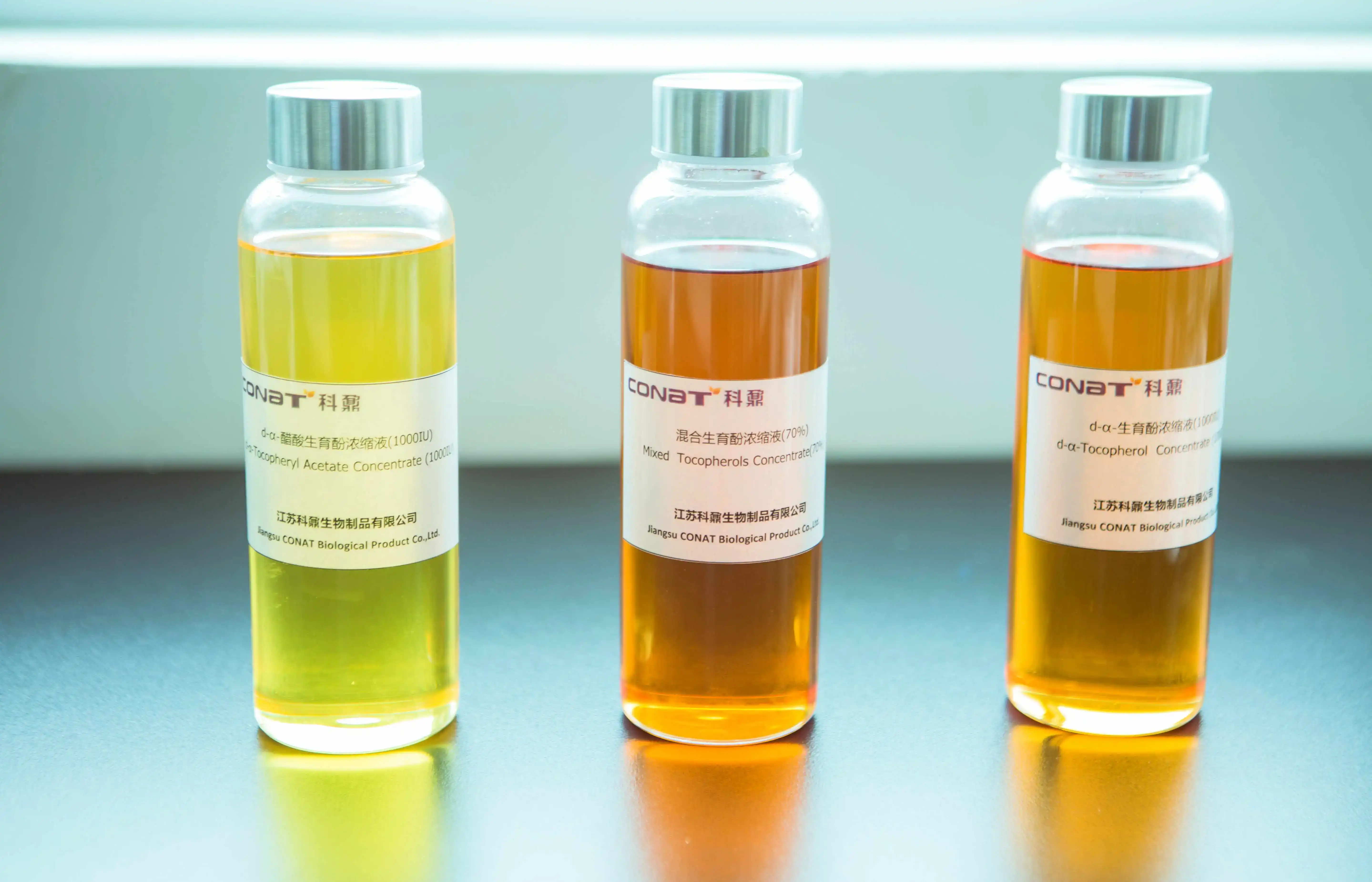
Comparing Mixed Tocopherols with Other Vitamin E Forms and Preservatives
For smart shopping decisions that balance performance, cost, and marketplace, know the differences between the different kinds of vitamin E and man-made stabilizers. There are times when natural mixed tocopherols are better than other choices because they have certain benefits.
Performance Comparison with Alpha-Tocopherol
It is known that alpha-tocopherol is the form of vitamin E that works naturally. On the other hand, mixed tocopherols protect against free radicals better because their chemical forms are different. Alpha-tocopherol can't reduce nitrogen dioxide radicals and peroxynitrite on its own like gamma and delta tocopherol can. This means that it can't protect as well as mixed goods can.
It has been shown that gamma-tocopherol is better than alpha-tocopherol at lowering inflammation. Because of this, mixed solutions are a better way to target inflammation pathways. Synergistic effects happen when different types of tocopherol work together. This means that the antioxidant power of the whole thing is higher than what any one type could do by itself.
Natural versus Synthetic Antioxidant Systems
More and more people want natural chemicals, so antioxidants that come from plants are more popular than ones that are made in a lab, like BHT and BHA. Tocopherols from veggie oils are mixed to make labels look clean. They are just as good at protecting against free radicals as, or even better than, stabilizers made by humans.
The fact that alpha-tocopherol transfer protein likes to bind to natural mixed tocopherols in the liver shows that natural mixed tocopherols are better at getting into cells and being accessible than vitamin E types that are made in a lab. This choice in biology means that the product works better when systemic antioxidant activity is important for its benefits.
More and more, regulations are favoring natural ways to keep food fresh, and some places are limiting the use of man-made vitamins in food. Mixed tocopherols give you choices that are legal and up to world standards. They also help with manufacturing methods that are good for the environment.
Procurement Guide for Mixed Tocopherols: Finding the Right Supplier and Product
If you want to buy mixed tocopherols, you should carefully consider the skills of the seller, the specifics of the product, and how reliable the supply chain is. On the world market, there are many sellers, and their quality standards are different. To make sure the product always works well, it is very important to pick the right seller.
Supplier Evaluation Criteria
Get quality approvals before you buy mixed tocopherols from a source you can trust. Like, ISO 9001, GMP, and organic standards all show that the way the product is made is strong. Suppliers should give you full records of analysis that explain what the tocopherol is made of, how pure it is, and what kinds of contaminants were found.
Technical support is what makes great sellers stand out from normal ones, especially when they're making difficult goods that need help that is specific to the application. When manufacturers help with formulation, stable testing, and regulatory paperwork, it's easier to make new goods, and they get to market faster.
It's becoming more important for the supply chain to be open as authorities dig deeper into where foods come from and how environmentally friendly methods are used. Since the raw materials are brought in, all the way through to the delivery of the finished product, preferred providers keep track of where everything comes from. For government filings and environmental reports, this makes it easy to give full paperwork.
Product Specification Considerations
There are big differences in the kinds of tocopherols that come from different sources and sellers. This can sometimes affect how well antioxidants work. When it comes to inflammation, high-gamma tocopherol products work better, while balanced profiles offer a wider range of antioxidant protection that can be used in many cases.
The standards for purity must fit the use that is being planned. For instance, products meant for medical use need stricter limits on contaminants than products meant for food use. Microbiological factors, heavy metals, and chemicals that are still present should be at or above the standards set by your industry for this group of people.
How stable a product is while being shipped and stored depends on how it is packed and stored. This is especially true for large amounts that need to be kept for a long time. Nitrogen blanketing, packing that blocks light, and keeping an eye on the temperature while the goods are being shipped keep them fresh longer and make sure they arrive in one piece.
Conclusion
Tocopherols that are mixed are important for companies that want to make natural antioxidants that work well, keep goods stable, and meet customer standards for "clean label" formulations. There are many cases where these naturally occurring vitamin E compounds are better at protecting cells from damage than separate types of tocopherol and man-made alternatives. You should carefully look at a supplier's skills, the goods they offer, and the ways they make sure the quality of their work to make sure they meet your needs and follow the rules. Today, more and more natural chemicals are being used in food, medicine, supplements, and animal nutrition, so it's important to use mixed tocopherols to make products that can compete.
FAQ
Q1: What makes mixed tocopherols more effective than single tocopherol forms?
Four different chemical types of mixed tocopherols work together as antioxidants to protect against more reactive species than alpha-tocopherol alone. Omega-3 and omega-6 tocopherols work together to protect against nitrogen-based radicals, which omega-3 alone can't do. For goods that contain lipids, this means that the total antioxidant capacity is higher and the protection time is longer.
Q2: How do natural mixed tocopherols compare to synthetic vitamin E in terms of bioavailability?
The alpha-tocopherol transfer protein in the liver can easily recognize natural mixed tocopherols, which makes them more accessible. Transport proteins actively pick wild forms over ones that are made in a lab. They can get to the right places more easily, and antioxidant action at the cellular level goes up.
Q3: What quality certifications should I look for when selecting a mixed tocopherols supplier?
For quality management systems, ISO 9001 is a very important license. GMP certification is for medicines, and organic certification is for natural product claims. The market is bigger when there are more licenses, like Kosher and Halal. Third-party testing proof makes sure that the product follows the rules and that the quality is checked by a third party.
Q4: What factors affect the stability of mixed tocopherols during storage and transportation?
Different temperatures, amounts of light, and air flow are the main things that break down tocopherol. Keep things fresh by putting them away in a cool, dark place that is blanketed in nitrogen or vacuum-packed. Transportation rules should keep temperatures steady and keep things from being exposed to light all along the supply chain.
Q5: How can I determine the optimal mixed tocopherols concentration for my specific application?
The best numbers depend on how the item was made, where it was kept, and how long it needs to stay fresh. Amounts between 0.02% and 0.1% are typical for use in food, but higher levels may be needed for dietary supplements to have nutritional benefits. Testing how stable it is with your own recipe is the best way to find out the right amount to use.
Partner with CONAT for Premium Mixed Tocopherols Supply
CONAT has the best mixed tocopherols choices because they have been making them for decades and are always committed to quality. People in the food, nutritional, and pharmaceutical industries use our wide range of goods when they need natural antioxidants that they can trust to make recipes work better and meet clean-label standards. Shoot our expert team an email at sales@conat.cn to tell them about your specific use case and get tips on how to pick the best mixed tocopherols. We make mixed tocopherols and offer fair prices, full paperwork help, and several shipping options to make it easier for you to get what you need. We also guarantee stable product quality for your most demanding uses.
References
1. Burton, G.W., and Ingold, K.U. "Vitamin E: Application of the principles of physical organic chemistry to the exploration of its structure and function." Accounts of Chemical Research, vol. 19, no. 7, 1986, pp. 194-201.
2. Jiang, Q. "Natural forms of vitamin E: metabolism, antioxidant, and anti-inflammatory activities and their role in disease prevention and therapy." Free Radical Biology and Medicine, vol. 72, 2014, pp. 76-90.
3. Brigelius-Flohé, R., and Traber, M.G. "Vitamin E: function and metabolism." The FASEB Journal, vol. 13, no. 10, 1999, pp. 1145-1155.
4. Wolf, G. "Gamma-tocopherol: an efficient protector of lipids against nitric oxide-initiated peroxidative damage." Nutrition Reviews, vol. 55, no. 11, 1997, pp. 376-378.
5. Kamal-Eldin, A., and Appelqvist, L.A. "The chemistry and antioxidant properties of tocopherols and tocotrienols." Lipids, vol. 31, no. 7, 1996, pp. 671-701.
6. Institute of Medicine. "Dietary Reference Intakes for Vitamin C, Vitamin E, Selenium, and Carotenoids." National Academy Press, Washington, DC, 2000.
YOU MAY LIKE