
Natural Tocopherols Benefits in Food and Cosmetics
Natural tocopherols represent a breakthrough in antioxidant technology, offering unparalleled protection for food and cosmetic formulations. These powerful vitamin E compounds deliver superior oxidative stability, extended shelf life, and enhanced consumer appeal across multiple industries. Through comprehensive research and application expertise, natural tocopherols have proven essential for manufacturers seeking premium ingredient solutions that meet both regulatory standards and market demands for clean-label products.
Understanding Natural Tocopherols and Their Benefits
Natural tocopherols are a big step forward in the field of antioxidants. They protect foods and cosmetics in ways that can't be beat. These strong vitamin E compounds offer better resistance to oxidation, longer shelf life, and higher customer appeal in several different businesses. Because they have been studied in depth and are easy to use, natural tocopherols are very important for companies that want to make high-quality ingredients that meet both government rules and consumer requests for clean-label goods.
There are four different types of natural tocopherols: alpha, beta, gamma, and delta. Each has its own protective qualities that change how products are made. When compared to synthetic options, these fat-soluble compounds, which are mostly produced from vegetable oils like soybean, sunflower, and palm, are very bioavailable.
Alpha-tocopherol is the most common type of tocopherol and is found in most food oils, especially almond, peanut, olive, and sunflower oils. It has the most biological activity of all tocopherol types. According to research, alpha-tocopherol has 100% relative antioxidant activity. This makes it the best ingredient for use in medicines and dietary products. This higher potency directly turns into better product effectiveness for companies making high-end formulas.
Canola, corn, and soybean oils often have higher amounts of gamma-tocopherol than alpha-tocopherol, which has its own benefits for certain uses. Studies show that gamma-tocopherol is very good at reducing inflammation, while delta-tocopherol is very good at being an antioxidant in vitro, even though it has less biological action. Because of these features, formulators can choose the best tocopherol levels for each product's needs and target market.
There are three naturally occurring tocotrienol homologues in palm oil: alpha, gamma, and delta. These provide extra antioxidant variety for specific recipes. Because of its unique structure, this product can offer full vitamin E protection while still using cost-effective sourcing methods. The combined benefits of tocopherols and tocotrienols make oxidative stability better than when only one ingredient is used.
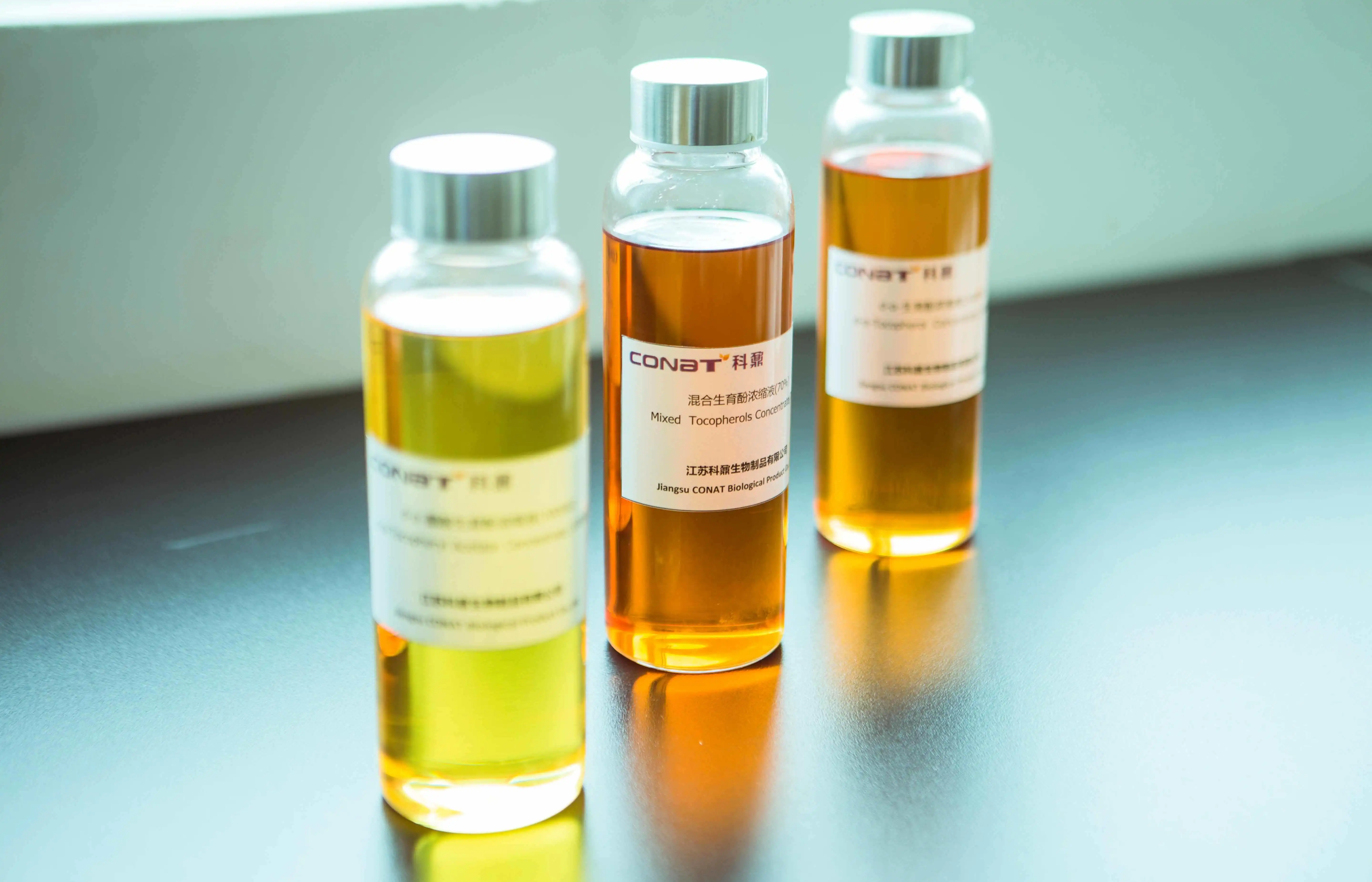
Natural Tocopherols vs Synthetic Vitamin E: What B2B Buyers Should Know
The main difference between natural and synthetic vitamin E is not just the shape of the molecules; it also includes bioavailability, legal compliance, and how consumers feel about the product, all of which have a direct effect on how well it does in the market.
The bioavailability of natural tocopherols is much better than that of manufactured ones. In clinical tests, absorption rates were higher than 36%. The higher bioactivity comes from the fact that there are different isomers of tocopherol that work together to create full antioxidant protection that manmade dl-alpha-tocopherol can't match. Better product performance and lower dose needs are good for manufacturing partners.
Natural vitamin E molecules can get organic, non-GMO, and clean-label labels, which are becoming more and more important to consumers when they are shopping. With these certificates, brands can charge higher prices while still meeting strict government rules, giving them a competitive edge in high-end markets. Natural tocopherols generally have a better paperwork trail than synthetic options and meet FDA, EFSA, and other foreign regulatory standards.
Consumer study shows that people always want natural chemicals. For example, 73% of people around the world actively look for goods that contain natural antioxidants. This movement has a big effect on the functional food and supplement industries, since natural tocopherols are great for marketing. Brands that use natural vitamin E can use "clean label" marketing to set their goods apart in markets that are getting more and more competitive.
Procurement Guide: Sourcing Natural Tocopherols for Food and Cosmetic Manufacturing
To make sure that products always work right and that companies follow the rules, good buying plans need to carefully look at what suppliers can do, how reliable their supply chains are, and what quality systems they use.
To meet the needs of a wide range of customers, major producers keep several certificates, such as ISO 9001, ISO 22000, GMP, Kosher, and Halal. These certificates show that you are committed to quality management systems and give you entry to global markets with different rules. Teams in charge of buying things should give more weight to sellers who have a lot of certifications and a history of audits.
Protocols for quality assurance must cover where to get raw materials, how to remove them, how to clean them, and how to test the finished product. Analytical skills should include HPLC analysis to check the amount of tocopherol, test for heavy metals, look for microbes, and do stable studies. Documentation packages should help with regulatory files and make it possible to track everything in the supply chain.
The price of natural tocopherol depends on how pure it is, what kind of tocopherol it is, and how much you order. Bulk buying usually starts with sales of at least 500 kg, and annual contracts that cover more than 5,000 kg can save you a lot of money. Long-term deals keep prices stable and protect suppliers, while also letting suppliers make the best use of production schedules and raw material purchases.
Price changes on the market show how much of a raw material is available, how much can be extracted, and how demand changes around the world. Tocopherol prices change with the seasons because of changes in the price of vegetable oil. This is why forward hiring methods are useful for budget planning. The total cost of ownership should be looked at by procurement teams. This includes freight, taxes, storage needs, and quality testing costs.
To keep the purity of the product while it's being shipped internationally, natural tocopherols need to be handled in a certain way. Temperature-controlled transportation, nitrogen packing, and the right paperwork make sure that the quality of the product gets from the factories that make it to the places where it is used. Established sellers keep global distribution networks with carefully placed warehouses to keep shipping costs and wait times as low as possible.
Diversifying your suppliers and plans for what to do in case of problems are important for the stability of your supply chain. Some ways to lower the risk of an event happening are to find and qualify multiple sources, keep safety stock levels high, and set up clear communication methods for supply updates. Regular checks and performance reviews of suppliers make sure that quality and service standards are always met.
Application Insights: Optimizing Use of Natural Tocopherols in Your Products
To use natural tocopherols strategically, you need to know how to optimize doses, make sure that formulations work well together, and think about stability so that you can get the best product performance at the lowest cost.
Depending on the purpose and oxidative problems, food makers usually use natural tocopherols at concentrations between 100 and 500 ppm. 200–300 ppm helps bakery goods keep enriched flours and nut-containing recipes from going bad. For beverage uses, 150–250 ppm is needed to protect delicate tastes and nutritional parts, while the product needs to last longer on the shelf.
Higher amounts are needed for oil and fat uses. For example, cooking oils and margarine products often need 500 to 800 ppm. Mixed tocopherols work better at protecting than single-isomer methods because they work together. This lets formulators get better stability while keeping ingredient costs low.
Natural tocopherols are used in cosmetics to protect against free radical damage and provide active ingredient advantages. Skin care products usually have tocopherol amounts of 0.1 to 1.0% to protect sensitive active ingredients and slow down the aging process. 0.05-0.5% amounts are used in hair care products to stop oxidative damage and make the goods more stable.
Studies on formulation compatibility show that both water-in-oil and oil-in-water emulsions are very stable when they are mixed correctly. Because of processing temperature limits, additions must be made below 60°C to keep their antioxidant action. For best tocopherol stability and effectiveness, formulas that are neutral to slightly acidic are preferred.
New studies show that natural tocopherols can be used in creative new ways in useful packaging, where their ability to move around helps protect packed goods for longer. Tocopherols are used in biodegradable films to improve their barrier qualities while still being environmentally friendly. These new ideas open up new market possibilities for producers who are willing to think outside the box.
Encapsulation technologies allow controlled release uses, which boost the effectiveness of tocopherol in tough formulation settings. Microencapsulation and nanoencapsulation keep tocopherols from breaking down and allow them to be delivered specifically to specific areas. These high-tech shipping methods come with higher prices and make products stand out more.
Conclusion
Natural tocopherols have a lot of benefits for companies that make food and cosmetics, and are looking for high-quality antioxidants that meet government standards and customer tastes. Natural vitamin E has a lot of benefits, including being more bioavailable, working with other nutrients to make them stronger, and not having any extra labels on it. Strategic relationships with qualified suppliers help keep product quality uniform while lowering costs and making the supply chain more reliable. As extraction methods and application innovations keep getting better, makers who want to use the health benefits of natural tocopherol will have more chances to do so.
Partner with CONAT for Premium Natural Tocopherols
As a top producer of natural tocopherols, CONAT gives food and cosmetic companies around the world the purest and most reliable products. Our advanced methods for extraction and cleaning make sure that the tocopherol profiles we produce are the best possible and meet the strict requirements of the industry while keeping our prices low.
We have been a seller of natural tocopherols for a long time and have all the necessary certifications, such as ISO 9001, GMP, and international food safety standards. Our expert team helps with formulation and application to get the best performance out of our products, and our global transportation network makes sure that they get delivered safely all over the world. Get in touch with sales@conat.cn to talk about your unique needs and ask for technical specs that are made to fit your applications.
References
1. Shahidi, F., & de Camargo, A. C. (2016). Tocopherols and tocotrienols in common and emerging dietary sources: Occurrence, applications, and health benefits. International Journal of Molecular Sciences, 17(10), 1745.
2. Lampi, A. M., & Kamal-Eldin, A. (1998). Effect of α-and γ-tocopherols on thermal polymerization of purified high-oleic sunflower oil. Journal of the American Oil Chemists' Society, 75(12), 1699-1703.
3. Sen, C. K., Khanna, S., & Roy, S. (2006). Tocotrienols: Vitamin E beyond tocopherols. Life Sciences, 78(18), 2088-2098.
4. Bramley, P. M., Elmadfa, I., Kafatos, A., Kelly, F. J., Manios, Y., Roxborough, H. E., & Wagner, K. H. (2000). Vitamin E. Journal of the Science of Food and Agriculture, 80(7), 913-938.
5. Munné-Bosch, S., & Alegre, L. (2002). The function of tocopherols and tocotrienols in plants. Critical Reviews in Plant Sciences, 21(1), 31-57.
6. Kamal-Eldin, A., & Appelqvist, L. Å. (1996). The chemistry and antioxidant properties of tocopherols and tocotrienols. Lipids, 31(7), 671-701.
YOU MAY LIKE