
Phytosterols: Extraction Methods, Analytical Techniques, and Biological Activity
Phytosterols are a new type of substance that comes from plants and has completely changed the nutraceutical and functional food businesses. There is a lot of promise for these beneficial molecules, especially when they are concentrated as Pure Phytosterol Particles, to help lower cholesterol and protect the heart. Manufacturers who want to make effective, science-based formulas that meet strict quality standards and legal requirements need to understand how they are extracted, how they are analyzed, and how they work biologically.
Understanding Pure Phytosterol Particles: Composition and Health Benefits
Pure Phytosterol Particles are mostly made up of sterols that come from plants. Their chemical structures are very similar to cholesterol's, but they have different physiological qualities that make them very useful for health purposes. Some of these substances are stigmasterol, campesterol, and beta-sitosterol. Each one adds a different bioactive property to mixtures.
Chemical Structure and Composition
Phytosterols have a basic structure that is similar to cholesterol's four rings, but they have side-chain changes that make them behave differently in living things. About 65–80% of phytosterol mixes are beta-sitosterol. It has an ethyl group at carbon-24 that makes it different from cholesterol's chemical structure. Because of this structural difference, phytosterols can compete with cholesterol for absorption in the intestines, which can lower cholesterol absorption by 30 to 50 percent if taken daily.
Campesterol and stigmasterol are two more beneficial compounds that are found in plants. Campesterol has stronger anti-inflammatory effects, while stigmasterol is a powerful antioxidant. When these acts work together, they have synergistic benefits that go beyond just lowering cholesterol. This gives makers the chance to make heart-healthy products.
Clinically Validated Health Benefits
Numerous studies have shown that taking phytosterol supplements, in amounts of 2 to 3 grams per day, lowers LDL cholesterol levels by 6 to 15 percent. The European Food Safety Authority agrees that plant sterols can lower cholesterol and allows health claims for goods that contain the minimum effective amounts. These government approvals give companies a strong scientific basis for how they sell and place their products.
In addition to their benefits for the heart, phytosterols may also help the immune system work better, reduce inflammation, and possibly even lower the risk of cancer by up to 20%, according to early statistical studies. These added benefits give companies the chance to make products that can help with a lot of different health problems.
Safety Considerations and Regulatory Framework
The safety ratings for phytosterols have been good in many clinical studies, with few side effects seen at the suggested doses. Phytosterols are generally thought to be safe by the FDA (GRAS), and they can be used in several different types of food in Europe as long as they follow certain labeling rules.
Manufacturers need to think about how Pure Phytosterol Particles might combine with fat-soluble vitamins, since they can make it harder for vitamins A, D, E, and K to be absorbed. Because of this, careful formulation methods are needed, and these vitamins are often added to keep the nutritional balance of the finished goods.
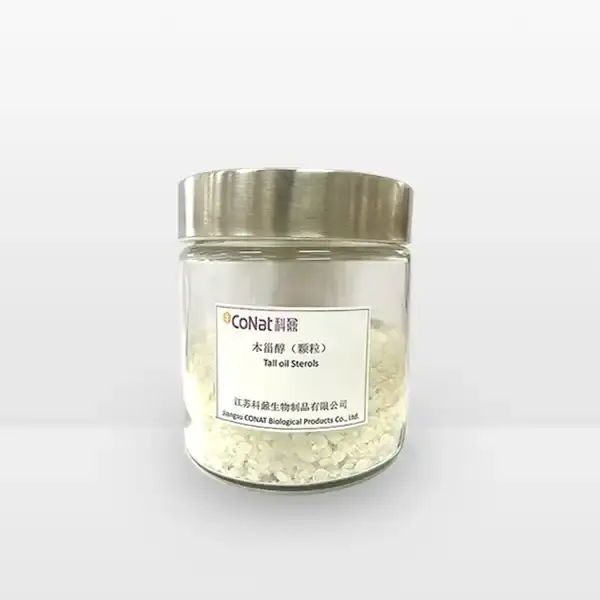
Extraction Methods for High-Purity Phytosterol Particles
Choosing the right extraction methods has a direct effect on the quality of the product, the yield, and the cost of production. Modern extraction methods are very different from older ones. They give you more control over the finished product's properties and can meet a wide range of industry needs.
Traditional Solvent Extraction Approaches
To separate phytosterols from plant products, traditional solvent extraction methods use organic solvents such as hexane, ethanol, or methanol. These methods usually get purity values of 70 to 85% while still being cost-effective for large-scale activities. Traditional ways, on the other hand, may not be able to reach the level of purity needed for medicinal use and may need extra steps of purification to meet strict quality standards.
Hexane extraction is still widely used because it dissolves lipids well and recovers sterols quickly. The process includes several rounds of extraction, followed by steps to remove the liquid and crystallize the phytosterol content. Even though this method is cost-effective, it needs careful tracking of liquid residues to make sure it follows food safety rules.
Advanced Supercritical CO2 Extraction
The best way to make high-purity phytosterol particles is to use supercritical carbon dioxide extraction. This technology gets purity levels above 95% and gets rid of liquid traces, which makes it perfect for use in pharmaceuticals and high-end nutraceuticals. The process works with controlled pressure and temperature, which allows the extraction selection to be changed precisely.
Carbon dioxide is non-toxic, recyclable, and doesn't leave behind any dangerous leftovers. This makes CO2 extraction good for the environment and in line with industry trends toward sustainability. The costs of running the business are still higher than with the old ways, but the better quality of the products and the benefits in terms of regulations usually make up for the extra money spent on high-end product lines.
Molecular Distillation and Chromatographic Techniques
By carefully controlling the temperature and pressure, molecular distillation is a very good way to clean things, and it can get phytosterol amounts above 98%. This method works especially well for getting rid of unwanted sterols and focusing on certain molecules, such as beta-sitosterol.
Separations using chromatography, like preparative HPLC and column chromatography, make it possible to separate individual phytosterol molecules for specific uses. When special sterol profiles are needed for study purposes or the creation of niche products, these methods can help.
Using more than one step to clean something lets companies make a range of products, from cheap bulk ingredients to very pure research-grade materials, to appeal to a wide range of price ranges and market groups.
Analytical Techniques for Quality Assurance of Phytosterol Particles
For Pure Phytosterol Particles quality assurance processes to work, they need complex testing methods to make sure the products are always the same, pure, and follow the rules. These methods give companies the information they need to decide which batches to release and to keep up with quality control programs.
Gas Chromatography Analysis Methods
For measuring and identifying phytosterols, gas chromatography with flame ionization detection (GC-FID) is the main diagnostic method used. Using this method, different sterol chemicals are separated based on how volatile they are, giving very accurate and thorough compositional profiles.
To make samples more volatile, they are derivatized, which is usually done with silylation reagents that change hydroxyl groups into trimethylsilyl ethers. The versions that were made have better chromatographic behavior and better detector response, which allows them to be quantified at low concentration levels.
Protocols for method validation set linearity ranges, detection limits, and accuracy factors that are needed for regulatory applications. The typical measurement limit for a single sterol is 0.1%, which allows for full impurity analysis and contamination monitoring.
High-Performance Liquid Chromatography Applications
HPLC methods work well with gas chromatography because they offer different ways to separate Pure Phytosterol Particles and make chemicals that are sensitive to heat more stable. Using C18 columns in reversed-phase HPLC systems makes it possible to get a good clarity of phytosterol mixtures, and evaporative light scattering detectors can find anything.
This method works especially well for studying phytosterols that have been esterified and keeping an eye on reactive breakdown products that might form during storage or processing. The main goal of method creation is to get the best mobile phase compositions and gradient programs so that key compound pairs can be separated at the baseline level.
Mass Spectrometry Identification
Mass spectrometry is a very accurate way to identify compounds and prove their structures. It helps with the development of new methods and characterizing unknown impurities. LC-MS devices use both chromatographic separation and mass spectral identification, which lets you measure and analyze structures at the same time.
The atmospheric pressure chemical ionization (APCI) method works really well for analyzing sterols because it creates unique molecular ions and diagnostic fragment patterns. These spectral libraries make it easier to move methods between labs and allow automated peak recognition.
Procurement Insights: Sourcing Pure Phytosterol Particles for Global B2B Clients
To get high-quality phytosterol particles, you need to carefully look at the skills, quality processes, and dependability of the suppliers you are working with. Different quality standards and complicated rules for foreign trade mean that suppliers need to be carefully chosen and relationships need to be managed on a regular basis.
Supplier Evaluation Criteria
Quality system approvals are basic signs of how reliable a provider is and how well they can make things. ISO 9001 certification shows that you know the basics of quality management. ISO 22000 or FSSC 22000 certification shows that you know the basics of food safety management, which is important for nutritional uses.
For pharmaceutical uses, following Good Manufacturing Practice (GMP) is very important. This means that manufacturing methods, quality control techniques, and change control systems must be carefully documented. Suppliers should give detailed quality agreements that include standards for tests, specs, and how to handle deviations.
Certificate of analysis paperwork shows what tests can be done and what quality standards are. Proof of identity, purity testing, heavy metals screening, bacterial testing, and liquid residue analysis should all be part of a full COA. The level of testing is often linked to how knowledgeable and committed to quality the provider is.
Cost-Quality Trade-Offs and Volume Considerations
Prices usually depend on how the materials were removed and how pure they are, with materials extracted using supercritical CO2 and pharmaceutical-grade goods costing more. When you make a volume promise, you can often get better prices, but you need to be very good at predicting demand to avoid stocking risks.
Bulk purchasing deals can cut unit costs by 15–25% while also protecting supplies during market changes. To make sure that the quality of the products is the same across multiple deliveries, these plans need strong quality agreements and the ability to check products as they come in.
Geographic sourcing considerations impact both cost structures and supply chain risk profiles. Logistics may be easier and wait times may be shorter with regional suppliers, while cost may be lower and product selection may be wider with global suppliers. Diversified sourcing methods help keep your business competitive while reducing the impact of supply outages.
Comparing Pure Phytosterol Particles: Choosing the Best Product for Your Needs
When choosing a product, you need to carefully look at its bioactivity profiles, how well it works with other ingredients, and what the target market wants. Pure Phytosterol Particles have different properties based on the source materials, extraction methods, and levels of processing, which makes it possible to match products more closely.
Bioactivity and Efficacy Comparisons
Beta-sitosterol is the main active ingredient in most products because it has the biggest effects on lowering cholesterol of all the phytosterols. However, mixed phytosterol products often have higher bioactivity because the different sterol molecules work together to make them more effective.
When it comes to lipid-rich forms, esterified phytosterols dissolve better in fat and are absorbed better, while free sterols work well in water-based systems and direct compression tablets. Which form to use depends on how you want to formulate it and how bioavailable you want it to be.
The spread of particle sizes has a big effect on how quickly they dissolve and how bioavailable they are. Micronized particles are better at absorption than standard grades. Manufacturers should think about particle size standards based on the needs of the product and the levels of effectiveness they want to reach.
Form Factor and Stability Considerations
Powders give you the most preparation options and are the most cost-effective for most uses. Encapsulated goods, on the other hand, are more stable and easier to use directly. When you specify powder, you should include its flow qualities, bulk density, and compaction traits that are important for the production process.
Stability testing shows how long Pure Phytosterol Particles should last in different store situations. If they are properly handled, they will stay effective for 24 to 36 months. Antioxidant systems may make things more stable in difficult formulas or when they are stored for a long time.
Packaging requirements vary based on moisture sensitivity and oxidation potential, with nitrogen cleaning and desiccant systems recommended for sensitive materials. Fiber drums, poly-lined cases, and special barrier films made for moisture-sensitive products are all types of bulk packing.
Conclusion
The phytosterol business keeps growing thanks to better ways to extract them, better ways to analyze them, and more scientific knowledge about how biological systems work. Pure Phytosterol Particles are an ingredient group that is stable but still changing. They have been shown to work and have strong regulatory backing. To do a good job of buying, you need to find a balance between quality needs and cost concerns, while also making sure that suppliers are reliable and following the rules. As the market for functional ingredients backed by science grows, phytosterols are still seen as important parts of cardiovascular health formulas used in nutraceuticals, functional foods, and medicines.
FAQ
Q1: What purity levels are achievable with modern extraction methods?
Molecular distillation and advanced supercritical CO2 extraction methods can get phytosterols that are more than 98% pure. Standard solvent extraction methods usually yield materials that are 70–85% pure. For some uses, chromatographic processing can separate individual molecules that are more than 99% pure.
Q2: How do regulatory requirements vary between different markets?
In the US, phytosterols are considered GRAS drugs, and there are set daily intake guidelines. Novel Food laws say that health claims must be backed up by specific evidence, and labels must follow certain rules in European markets. Asian markets have different needs. Japan and Australia have well-established ways to get things approved, while emerging markets are still building their legal systems.
Q3: What analytical methods are essential for quality control?
The main way to identify and measure phytosterols is to use gas chromatography with flame ionization detection. High-performance liquid chromatography can be used to look at both esterified forms and breakdown products. Mass spectrometry provides clear structural proof and helps identify impurities. Heavy metals, microbiological pollution, leftover liquids, and moisture content are some of the other things that are tested.
Partner with CONAT for Premium Pure Phytosterol Particles
For companies that make useful and nutraceutical foods all over the world, CONAT is a top provider of Pure Phytosterol Particles. Our cutting-edge extraction facilities use advanced supercritical CO2 technology and molecular distillation systems to make pharmaceutical-grade phytosterol particles with purity levels exceeding 95%. With complete ISO 9001, ISO 22000, and GMP certifications, we ensure consistent quality and regulatory compliance for global markets. Our skilled technical team helps with formulation and creates unique particle size specs to meet the needs of a wide range of applications. Get in touch with our experts at sales@conat.cn to talk about your unique needs and find out how our high-quality phytosterol ingredients can improve your product recipes while still meeting the highest quality standards.
References
1. Moreau, R.A., Whitaker, B.D., & Hicks, K.B. (2002). Phytosterols, phytostanols, and their conjugates in foods: structural diversity, quantitative analysis, and health-promoting uses. Progress in Lipid Research, 41(6), 457-500.
2. Piironen, V., Lindsay, D.G., Miettinen, T.A., Toivo, J., & Lampi, A.M. (2000). Plant sterols: biosynthesis, biological function and their importance to human nutrition. Journal of the Science of Food and Agriculture, 80(7), 939-966.
3. Abumweis, S.S., Barake, R., & Jones, P.J. (2008). Plant sterols/stanols as cholesterol lowering agents: A meta-analysis of randomized controlled trials. Food & Nutrition Research, 52, 1811-1825.
4. Bradford, P.G. & Awad, A.B. (2007). Phytosterols as anticancer compounds. Molecular Nutrition & Food Research, 51(2), 161-170.
5. Fernandes, P. & Cabral, J.M. (2007). Phytosterols: applications and recovery methods. Bioresource Technology, 98(12), 2335-2350.
6. Rozner, S. & Garti, N. (2006). The activity and absorption relationship of cholesterol and phytosterols. Colloids and Surfaces A: Physicochemical and Engineering Aspects, 282-283, 435-456.
YOU MAY LIKE