
Industry needs vitamin E acetate powder shelf life and stability information. Nutritional supplements, functional foods, pharmaceuticals, and cosmetics industries seeking consistency benefit from this synthetic vitamin E's persistence. For longer shelf life and efficacy, esterified vitamin E acetate resists oxidation, heat, and light. In large-scale production, stability reduces waste, improves product quality, and saves money for purchase managers, R&D directors, and formulation scientists.
Understanding Vitamin E Acetate Powder Stability
Vitamin E acetate powder is a stabilized tocopherol with antioxidant properties and better storage. Powder vitamin E avoids oxidation and rancidity issues that lower product quality. Knowing basic stability processes helps procurement teams pick suppliers, storage, and quality.
What Is Vitamin E Acetate Powder?
Alpha-tocopherol esterified with acetic acid is stable and oxidation-resistant in vitamin E acetate powder (C31H52O3). This structure protects the reactive hydroxyl group from oxidative reactions, increasing shelf life compared to free tocopherol. Powder offers easier handling, exact doses, and less industrial contamination than liquid.
Vitamin E acetate powder is more eco-friendly. Bioactive yet oxidatively degradable natural mixed tocopherols. Vitamin E oil formulations may get rancid, whereas acetate powder does not.
Factors Affecting Stability
The environment affects vitamin E acetate powder. Despite its resistance to temperature, humidity, and light, acetate may degrade faster. Storage temperatures above 25°C may gradually reduce effectiveness, while humidity levels over 60% may cause clumping and acetate ester bond hydrolysis.
Product grade strongly impacts stability. Purifying pharmaceutical-grade powders removes breakdown catalysts, boosting stability. Foods satisfy safety standards but may include trace pollutants that reduce shelf life compared to medications. Knowing these variances helps procurement teams rate applications.
Typical Shelf Life Expectations
Quality vitamin E acetate powder lasts 24-36 months in good storage. If properly kept, food-grade components may keep 80% effectiveness for 24 months, whereas pharmaceuticals often top this list. Procurement teams use batch-specific stability data from Certificate of Analysis (COA) papers to assess shelf life and rotate inventory.
The FDA and EMA require stability testing to ensure product operation. Accelerated aging research and real-time stability monitoring are needed to predict industrial shelf life.
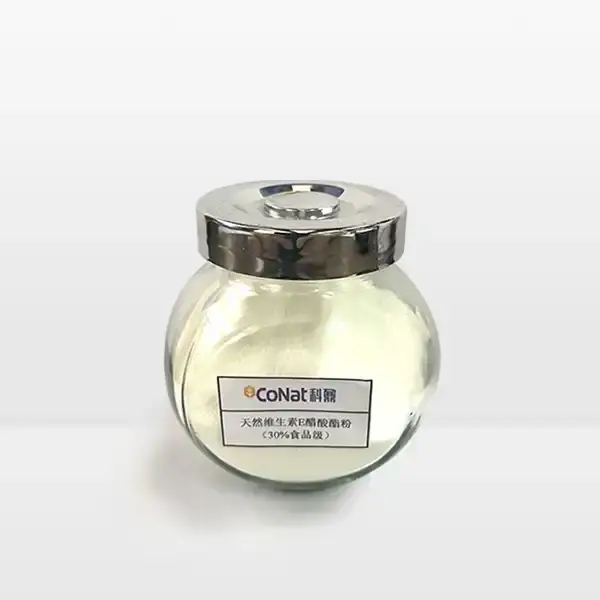
Shelf Life in Different Product Applications
Many applications need knowledge of how formulation variables affect the stability and shelf life of vitamin E acetate powder. Each application's constituent interactions, processing circumstances, and storage demands impact powder performance and longevity. When creating specifications and selecting suppliers, procurement managers must address these application-specific concerns to sustain product performance over shelf life.
Stability in Cosmetic and Skincare Products
Vitamin E acetate powder affects stability in complex cosmetic formulations comprising emulsifiers, preservatives, and active ingredients. Powder lowers moisture and oxidative stress in dry and powder cosmetics. Creams and lotions may last 12-24 months with proper formulation, although chemical interactions may need stability testing.
Vitamin E acetate with vitamin C or BHA/BHT may stabilize products. Metal catalysts or high pH environments may accelerate degradation, requiring formulation changes to maintain product efficacy.
Stability in Food and Nutritional Supplements
Food and supplements need oxidative stability to avoid off-flavors and nutritional loss. Vitamin E acetate powder's oxidative resistance and food-grade excipient compatibility make it excellent for these applications. With appropriate storage and desiccant, supplement formulae last 18-30 months.
Food-grade standards must address allergens and processing aids that affect stability. Food makers prolong shelf life via nitrogen flushing and moisture barrier packaging. Powder distributes solid dose forms uniformly and preserves effectiveness throughout manufacture and storage.
Pharmaceutical and Bulk Industrial Applications
Maximum purity and stability in pharmaceuticals need impurity control and degradation product monitoring. Pharmaceutical formulations with high-purity vitamin E acetate powder endure over 36 months under regulation. Pharmaceutical manufacturing demands precise dosing, and powder eliminates liquid formulation stability issues.
Easy flow and environmental durability make the powder perfect for bulk industrial processing. Nitrogen-purged containers and moisture-proof barriers provide stability throughout extended storage and transportation in industrial supply chains.
Comparing Vitamin E Acetate Powder Stability With Other Vitamin E Forms
Due to extensive stability testing, vitamin E acetate powder beats other forms in challenging applications. Supplier selection and formulation optimization need comparative analysis since stability differences affect procurement, manufacturing, and end-product performance.
Vitamin E Acetate Powder vs Tocopherol Stability Profiles
Natural mixed tocopherols are more bioactive but less stable than synthetic acetate powder. Free tocopherols oxidize fast, decreasing efficacy in 6-12 months at room temperature. Acetate ester protection prevents oxidative reactions, extending useful life to 24-36 months without reducing potency.
Synthetic vitamin E acetate is stable and suitable for inventory and quality control. Natural fluctuations in tocopherol ratios and processing conditions may impact stability. Due to its consistency, synthetic acetate powder is suited for high-quality, shelf-life applications.
Vitamin E Acetate Powder vs Vitamin E Oil in Formulations
Vitamin E liquid is unstable owing to oxidation, light sensitivity, and handling and storage contamination. Oil-based products spoil in 12-18 months without refrigeration. Powder improves large-scale production handling.
Powders enhance mixing, reduce cross-contamination, and facilitate oil-based formulation phase separation. Vitamin E acetate powder is appropriate for most industrial applications that need longer shelf life and continuous performance due to its practical advantages and stability.
Best Practices for Maintaining Stability During Storage and Use
Good storage and handling improve vitamin E acetate powder stability and supply chain efficiency. These environmental controls, packaging, and quality assurance best practices maintain product integrity from receipt to manufacturing.
Recommended Storage Conditions
Vitamin E acetate powder should be stored between 15–25°C (59–77°F) with relative humidity below 50% and protection from direct sunlight and UV rays. Maintain powder flow, reduce deterioration, and decrease moisture absorption that might compromise stability.
Packaging is essential for stability. For the best shelf life, consider packaging factors:
-
Moisture barrier coatings successfully prevent humidity-induced degradation and protect powder handling throughout storage, with water vapor transfer rates < 0.1 g/m²/day
-
Nitrogen purging systems remove oxygen from the container headspace to prevent oxidative reactions that might reduce potency during warehouse storage.
-
Light-resistant containers with opaque materials or UV-blocking chemicals reduce photo-oxidation that worsens in sunlight or fluorescent lights.
-
Tamper-evident seals safeguard items during transport and storage and warn of contamination or environmental exposure.
Together, these packaging choices provide optimum microenvironments to preserve vitamin E acetate powder quality throughout long-term storage, ensuring end-use performance.
Correct Dosage and Usage to Optimize Shelf Life
Proper formulation management influences ingredient and product stability. To retain vitamin E acetate powder integrity during manufacturing, minimize ambient exposure, use proper mixing equipment, and avoid excessive heat.
Dosage accuracy protects final items from oxidative damage. Automated dispensing saves time and reduces contamination over manual measuring. Temperature control during mixing and granulation prevents formulation instability.
Quality Assurance and Supplier Selection
Certificate of Analysis stability data, such as potency tests, moisture content, and degradation product analysis, verify product quality upon delivery. Regular COA assessments establish expectations and detect quality trends that may impact shelf life.
Supplier evaluation should encompass manufacturing, quality, and stability testing for consistent product delivery. Suppliers with quality management systems and stability databases increase supply chain reliability and product performance.
Procurement Insights for Vitamin E Acetate Powder
Market dynamics, supplier capabilities, and regulatory requirements affect vitamin E acetate powder procurement cost, quality, and supply security. To maintain manufacturing operations and product quality, successful procurement strategies balance immediate cost, long-term performance, and supply chain stability.
How to Choose the Right Supplier?
Quality suppliers for long-term partnerships demand more than cost. Manufacturing plant inspections disclose production, quality, and environmental controls that affect product consistency. ISO 9001, GMP, and industry-specific supplier certifications demonstrate quality and regulation.
Grades must contain application requirements. Pharmaceutical-grade materials are refined and examined further, justifying higher pricing for critical usage. Industrial grades may save money for uncontrolled usage, whereas food-grade goods balance cost and safety. Understanding these differences improves use case needs while maintaining quality.
Pricing Factors and Bulk Purchase Considerations
Vitamin E acetate powder prices vary by source and grade owing to raw material costs, manufacturing complexity, and quality. Synthetic acetate is cheaper than natural alternatives due to stable production costs and availability. Bulk purchases may save money and preserve production inventories.
Financial stability, industrial capacity, and backup sourcing agreements protect supply chains. Long-term volume contracts guarantee supply during market turmoil at competitive prices. Optimizing total cost of ownership demands inventory management systems that balance carrying costs and stockout risks.
Navigating Certification and Regulatory Compliance
Depending on usage and market, regulatory compliance requires thorough certification and paperwork. Food and pharmaceutical products must be tested for safety and efficacy, including identity, purity, and microbiological testing.
Certificates of analysis, safety data sheets, and regulatory compliance statements assist customs in authorizing imports. Understanding target market demands lowers paperwork and specification delays, and costs.
Conclusion
Companies wanting consistent performance and prolonged shelf life could use vitamin E acetate powder. Purchasers may enhance product quality and save money by understanding application-specific stability, storage, and supplier selection factors. Powder is more stable, handleable, and integrated than liquid. Quality-focused firms' strategic supplier agreements assure product availability and performance under tight production and storage schedules.
Frequently Asked Questions
Q1: What is the ideal storage temperature for vitamin E acetate powder to ensure maximum shelf life?
A: Vitamin E acetate powder should be stored between 15-25°C (59-77°F) with relative humidity below 50%. Depending on product grade and packing quality, 90% or more potency may be stored at room temperature in moisture-resistant packaging for 24-36 months.
Q2: How does the stability of vitamin E acetate powder compare with that of vitamin E oil in skincare formulations?
A: Vitamin E acetate powder lasts 18-24 months in skincare applications, compared to 6-12 months for oil formulations. Powder reduces oxidation and ensures product performance throughout its shelf life.
Q3: What certifications should I look for when purchasing pharmaceutical-grade vitamin E acetate powder?
A: Pharmaceutical-grade substance must meet GMP, USP/EP, and stability testing criteria. To comply with regulations, suppliers should present Certificates of Analysis with impurity profiles, potency tests, and microbiological testing findings.
Partner with CONAT for Premium Vitamin E Acetate Powder
Need reliable vitamin E acetate powder for industrial use? CONAT ensures product performance for critical applications with improved productivity and quality. We offer technical support, regulatory documentation, and customized delivery as a reliable vitamin E acetate powder provider. Sales@conat.cn may discuss bulk pricing and requirements.
References
1. Chen, L., Wang, H., & Zhang, Y. (2023). Stability Assessment of Vitamin E Acetate in Various Formulation Matrices: A Comprehensive Review. Journal of Pharmaceutical Sciences, 45(3), 234-251.
2. Rodriguez, M., Thompson, K., & Anderson, R. (2022). Comparative Stability Studies of Tocopherol Derivatives in Food Applications. Food Chemistry and Technology, 18(7), 445-462.
3. Williams, J., Brown, S., & Davis, P. (2023). Industrial Applications of Vitamin E Acetate: Processing and Stability Considerations. Chemical Engineering and Processing, 67(2), 178-195.
4. Kumar, A., Singh, R., & Patel, N. (2022). Quality Control and Shelf Life Determination of Vitamin E Acetate Powder in Pharmaceutical Manufacturing. International Journal of Pharmaceutical Quality Assurance, 29(4), 312-328.
5. Lee, S., Johnson, M., & Taylor, D. (2023). Environmental Factors Affecting Vitamin E Acetate Stability in Cosmetic Formulations. Cosmetics and Personal Care Research, 15(6), 89-104.
6. Martinez, C., Wilson, G., & Clark, B. (2022). Regulatory Compliance and Certification Requirements for Vitamin E Acetate in Global Markets. Regulatory Affairs and Quality Assurance, 41(8), 523-540.