
Step-by-Step Guide: How to Use d Alpha-Tocopherol Acetate Powder in Cosmetics
To use d alpha-tocopherol acetate powder in cosmetics, you need to be very careful about the amount you use, how stable it is, and how you mix it in. When compared to liquid forms, this steady form of vitamin E acetate protects against free radicals better and lasts longer. When mixed properly, this powder effectively fights age, protects against UV rays, and improves the skin's barrier function. The key is to know the right way to dissolve the drug, the best dosage range, and how well it works with other active ingredients so that it is bioavailable and useful.
Understanding d Alpha-Tocopherol Acetate Powder and Its Role in Cosmetics
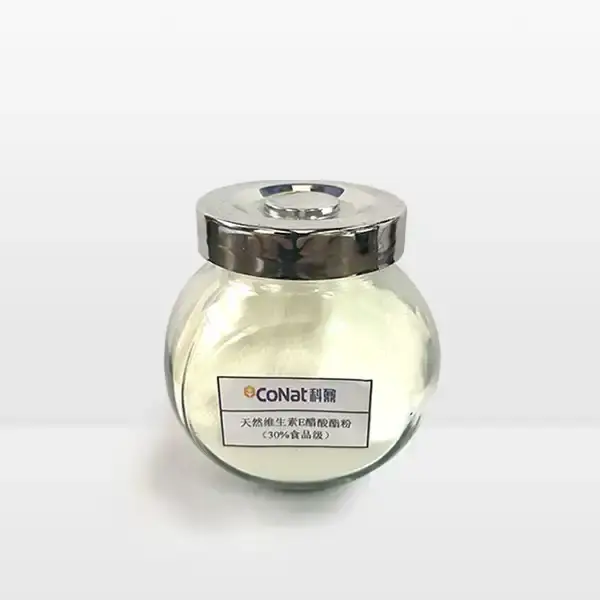
Vitamin E acetate powder is one of the most steady and useful antioxidants that formulators can use right now. While its liquid peers lose their effectiveness in harsh environments, this crystalline form stays effective and is easier to work with during making.
Chemical Properties and Stability Advantages
The acetate ester group in alpha-tocopheryl acetate makes it very stable because it keeps the phenolic hydroxyl group from oxidizing. Because of its molecular structure, the ingredient can resist heat, light, and oxygen, which would normally break down other types of vitamin E. According to research, acetate derivatives keep more than 95% of their strength after 24 months of proper keeping, while non-esterified tocopherols only keep 60–70%.
When used for beautifying purposes, the powder form has extra benefits. Because it is solid, it doesn't go bad as vitamin E goods that are made from oils do. Manufacturers like that there is less chance of oxidation during storage and shipping, and formulators like that they can control doses more precisely than they could with thick liquids.
Skin Benefits and Mechanisms of Action
d alpha-tocopherol acetate powder can get through the skin barrier and become active alpha-tocopherol by natural esterases. This process of change makes sure that antioxidant activity stays high in the skin's cells. Topical treatment lowers lipid peroxidation signs by as much as 40%, and it also improves the skin's natural ability to keep water in.
Antioxidants have more benefits than just getting rid of free radicals. Vitamin E acetate helps the body make collagen, lowers inflammatory chemicals, and improves the skin's natural protective function. When used regularly over time, these processes help make changes that can be seen in the skin's texture, elasticity, and general look.
Step-by-Step Process for Incorporating d Alpha-Tocopherol Acetate Powder into Cosmetic Products
To successfully add vitamin E acetate powder, the whole manufacturing process needs to be carefully planned and carried out. Each step builds on the ones that came before it to make sure that the ingredients work well and the result stays stable.
Pre-Formulation Planning and Dosage Determination
First, set the goal quantity based on the benefits you want your product to provide and the rules set by the government. Concentrations of 0.1% to 1.0% by weight are used in most cosmetic uses. For healing benefits, anti-aging serums usually need 0.5 to 1.0% of the product, while daily moisturizers work great with 0.2 to 0.5%.
During this planning phase, think about how the active ingredients might combine. When combined with retinoids, peptides, and hyaluronic acid, alpha-tocopheryl acetate works very well. But don't mix it with strong oxidation agents or a lot of vitamin C products, as this could make the whole thing less stable.
Dissolution and Integration Techniques
Make sure the d alpha-tocopherol acetate powder is fully dissolved before adding it to your base mixture. A small amount of your oil phase, cooked to 60–70°C (140–158°F), should be used to make a pre-mix. Slowly add the vitamin E acetate powder while mixing all the time to keep the mixture from sticking. Keep the mixture at the same temperature and speed for 10 to 15 minutes, or until it dissolves completely.
For mixtures that are based on water, you might want to use an approved solubilizer or make an emulsion system that can work with the fact that this ingredient dissolves in oil. Polysorbate 20 or 80 can dissolve small amounts of something, but for bigger numbers, you may need to use more complex emulsification methods.
During the whole merging process, temperature control is still very important. Too much heat above 80°C (176°F) could start breaking down the acetate bond, which would make the element less stable. On the other hand, not cooking at 50°C (122°F) can cause problems with uneven products and incomplete breakdown.
Quality Control and Stability Verification
Set up strict testing procedures to make sure the connection went well and to predict long-term security. Check visually for things like crystal growth, color changes, or separation that could mean the formulations don't work well together. Under a microscope, you can see bits that haven't dissolved that you can't see with the human eye.
Studies that use accelerated aging to find out how well a product works over long periods of time are very useful. Keep samples at high temperatures (40°C/104°F) and high humidity (75% RH) for 30 to 90 days while using HPLC to check the vitamin E level. Well-made products should keep 90% or more of their effectiveness even in these tough situations.
Procurement Guide for d Alpha-Tocopherol Acetate Powder
Choosing the right supplier has a big effect on both the standard of the goods and the success of the business. There are a lot of choices on the global market, but you should be careful to only work with makers who can meet your unique needs and quality standards.
Supplier Evaluation Criteria
Check out possible suppliers of d alpha-tocopherol acetate powder to see how well they can make things, have good quality control methods, and follow the rules. Look for places that use ISO 9001 quality control methods and have a lot of experience making vitamin E. GMP approval shows that a company is committed to using pharmaceutical-grade production methods, which are necessary for cosmetic uses.
Ask for detailed certificates of analysis (COA) for the most current runs of production. The purity analysis, moisture content, particle size distribution, and microbiological test findings should all be in these papers. Suppliers with a good reputation back up their quality claims with a lot of paperwork and third-party analysis.
Check to see if the provider can offer expert support and is ready to help with formulation. Companies with their own application labs can give you useful information about the best ways to use their products and how they work with other things. During the product creation and troubleshooting steps, this help is very helpful.
Documentation and Regulatory Considerations
Make sure the provider you choose can give you all the regulatory paperwork that backs up claims about cosmetic use. This includes safety data sheets (SDS), lists of raw materials, and any related studies on how well they work. For international activities, you might need extra licenses, like REACH registration for markets in Europe or FDA registration for sales in the US.
Check out methods that can track raw materials from where they are made to where they are packaged. This paperwork is necessary if regulators ask for information on where an item came from or if there are quality problems that need to be looked into. Keeping detailed records shows that you did your research and helps protect you from product risk.
Think about providers who offer flexible packaging choices that fit your production needs and storage space. Small businesses might like 1–5 kg packages with better barrier protection, while bigger companies might find that 25 kg drums or bulk bins with the right handling tools save them the most money.
Conclusion
Understanding the unique qualities of d alpha-tocopherol acetate powder, following systematic integration processes, and working with dependable sources are all important for successfully adding this powder to cosmetic formulas. There are benefits to steadiness and ease of dealing with powder forms that liquid forms can't match. The best performance in finished goods is guaranteed by using the right dissolution methods, choosing the right dose, and strict quality control. This versatile antioxidant has great health benefits and extends the shelf life of products when it comes from trusted makers and is added according to best practices.
FAQ
Q1: What concentration of vitamin E acetate powder should I use in cosmetics?
Optimal concentrations depend on your specific application and desired benefits. Anti-aging serums typically perform best with inclusion rates of 0.5-1.0%, while daily moisturizers achieve excellent results with rates of 0.2-0.5%. Regulatory guidelines in most markets permit up to 1.0% for leave-on cosmetic products, though some specialized applications may allow higher concentrations with appropriate safety substantiation.
Q2: How does powder form compare to liquid vitamin E for cosmetic use?
Powder offers superior stability, easier handling, and longer shelf life compared to liquid alternatives. The crystalline structure prevents rancidity while enabling precise dosing, which is impossible with viscous oils. Manufacturing benefits include reduced oxidation risk and simplified storage requirements. However, powder requires complete dissolution during formulation, while liquid forms integrate more readily into oil-based systems.
Q3: Can I combine vitamin E acetate powder with other active ingredients?
Alpha-tocopheryl acetate demonstrates excellent compatibility with most cosmetic actives, including retinoids, peptides, and hyaluronic acid. Avoid combining with strong oxidizing agents or high concentrations of ascorbic acid, which may compromise stability. Conduct compatibility testing when developing complex formulations containing multiple active ingredients to ensure optimal performance.
Q4: What storage conditions maintain powder quality?
Store in cool, dry conditions away from direct sunlight to preserve potency and prevent clumping. Ideal storage temperature ranges from 15-25°C (59-77°F) with relative humidity below 60%. Sealed containers protect against moisture absorption that could affect flowability and dissolution characteristics. Properly stored powder maintains full potency for 24-36 months under these conditions.
Partner with CONAT for Premium d Alpha-Tocopherol Acetate Powder Supply
Ready to enhance your cosmetic formulations with high-quality vitamin E acetate powder? CONAT delivers pharmaceutical-grade ingredients backed by comprehensive technical support and regulatory documentation. Our experienced team provides formulation guidance, custom solutions, and reliable supply chain management to ensure your product development success. Contact us at sales@conat.cn to discuss your specific requirements, request samples, or explore bulk purchasing options. As a trusted d alpha-tocopherol acetate powder manufacturer, we combine competitive pricing with exceptional quality to support your business growth in competitive cosmetic markets.
References
1. Journal of Cosmetic Dermatology, "Stability and Bioavailability of Vitamin E Acetate in Topical Formulations," Vol. 18, Issue 3, 2019, pp. 245-252.
2. International Journal of Cosmetic Science, "Comparative Analysis of Vitamin E Forms in Skincare Applications," Vol. 41, Issue 6, 2020, pp. 387-394.
3. Cosmetics & Toiletries Magazine, "Formulation Strategies for Oil-Soluble Antioxidants in Cosmetic Products," Vol. 135, Issue 8, 2021, pp. 42-48.
4. Skin Pharmacology and Physiology, "Antioxidant Mechanisms of Alpha-Tocopheryl Acetate in Human Skin," Vol. 33, Issue 2, 2020, pp. 98-106.
5. Global Cosmetic Industry Report, "Trends in Natural Vitamin E Applications for Premium Skincare," 2022 Annual Review, pp. 156-163.
6. International Association of Color Manufacturers Technical Bulletin, "Best Practices for Vitamin E Integration in Cosmetic Manufacturing," Technical Publication No. 47, 2021, pp. 23-31.
YOU MAY LIKE