
As a key nutrient in modern animal farming, natural vitamin E powder for feed stands out because it is more bioavailable and has better protective qualities than manufactured options. This feed-grade vitamin, which is mostly made up of d-alpha-tocopherol, is very important for keeping animals healthy and helping them reproduce. Feed makers, scientists, and buying workers who want to find the best animal nutrition solutions that meet government rules and give reliable results in a wide range of farming settings need to know about the product's technical specs and quality standards.
Overview of Natural Vitamin E Powder for Animal Feed
Natural vitamin E powder is one of the most important ingredients in high-quality animal feed because it has so many health benefits that fake versions just can't match. Because the main ingredient, d-alpha-tocopherol, has a lot more biological activity than its synthetic cousin, dl-alpha-tocopherol, feed makers choose it over the synthetic one.
Composition and Bioavailability Advantages
The natural form is about 36% more bioavailable in animal systems, which means that it is absorbed more quickly and used more efficiently at the cellular level. The reason for this better performance is that the stereochemical structure of natural vitamin E works perfectly with the way animals' bodies move nutrients around. According to research, animals that get natural vitamin E supplements have better muscle growth, better breeding success, and stronger immune systems than animals that get manufactured versions.
Regulatory Framework and Compliance Standards
Natural vitamin E powder that is used in animal feed has to meet strict international standards. These include FDA rules for animal feed chemicals and AAFCO (Association of American Feed Control Officials) guidelines. European markets need to follow EFSA (European Food Safety Authority) rules, and many places also need GMP (Good Manufacturing Practices) certification to make sure that quality and safety standards are always met.
Key Technical Specifications of Natural Vitamin E Powder for Feed
To keep batches consistent and get the nutritional results you want, you need to know the exact technical factors of vitamin E feed additives. These specs are used as standards to judge quality and make decisions about what to buy.
Concentration and Purity Metrics
Natural vitamin E powder for feed made for feed usually has between 500 and 1000 International Units (IU/g) of vitamin E, but the best types can have up to 1360 IU/g. For business use, the purity level usually goes above 95%, and the amount of total tocopherol is the best way to tell if something is good. Acceptable pollution levels are still less than 2%. This includes heavy metals, wetness, and other small contaminants that could hurt the quality of the feed or the health of the animals that eat it.
Physical Properties and Stability Characteristics
The range of particle sizes has a big effect on how regular the mixing is and how bioavailable the materials are. The best ranges are between 40 and 200 mesh. To make sure that the mixing is regular during the feed production process, the flowability properties must meet certain standards. The safety of the environment is also very important, because natural vitamin E powder needs to be kept away from light, air, and high temperatures that can weaken it over time.
Analytical Methods and Quality Verification
High-performance liquid chromatography (HPLC) is the usual way to check the amount of vitamin E in a sample because it accurately measures the amount of each tocopherol isomer. Titration methods are different ways to test for regular quality control, and spectrophotometric analysis lets you quickly check big batches to make sure that all production runs are the same.
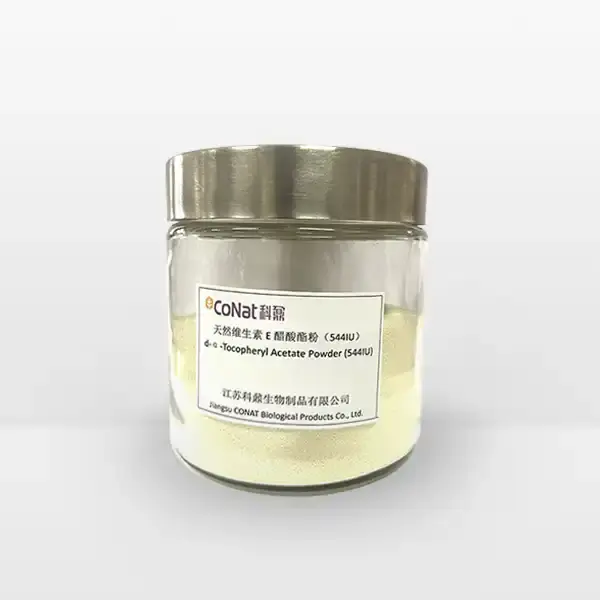
Quality Standards and Certifications Ensuring Safety and Efficacy
Comprehensive quality assurance programs use multiple levels of approval to make sure that products are safe, effective, and in line with regulations. These standards give feed makers trust, protect animal health, and help production run as smoothly as possible.
International Certification Requirements
ISO approval shows that a company follows quality management systems that are known and respected around the world. GMP compliance makes sure that the methods used in manufacturing meet standards for pharmaceuticals. More standards, like kosher and halal, make the market more accessible for a wider range of customers, especially in places where people have to follow certain food rules when it comes to animal goods.
Safety Standards and Contaminant Controls
Heavy metal pollution levels, such as lead, mercury, and cadmium levels, are closely watched by strict testing methods. These levels must stay below certain limits so that they don't build up in animal cells. Pathogenic organisms are checked for using microbiological testing, and mycotoxin screening checks for fungus pollution that could harm animal health and feed quality.
Storage and Shelf Life Management
For vitamin E to stay effective throughout the supply chain, it needs to be stored in a controlled setting with temperatures below 25°C and relative humidity below 60%. Photodegradation can't happen with light-resistant packing materials, and reactive degradation can't happen as much with nitrogen washing during packaging. In ideal conditions, natural vitamin E powder stays 90% effective for 24 months, which helps with managing stockpiles and planning purchases.
Comparative Analysis: Natural vs Synthetic Vitamin E Powder for Feed
Natural and manufactured vitamin E are not just different labels; they are also fundamentally different in chemical structure, biological action, and cost-effectiveness, all of which affect how well animals are fed.
Bioavailability and Physiological Impact
Studies over and over again show that natural vitamin E (RRR-α-tocopherol) is better at keeping tissues healthy than manmade vitamin E (all-rac-α-tocopherol). Better antioxidant defense, better immune function, and better reproduction success in animals are all results of this increased absorption. When animals are given natural vitamin E supplements, their muscle tissue, milk, and eggs contain more α-tocopherol. This makes food items that come from animals healthier.
Economic Considerations and Long-term Value
Natural vitamin E powder for feed costs more than manufactured versions, but the higher biological efficiency often makes up for the higher price through better feed conversion rates, lower medical costs, and better product quality. Feed formulators can get the same nutritional results with smaller amounts of natural vitamin E, which helps to balance out the higher unit cost while still providing better health benefits for animals.
Practical Application and Dosage Guidelines for Optimal Use
If you want to use natural vitamin E supplements successfully, you need to think about the needs of different species, changes in production stages, and external factors that affect how animals use vitamin E.
Species-Specific Dosage Recommendations
For poultry farms, 10 to 30 IU per kilogram of feed is usually enough. Higher amounts are suggested during times of heat stress or immunity challenge. Supplementing a pig's food with 15 to 40 IU/kg is good for them, especially during their sexual cycles and early growth stages. Cattle and dairy farms use 15 to 80 IU/kg, based on how much they need to produce and the quality of the grass. Aquaculture uses range a lot depending on the species, but most of the time they are between 50 and 200 IU/kg of feed.
Processing Considerations and Compatibility
To keep the vitamin E activity, feed preparation temperatures must stay below 80°C. This means that pelleting processes need to be closely watched. Compatibility with other feed ingredients is usually not a big deal, but iron and copper levels should be watched to make sure they don't speed up rusting. The right order of mixing steps makes sure that the materials are spread out evenly and that pro-oxidant minerals aren't exposed too much during the blending process.
About CONAT: Your Trusted Natural Vitamin E Powder Manufacturer
Biological Products Co., Ltd. is a specialist in making high-quality natural vitamin E powder and phytosterol products. They provide the feed business around the world with unwavering quality and technical know-how. Our wide range of study, production, and testing skills guarantees steady product quality that meets the strictest requirements.
Manufacturing Excellence and Quality Assurance
Advanced extraction and processing technologies are used in CONAT's production plants to precisely control the amount of vitamin E and the level of purity. Our technical team has decades of experience making natural vitamin E, so we can be sure that each batch is the same and that we follow all the rules for foreign markets. Modern testing labs use HPLC analysis and strict quality control methods to make sure that products meet their standards.
Customer Support and Technical Services
In addition to making products, CONAT offers a wide range of professional support, such as help with preparation, suggestions for use, and regulation issues. We want our customers to be successful, so we communicate quickly, offer a variety of packing choices, and handle our clients' supply chains in a way that supports their production plans and quality goals.
Conclusion
The high price of natural vitamin E powder for feed is justified by the fact that it is an important investment in animal diet because it is more bioavailable and has health benefits. Knowing the technical details, quality standards, and application rules helps feed makers make smart buying choices that improve animal performance and meet government standards. With the right application methods, the health and efficiency of animals can be improved significantly by using natural vitamin E instead of synthetic ones. Working with well-known companies like CONAT lets you get high-quality goods backed by technology know-how and dependable supply chain management.
Frequently Asked Questions
Q1: What is the optimal storage temperature for natural vitamin E powder?
A: Natural vitamin E powder should be stored at temperatures below 25°C in a cool, dry environment with relative humidity under 60%. Light-resistant packaging and protection from oxygen exposure are essential to maintain potency throughout the shelf life.
Q2: How does natural vitamin E improve animal immune function?
A: Natural vitamin E functions as a powerful antioxidant, protecting cell membranes from oxidative damage and supporting immune cell function. This enhanced protection leads to improved disease resistance, better vaccine responses, and reduced inflammatory stress in livestock.
Q3: Can natural and synthetic vitamin E be combined in feed formulations?
A: Yes, natural and synthetic vitamin E can be combined, though careful attention to total vitamin E levels is required to prevent over-supplementation. The superior bioavailability of natural vitamin E should be considered when calculating equivalent dosages.
Partner with CONAT for Premium Natural Vitamin E Solutions
CONAT is ready to help you make great feed by giving you high-quality Natural Vitamin E Powder for Feed that meets the strictest quality standards. Feed makers all over the world choose us as their natural vitamin E powder source because we offer a wide range of products, have expert technical knowledge, and are dedicated to making sure our customers are happy. You can talk about your unique needs, ask for product samples, or set up a professional meeting by emailing sales@conat.cn. Discover the difference that CONAT makes in the quality of natural vitamin E and customer service.
References
1. National Research Council. "Nutrient Requirements of Swine: Eleventh Revised Edition." Washington, DC: The National Academies Press, 2012.
2. Surai, Peter F. "Vitamin E in Avian Reproduction and Embryonic Development." Poultry Science Review, vol. 15, no. 2, 2004, pp. 133-165.
3. Weiss, William P., and Daniel J. Wyatt. "Effect of Oil Type and Fish Meal Addition on Vitamin E Concentration and Stability in Feeds." Journal of Dairy Science, vol. 83, no. 10, 2000, pp. 2281-2287.
4. Jensen, Craig, et al. "Vitamin E: Function and Effects of Deficiency in Fish Nutrition." Aquaculture Nutrition, vol. 5, no. 3, 1999, pp. 155-166.
5. McDowell, Lee Russell. "Vitamins in Animal and Human Nutrition, 2nd Edition." Iowa State University Press, 2000.
6. European Food Safety Authority. "Scientific Opinion on the Safety and Efficacy of Vitamin E (all-rac- or RRR-α-tocopheryl acetate and RRR-α-tocopherol) as a Feed Additive for All Animal Species." EFSA Journal, vol. 8, no. 6, 2010, pp. 1635-1652.