
Vitamin E Succinate Benefits for Immune Support
Vitamin E succinate is a new kind of vitamin E that works better than regular tocopherol forms to help the defense system. This unique substance is an ester derivative that is steady and improves bioavailability and antioxidant defense. This makes it more useful for B2B companies that want to make effective products for overall health. Vitamin E succinate is being used in more useful foods, dietary supplements, and pharmaceuticals because it has been shown to boost cell protection and immune function by making antioxidant processes better.
Understanding Vitamin E Succinate and Its Role in Immune Support
Vitamin E succinate is also a unique ester form of alpha-tocopherol that is much more stable than other types of vitamin E. When oxygen, heat, and light hit standard kinds of tocopherol, they can break down fast. What about the succinate ester? It does a great job of keeping oxidation away. Because it is more stable, it lasts longer and works better, which makes it a great choice for companies that make immune-boosting products.
Enhanced Bioavailability and Cellular Protection
Vitamin E succinate is easier for the body to receive and use because of the way its molecules are set up. Researchers have found that this form protects cells better than acetate esters because it goes deeper into cells. In order for vitamin E to work better, it needs to be able to get through cell walls. The succinate group helps it do this.
To help the immune system, vitamin E succinate's antioxidant power is very important. It gets rid of harmful free radicals that can hurt the function of immune cells. This keeps lymphocytes, neutrophils, and other important immune cells safe, so when they are exposed to oxidative stress, they can keep their shape and function.
Comparative Analysis with Other Vitamin E Forms
Buying teams can choose the right ingredients when they know the differences between the types of vitamin E. It is better than acetate and natural tocopherol types of vitamin E in several important ways. Vitamin E succinate powder is easy to work with when making supplements, and because it is stable, goods can stay fresh for longer without losing their usefulness.
Vitamin E esters come in different forms and are absorbed at different speeds. The acetate forms may be absorbed faster at first, but the succinate forms are more soluble over time. This quality is especially helpful for immune support uses, where antioxidant protection all the time is key to getting the best effects.
Key Benefits of Vitamin E Succinate for Immune Health
Vitamin E succinate strengthens the defense system because it is a strong antioxidant that protects cells. A study says that getting enough vitamin E is good for the immune system in many ways, such as by making more antibodies, T cells, and natural killer cells.
Antioxidant Protection and Immune Cell Support
The succinate form of vitamin E stops immune cell walls from breaking down, so they can keep working well even when they are under a lot of stress. Oxidative stress is high when you are sick, working out a lot, or in a tough environment. This protection is especially important to keep your immune system working at its best.
One more important benefit for immune health is that the substance can help immune cells talk to each other better. It keeps the health of cell walls in good shape so that different types of immune cells can communicate properly. This helps the immune system find invaders and work together better.
Anti-inflammatory Properties and Immune Balance
Vitamin E succinate is a strong anti-inflammatory that helps keep the nervous system healthy. It is also an antioxidant. Inflammation that lasts for a long time can weaken the immune system and cause a number of health issues. Vitamin E succinate's anti-inflammatory feature helps keep inflammatory reactions in check. This helps the defense system in the right way without doing too much harm.
Researchers have found that taking vitamin E succinate tablets can help keep the production of cytokines in check. There is less inflammation when you do this, which is good for your immune system in the short and long run. This smart method works especially well for people who want to keep their immune systems strong over time.
Practical Applications and Usage of Vitamin E Succinate in B2B Sectors
Vitamin E succinate is very adaptable, so it can be used in many B2B conditions. Its safety and absorption make it useful for all of these purposes. These uses help people who make things figure out how to make them best and find new customers.
Dietary Supplement and Nutraceutical Formulations
Health supplement companies are using vitamin E succinate more and more as an important part of goods that help the defense system. Because it is a powder, it is easy to add to pills, tablets, and powder mixes. Its stability also means that it works for the whole product. Vitamin C, zinc, and selenium are some other immune-boosting chemicals that work well with this one to make more total immune health goods.
The clean label attraction of vitamin E succinate fits with what people want these days: chemicals that are natural and easy to spot. This trait is very helpful for supplement companies that want to stand out in a crowded market while still making sure their products work well.
Functional Food and Beverage Applications
The consistency of vitamin E succinate is used by people who make functional foods to make foods that are healthier and keep their nutritional value even after being made and kept. We can heat it, and it doesn't change, so we can use it to process food in many ways, such as baking, pasteurizing, and sterilizing, which are all common ways that businesses make food.
Vitamin E succinate is liked by drink makers because it's easy to dissolve and doesn't change the taste of the drink. They can now make immune-boosting drinks that don't look or taste bad. Being stable in liquid form means that its usefulness stays the same from making it to using it.
Pharmaceutical and Medical Nutrition Development
Vitamin E succinate, made for medicinal use, is used in several therapeutic settings where immune support is an important part of the treatment plan. A lot of studies have shown that the compound is safe, so it can be used in regulatory applications and clinical research projects.
Pharmaceutical firms mix vitamin E succinate with other ingredients to help people whose immune systems aren't working well or who are under a lot of reactive stress. Bioavailability means that the ingredient is easy for the body to use. This makes it good for sensitive patients who need regular immunity support.
Purchasing Vitamin E Succinate: What B2B Buyers Need to Know
Make sure the seller is skilled, the product details are clear, and there are quality control steps in place before you buy vitamin E succinate. To make sure that supply chain relationships last and that product quality stays the same, it's important to know the key decision factors.
Quality Standards and Certification Requirements
Full quality control systems with GMP, ISO 9001, and ISO 22000 certifications are used by suppliers of high-quality vitamin E succinate. These permits make sure that the same steps are always used in the production process, that quality is strictly controlled, and that there is accurate information to meet all legal requirements in all markets.
Standards for quality are very important to B2B buyers. For instance, goods meant for use in medicine generally need to be purer than 98%. Analytical results should include full tests for heavy metals, microbiological toxins, and liquids that were left over to make sure the product is safe and follows the rules.
Supply Chain Reliability and Documentation
It is easy to keep track of the supply line from where the raw materials come from to where the finished product is brought when you buy from a reputable seller. This paperwork is very important for quality checks, regulatory records, and when buyers want to know where the ingredients come from and how they are mixed.
Supply chain openness is becoming more important as businesses try to learn more about ethical manufacturing standards and eco-friendly ways to buy goods. Many of the big companies are very open about their workplaces, how they treat the earth, and the good things they do for society.
Bulk Purchasing Considerations and Market Dynamics
Most of the time, when it comes to vitamin E succinate, larger orders get big price breaks, and companies that make it often offer good deals for yearly supply agreements. If you understand how the market works and how demand changes throughout the year, you can make smart choices about when to buy things and how to store your stock.
There are a lot of things to think about when sending things across foreign borders. For example, you need to know how to properly package temperature-sensitive items, what information you'll need to get through customs, and what the rules are for importing goods into each country. Experienced suppliers offer full shipping help to make sure that business deals between countries go smoothly.
Conclusion
This is the best choice for B2B companies that want to make immune-boosting products that work better, are more stable, accessible, and easy to make. As an antioxidant, it has been shown to lower inflammation and protect cells. This is why it is an important part of many modern immune health products. The substance can be found in healthy foods, dietary additives, and medicines. This gives manufacturers many choices for markets and helps them meet customer needs for more natural immunity support goods. You need to work with qualified suppliers who can offer consistent quality, clear papers, and ongoing expert help as the product is created and put on the market for it to go smoothly.
FAQ
Q1: What are the side effects of vitamin E succinate?
Vitamin E succinate generally demonstrates excellent safety when used within recommended dosage ranges. Supplements don't bother most people when they take normal amounts of them. But if you are sensitive, too much may make your stomach hurt, give you headaches, or make you more likely to bleed. Following the rules for the right amount and talking to medical professionals can help ease any fears that may come up.
Q2: What is the difference between vitamin E succinate and acetate forms?
Succinate and acetate are different from each other in how solid they are, how well they absorb, and how they feel. When left out in the open air, acetate forms stay watery, while succinate forms stay rigid as a powder. Research shows that acetate may be taken more quickly at first, but succinate is more bioavailable over time, which makes it a better choice for immunity support.
Q3: Is it safe to take vitamin E succinate supplements daily?
Vitamin E succinate taken every day in amounts that are safe for most people is safe to do. For good health, adults should take between 22.4 and 32.4 IU of this drug every day. If you are getting medical help, you may need bigger amounts for therapeutic reasons. 1,000 mg (1,500 IU) of vitamin E is the most that can be taken every day without harm. Standard plans for taking supplements have a lot of room for mistakes because of this.
Q4: What form of vitamin E provides the best bioavailability?
The body can easily use this type of vitamin E succinate, which is great for long-term defense support. It's easy for the body to absorb alpha-tocopherol, but succinate forms stay in the tissues longer and keep the amounts fixed. What makes the difference between the forms is what the application needs. It is very helpful to use succinate in recipes that need to stay steady over time and still be bioavailable.
Partner with CONAT for Premium Vitamin E Succinate Supply
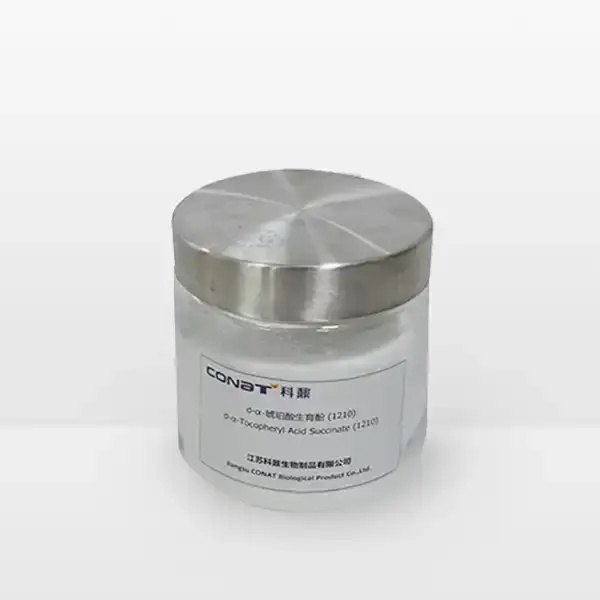
CONAT can help you with all of your health product needs because it is one of the biggest companies that makes vitamin E succinate. Vitamin E succinate powder, which is safe for use in medicine, is very steady and can be used in many ways. It also lives up to the highest quality standards. You can talk to our expert team about your specific needs, get full product specs, or ask if they can make a formula just for you by emailing sales@conat.cn. Companies that make supplements, market drugs, and market drugs should be qualified to join our network of trusted partners. They will be able to use our knowledge that has been tested, our reliable supply chain, and our commitment to making new natural vitamin E goods.
References
1. Traber, M.G. "Vitamin E Regulatory Mechanisms." Annual Review of Nutrition, vol. 27, 2007, pp. 347-362.
2. Lewis, E.D., et al. "Regulatory Role of Vitamin E in the Immune System and Inflammation." IUBMB Life, vol. 71, no. 4, 2019, pp. 487-494.
3. Mocchegiani, E., and Malavolta, M. "Role of Zinc and Selenium in Oxidative Stress and Immunosenescence: Implications for Healthy Aging and Longevity." Age, vol. 30, no. 2-3, 2008, pp. 147-157.
4. Meydani, S.N., et al. "Vitamin E Supplementation and In Vivo Immune Response in Healthy Elderly Subjects." Journal of the American Medical Association, vol. 277, no. 17, 1997, pp. 1380-1386.
5. Wu, D., and Meydani, S.N. "Age-associated Changes in Immune and Inflammatory Responses: Impact of Vitamin E Intervention." Journal of Leukocyte Biology, vol. 84, no. 4, 2008, pp. 900-914.
6. Brigelius-Flohé, R., and Traber, M.G. "Vitamin E: Function and Metabolism." The FASEB Journal, vol. 13, no. 10, 1999, pp. 1145-1155.
YOU MAY LIKE