
Vitamin E Succinate is a new antioxidant supplement that is more stable and accessible than other vitamin E types. This full guide talks about technical standards, industrial uses, and purchasing methods for makers who want very pure vitamin E succinate. In the pharmaceutical, nutraceutical, and functional food industries, as long as you stay within the law, knowing the right dosage, quality certifications, and how to judge suppliers helps you make smart buying choices that improve the effectiveness of the products.
Understanding Vitamin E Succinate: Chemical Properties and Advantages
Currently, D-alpha-tocopheryl acid succinate is the most effective and stable form of vitamin E that you can get. Because of its unique chemical makeup, this man-made version is easier for cells to take in than normal tocopherols. As vitamin E is made and kept, the succinate ester connection keeps the molecule from oxidizing.
Vitamin E succinate is a very strong antioxidant that studies have shown helps the heart and nervous system. It's three times more stable than natural tocopherols, so it's great for mixes that are sensitive to heat. The molecule stays strong over a wide range of pH levels, from acidic drinks to alkaline supplement materials.
Bioavailability tests show that this kind of vitamin E is taken more easily than regular alpha-tocopherol acetate. Vitamin E succinate is turned into active tocopherol more quickly in the body, which raises bloodstream levels. This leads to better healing results with less medicine.
Vitamin E succinate can reduce inflammation by changing how nuclear factor-kappa B works and how prostaglandins are made. Clinical data show that it works to lower oxidative stress indicators and protect the brain from free radical damage.
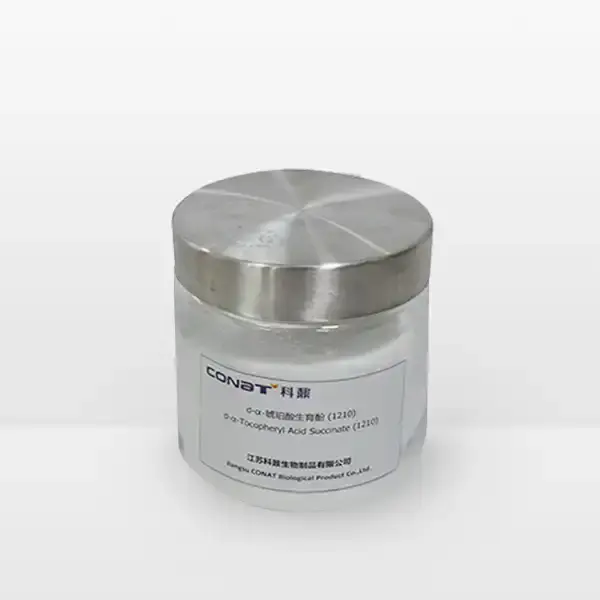
Technical Specifications and Quality Standards
To be pharmaceutical-grade, vitamin E succinate must meet all of the requirements set out in the USP monograph. Purity levels must be higher than 97% and have very few impurities. The total amount of heavy metals should be less than 10 ppm, with separate limitations for lead, mercury, cadmium, and arsenic.
Microbiological requirements say that total aerobic counts must be less than 1000 CFU/g and that there must be no harmful organisms like Salmonella, E. coli, or Staphylococcus aureus. For medicinal uses, the number of yeast and mold cells must not be more than 100 CFU/g.
The size of the particles in tablet formulations impacts how quickly they dissolve and how well they work in the body. Standard mesh sizes are between 40 and 80 mesh, however you can get custom sizes for unique uses. The bulk density usually falls between 0.4 and 0.6 g/mL, which affects how things need to be packaged and handled.
Moisture content guidelines say that levels must be less than 0.5% to keep things stable and stop them from breaking down. To keep the antioxidant effect, peroxide levels must be below 5 meq O2/kg. These factors have a direct effect on how long a product will last and how well it will work.
The certificate of analysis should have full spectroscopic identification utilizing HPLC, IR, and UV procedures. Reports on batch-to-batch consistency show that there are controls and quality assurance procedures in place for manufacturing.
Industrial Applications Across Multiple Sectors
Vitamin E succinate is used by nutraceutical companies to make high-end antioxidant products for the skin health and anti-aging industries. Because the component is stable, it can be added to softgel capsules, tablets, and powder blends without worrying about it breaking down.
- Vitamin E succinate's heat stability during pasteurization processes is helpful for functional beverage applications. This version keeps its potency during thermal processing, which makes it more appealing to health-conscious consumers than natural tocopherols.
- Pharmaceutical companies use vitamin E succinate in cancer studies because it has special qualities that cause cells to die. Clinical investigations examine its potential in cancer therapy support, necessitating pharmaceutical-grade purity and adherence to GMP standards.
- Topical cosmetics take advantage of vitamin E succinate's ability to penetrate the skin better than other vitamins. The chemical protects against oxidative damage caused by UV rays and helps the body make collagen.
- Vitamin E succinate is added to recovery products by sports nutrition companies to help with oxidative damage caused by exercise. The improved bioavailability helps muscles heal faster and lowers signs of muscular inflammation.
- Vitamin E succinate is a high-quality antioxidant that is used in pet supplements and cattle feed in animal nutrition applications. Its stability profile makes sure that the potency stays the same even after long periods of storage.
Quality Certifications and Regulatory Compliance
ISO 9001:2015 accreditation guarantees that all manufacturing processes have complete quality management systems in place. This standard includes design controls, supplier qualification, and processes for continuous improvement that are necessary for keeping product quality consistent.
- The FDA's 21 CFR Part 111 rules for good manufacturing practices (GMP) oversee the making of nutraceuticals. Facility inspections check that the right processes are being followed for handling, controlling contamination, and keeping records of batches.
- Kosher and Halal certifications make it easier for vitamin E succinate products to reach more customers. To avoid cross-contamination, these religious dietary certifications require particular handling procedures and separate production lines.
- FAMI-QS certification is for animal nutrition applications. It makes sure that feed is safe and can be traced throughout the supply chain. This standard talks about how to do hazard assessments, how to approve suppliers, and how to stop contamination.
- USP verification procedures give another layer of quality control for pharmaceutical applications. Independent testing checks that claims about identity, purity, and potency are true and that they meet compendial requirements.
There are organic certification possibilities for vitamin E succinate derivatives that come from plants. The USDA Organic and EU Organic standards say that you need to keep records of the resources you use and how you process them.
Procurement Strategies and Supplier Evaluation
- The first step in supplier certification is a full audit of the facility to look at its manufacturing capabilities, quality processes, and history of following rules. Site visits show how things are really made and how to keep contamination under control.
- A supply chain stability evaluation looks at how to get raw materials, how to manage inventory, and how to work with backup suppliers. Using multiple sources lowers the risk of relying on one source too much while making sure that the product is always available.
- The ability to give technical help sets premium suppliers apart from commodity providers. Having access to formulation experts, stability data, and regulatory documents speeds up the process of developing new products.
- When negotiating prices, you should think about the whole cost of ownership, not just the unit price. For important applications, high prices are justified by quality consistency, reliable delivery, and the value of technical support.
- Accelerated stability testing, compatibility investigations, and analytical verification are all examples of sample evaluation techniques. Before making big purchases, these tests make sure that the statements made by suppliers are true.
- Long-term cooperation agreements keep prices stable and make sure that there is always enough supply for high-volume uses. Volume commitments often get you better prices and priority when there aren't enough supplies.
Formulation Considerations and Dosage Guidelines
- Finding the right dose relies on the target application and the desired therapeutic effects. Most nutraceuticals have 100 to 400 IU per serving, however some specialized uses may need larger amounts.
- Compatibility testing shows how the active substances, excipients, and packaging materials could interact with one other. Iron salts, certain minerals, and molecules that are sensitive to light are some things that don't go well together.
- Some ways to make things more stable are choosing the right excipients, controlling moisture, and using protective packaging technologies. Antioxidant synergists like ascorbyl palmitate can help difficult formulations last longer on the shelf.
- Strategies for improving bioavailability include delivery systems based on lipids, smaller particles, and absorption enhancers. These methods make the most of the medicine's effectiveness while cutting down on the amount needed.
- When it comes to the manufacturing process, temperature sensitivity, mixing sequence, and equipment compatibility are all important. Following the right steps while handling things stops them from breaking down during production and packaging.
- Developing analytical methods makes sure that potency is measured correctly over the whole shelf life of a product. HPLC procedures give you the accuracy and sensitivity you need for quality control testing.
Market Trends and Future Developments
- The need for natural antioxidants in vitamin E succinate applications pushes companies to come up with new uses for the vitamin. Clean-label formulations focus on naturally derived sources while keeping stability profiles that are better than those of other products.
- Trends in personalized nutrition make it possible to adjust vitamin E succinate doses depending on a person's genetic makeup and biomarkers. Precision dosage gives you the most therapeutic advantages while causing the least amount of negative effects.
- Nanotechnology applications improve the distribution of vitamin E succinate by making it more soluble and using controlled release mechanisms. Nanoencapsulation methods keep the active substance safe and manage how quickly it is absorbed.
- Research on combination therapy looks at how it works with other antioxidants, omega-3 fatty acids, and phytochemicals to make things work better. These multi-ingredient formulations are made to help with complicated health problems that need a lot of antioxidant assistance.
- Sustainable sourcing programs focus on using raw materials that can be replaced and making things in ways that are good for the environment. Green chemistry methods lower the environmental impact of products while keeping their quality high.
- Advanced analytical techniques let us learn more about how vitamin E succinate is broken down and how to make biomarkers. These insights help with optimizing formulations and designing clinical studies.
Conclusion
Vitamin E succinate represents the pinnacle of antioxidant supplementation technology, offering unmatched stability, bioavailability, and therapeutic potential. Successful procurement requires careful evaluation of technical specifications, quality certifications, and supplier capabilities. Understanding application-specific requirements enables optimal formulation decisions that maximize product efficacy while ensuring regulatory compliance. The evolving landscape of personalized nutrition and sustainable manufacturing creates exciting opportunities for innovative vitamin E succinate applications across diverse industries.
Partner with CONAT for Premium Vitamin E Succinate Solutions
CONAT delivers pharmaceutical-grade vitamin E succinate backed by decades of expertise in natural antioxidant manufacturing. Our comprehensive quality systems ensure consistent purity, potency, and regulatory compliance for demanding applications. As a trusted vitamin E succinate supplier, we provide complete technical support, from formulation guidance to stability testing, helping you achieve superior product performance. Contact us at sales@conat.cn to discuss your specific requirements.
References
1. Journal of Nutritional Biochemistry: "Comparative bioavailability and antioxidant properties of vitamin E succinate versus conventional tocopherols in human plasma studies" (2023)
2. International Journal of Pharmaceutics: "Stability assessment and formulation optimization of vitamin E succinate in pharmaceutical dosage forms" (2022)
3. Food Chemistry: "Industrial applications and quality specifications for vitamin E succinate in functional food manufacturing" (2023)
4. Antioxidants & Redox Signaling: "Mechanisms of vitamin E succinate bioactivity and cellular uptake pathways in human tissues" (2022)
5. Pharmaceutical Research: "Regulatory compliance and quality assurance protocols for vitamin E succinate manufacturing in pharmaceutical applications" (2023)
6. Nutrition Reviews: "Clinical efficacy and safety profile of vitamin E succinate supplementation across diverse population groups" (2022)