
Vitamin E Succinate vs Acetate: Key Differences
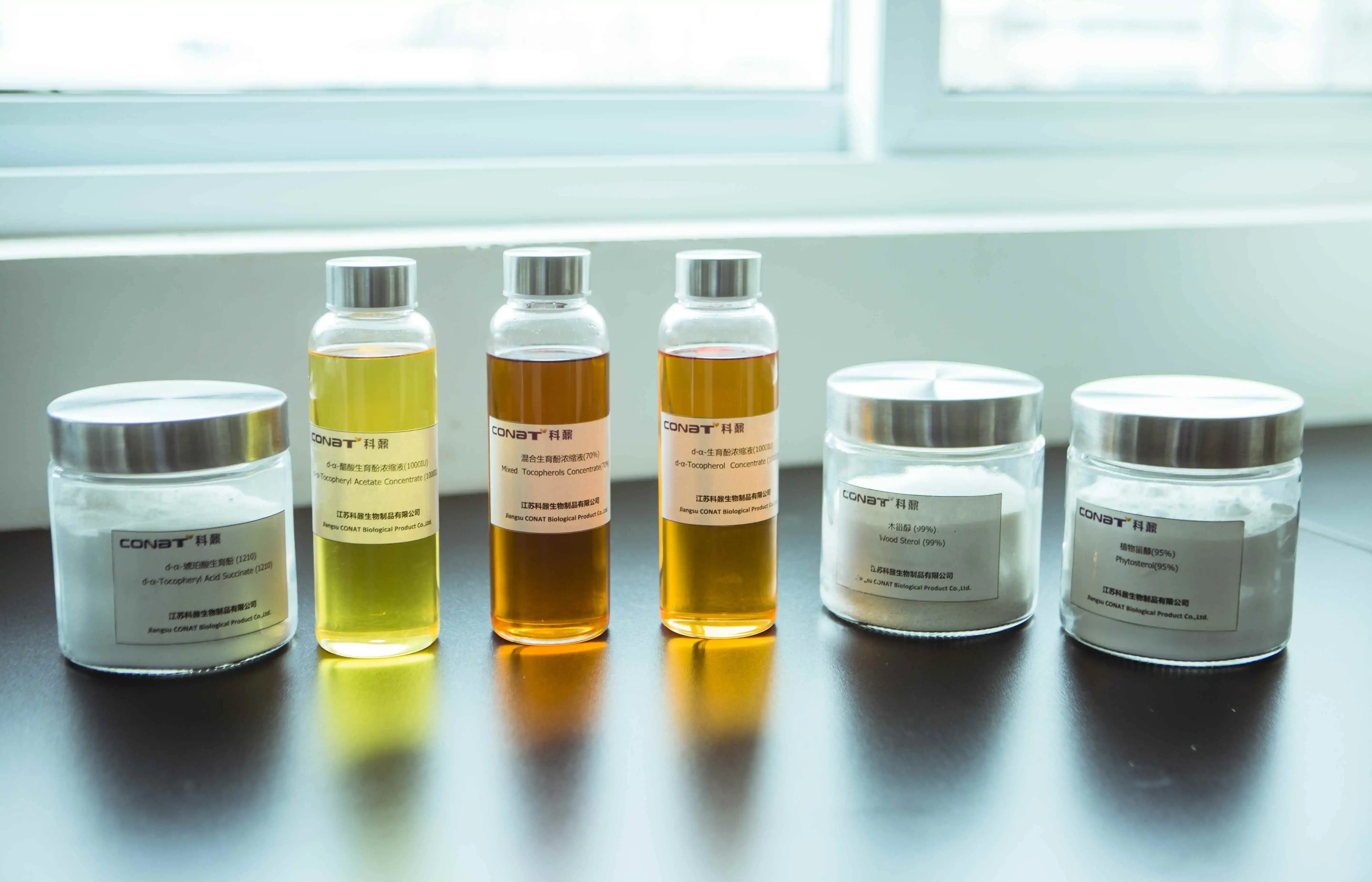
When evaluating vitamin E derivatives for industrial applications, understanding the fundamental distinctions between succinate and acetate forms proves essential for optimal procurement decisions. Vitamin E succinate exists as a water-soluble, crystalline powder offering enhanced stability and bioavailability, while vitamin E acetate presents as an oil-soluble liquid with different absorption characteristics. These molecular differences significantly impact formulation requirements, storage protocols, and end-product efficacy across nutraceutical, pharmaceutical, and functional food applications.
Understanding Vitamin E Succinate and Vitamin E Acetate
A big part of how useful vitamin E product molecules are in business and what kinds of uses they can have is how they are structured. Alpha-tocopherol succinate is joined to the phenolic hydroxyl group by a succinate ester group. This makes the material stable in a range of handling settings and allows it to mix with water. This change to the structure makes it easier for cells to take it in and gives living things better protection against free radicals.
Molecular Structure and Solubility Profiles
For vitamin E acetate to be taken properly, it needs fatty carriers because it has an acetate ester group. Acetate in this form works well with oil-based mixes and stays useful even when cooked at high temperatures. Researchers say that pancreatic carboxyl ester hydrolase needs to break down both esters in the bowels so that alpha-tocopherol can be produced and used by the body.
Solubility has a direct effect on the ways that different kinds of things are made. Forms of acetate work best in lipophilic materials and oil-based delivery systems. Forms of succinate, on the other hand, work well in powder formulas and water-based systems. Studies have shown that these features change the bioavailability profiles. Depending on the ester form used, different plasma concentration graphs can be seen.
Stability and Bioactivity Considerations
When picking products for business use, it's very important to think about how stable the setting is. When it comes to hot temperatures, vitamin E succinate is more stable than vitamin E acetate. It is also less likely to break down under oxygen. When the crystalline powder is kept at room temperature, it lasts longer. This means that there is less need for a cold chain and less cost to move it.
Bioactivity tests show that the two types take in things in various ways. A study in humans found that succinate esters get to their top levels in the blood more quickly after being taken by mouth. This means that they may be better for some uses because they are more accessible. Acetate types, on the other hand, don't change how quickly they are absorbed in places with a lot of fat, so they can be used in recipes that dissolve in fat.
Comparing Benefits and Limitations for B2B Procurement
A buying expert has to look at a number of performance factors to choose between vitamin E goods, including vitamin E succinate, that can be used for different tasks. Regulatory compliance requirements, recipe fit, bioavailability profiles, and supply chain factors all play a direct role in how long it takes to make a product and where it stands in the market.
Absorption and Bioavailability Analysis
Tests on people have shown that the succinate and acetate forms are taken in very different ways. It has been shown that alpha-tocopherol acetate has higher starting plasma concentrations than succinate esters within 6 to 7 hours of treatment in humans. These ingredients are quickly absorbed and can be used in solutions for sports nutrition and emergency care that need antioxidant action right away.
On the other hand, succinate forms have longer release times and better cell entry in some types of tissue. It is easier for it to get into cells that are full of water because it dissolves in water. This could make it better for use in the heart and brain. Because of the different amounts of absorption, there are different ways to dose and make finished things.
Regulatory Compliance and Quality Standards
The FDA, EFSA, and other foreign groups have set very high quality standards for both types of vitamin E products. The production standards set by GMP make sure that the levels of purity stay the same. Usually, the levels are higher than 98% active content with clear impurity profiles. You can feel safer about quality control systems and food safety rules when a company has certifications like ISO 9001 and ISO 22000.
There are different kinds of paperwork needed for different kinds of apps. Scientists have to do a lot of tests on things like pharmaceutical uses, like heavy metal screening, microbiological testing, and leftover solvent analysis. For nutraceutical and functional food uses, you need to include safety warnings, check for GMOs, and follow the rules for organic approval when necessary.
Key Factors to Consider When Choosing Between Vitamin E Succinate and Acetate
Vitamin E goods are picked based on how well they work in a certain situation, with formulation security being the main thing that is looked at. The processing conditions, how the ingredients work together, and the way the goal is reached all have an impact on the performance and help you pick the best ester for each type of product.
Formulation Compatibility Assessment
People who heat or cool things should think about how well they can handle heat. Vitamin E acetate, for instance, stays very solid when it is heated up. It stays strong even after being sprayed dry, baked, and extruded. Because it dissolves in oil, it won't break down in water while it's being made or stored.
At different pH levels, the two types are not at all stable in the same way. It's better for succinate esters to work in acidic places, like drinks. Because it dissolves in water, it can be spread out widely in systems that use water without the need for special emulsification techniques. Because of these traits, recipes are easier, which lowers the cost of study.
Supply Chain and Cost Considerations
The availability of raw materials changes how people buy things. Take acetate forms as an example. They tend to have more sources and better prices. There are different kinds of bulk packaging for different numbers of items, from a few items in the lab to tons of items that need to be shipped. Moving solid succinate types is better because they don't need to be kept cold, and it costs less to ship them.
To store the forms, you need very different types of tools. To keep their thickness and keep from going bad, acetate oils need to be kept in places where the temperature is controlled. When you store vitamin E succinate powders, they stay stable at room temperature and are less likely to get dirty when you touch them.
Market Insights: Supplier and Brand Evaluation
There are well-known companies in the world market for vitamin E goods that have a history of checking the quality of their products and following the rules. To make sure that the quality of the goods and how well they ship are always the same, sellers are judged on their technical know-how, the way they test analytically, and how reliable their supply lines are.
Certification and Quality Assurance Programs
Many of the best providers have a lot of different standards, like ISO 9001, ISO 22000, and GMP, that show they are dedicated to quality management systems. Goods that are meant for certain groups of people can reach more customers with the help of kosher and halal certification. Organic certificates help with marketing strategies called "clean labels," which are becoming more and more popular among health-conscious customers.
The analysis services they offer are not all the same. More up-to-date labs have all the testing methods you could want, like HPLC analysis, optical rotation measurements, and stability testing while the product ages quickly. There is information about each batch on the certificate of analysis. This makes sure that quality is checked and kept track of all the way through the supply chain.
Natural vs. Synthetic Source Considerations
People are becoming more and more interested in vitamin E chemicals that come from plant oils instead of those that are made in a lab. It costs more for natural types of d-alpha tocopherol, but they work better in the body and look better on the label. It is cheaper to use synthetic forms of dl-alpha tocopherol when natural sources are not as important.
For natural sources, information that can be tracked is becoming more and more important, and companies are keeping full records of the chain of custody from where the raw materials came from to where the finished product is given. Sustainable licenses help with goals for being good to the world and are in line with efforts for being a good business.
Optimizing Purchase and Application Strategies
When you buy something strategically, you make sure that the technical needs match up with the business's goals, that costs stay low, and that the supply is stable, including for components like vitamin E succinate. To get the right level of usefulness and market positioning, optimizing product standards means understanding how the qualities of raw materials, such as vitamin E succinate, affect how well the end product works.
Specification Development and Quality Control
Usually, the purity level needs to be higher than 98% active material, and there are limits on chemicals that are related, solvents that are still there, and possible contaminants. The particle size needed for succinate powders affects how quickly they dissolve and how evenly they mix, so these needs should be carefully thought through based on what the powders are going to be used for. How the product is made and how it feels when it's done depend on how thick the oil is in the acetate forms.
Estimates of shelf life can be confirmed by stability testing methods in a variety of storage conditions. This is useful information for developing new products and writing regulatory reports. Studies that speed up aging try to guess how well something will work in the long run and look for ways it might break down, which could change how well it works or if it is safe.
Implementation Best Practices
A product's antioxidant activity stays the same while it is being made and while it is being kept if it is done right. As the goods are stored in bulk, nitrogen blanketing stops oxidative breakdown, and moisture control systems keep powders moving easily and prevent succinate recipes from hardening. By keeping an eye on the temperature, you can make sure that the storage conditions are perfect and avoid damage from heat.
Handling methods keep goods from getting messed up and maintain their identity during production. With specific tools, different kinds of vitamin E can't get mixed up, and stability from batch to batch is ensured by the right cleaning validation. Safety rules and good business practices are followed by workers thanks to training programs.
Conclusion
If you know the detailed differences between succinate and acetate types of vitamin E, you can buy the right stuff for your product and help your business reach its goals. Derivatives of succinate dissolve and stay stable in water better, which makes them good for powder recipes and systems that use water. On the other hand, acetate derivatives work better with heating processes and goods that are based on oil. To pick the right ingredients, you need to think about many things, such as how soluble they are, how well they mix with other ingredients, how well they follow the law, and how the supply chain works. More and more people want vitamin E sources that come from plants. At the same time, standards for safety and license requirements are also going up. It is even more important to work with well-known sellers who can show they know how to do professional work and check the quality of their products.
FAQ
1. What are the main chemical differences between vitamin E succinate and acetate?
Vitamin E acetate is a liquid that dissolves in oil because it has an acetate ester group. Vitamin E succinate, on the other hand, is a solid powder that dissolves in water because it has a succinate ester group. Because molecules are different, they can change how well something breaks, how stable it is, and how accessible it is.
2. Which form offers better bioavailability for supplement applications?
Studies in humans have shown that vitamin E acetate forms have higher initial plasma levels within 6-7 hours of treatment, while succinate forms are better at getting into cells and releasing the vitamin over a longer period of time. The best choice depends on the treatment goals and recipe needs of each person.
3. How do storage requirements differ between the two forms?
To keep acetate oils from going bad, they need to be kept in places with controlled temperatures. On the other hand, vitamin E succinate powder doesn't need to be kept in a certain way and can be kept at room temperature. Because succinate types don't need to be kept cold, they are easier to store and less expensive to ship.
4. What regulatory considerations apply to vitamin E derivative procurement?
Both types have to be made in a way that follows GMP guidelines and all FDA, EFSA, and other government rules. Things that need to be written down are certificates of analysis, allergy statements, proof of GMO status, and, if needed, proof of compliance with organic certification standards.
5. How do costs compare between succinate and acetate forms?
Acetate forms are generally cheap because they come from more places and have been made the same way for a long time. It costs more to buy natural goods than to buy man-made goods, but buying in bulk can save you money on both types.
Partner with CONAT for Premium Vitamin E Succinate Solutions
CONAT is very good at making molecules like high-purity vitamin E succinate. They offer full products that can be used in medicines, nutraceuticals, and functional foods. Our state-of-the-art companies keep their ISO 9001, GMP, and organic certifications. This makes sure that the quality stays the same and that they follow all the rules for sale in all markets. Our scientific team is very focused and has made a lot of natural vitamin E before. To meet your needs, we can make formulas and give you options for large supplies.
Since we make vitamin E succinate, we can do full scientific testing, stability studies, and offer expert advice throughout the whole process of making the product. Email our buyers at sales@conat.cn to talk about your vitamin E needs and get a list of goods that are okay to buy. We help you reach your product goals with solid supply chain solutions at prices that are fair and quality standards that are the best.
References
1. Hidiroglou, M., et al. "Comparative bioavailability of vitamin E compounds in sheep." Journal of Animal Science, vol. 70, no. 8, 1992, pp. 2555-2561.
2. Cheeseman, K.H., et al. "Biokinetics in humans of RRR-alpha-tocopherol: the free phenol, acetate ester, and succinate ester forms of vitamin E." Free Radical Biology and Medicine, vol. 19, no. 5, 1995, pp. 591-598.
3. Muller, D.P., et al. "Studies on the mechanism of absorption of vitamin E in children with cystic fibrosis." Pediatric Research, vol. 10, no. 4, 1976, pp. 267-271.
4. Pryor, W.A. "Vitamin E and heart disease: basic science to clinical intervention trials." Free Radical Biology and Medicine, vol. 22, no. 6, 1997, pp. 981-993.
5. Jensen, S.K., et al. "Supplementation of broiler diets with vitamin E and selenium: effect on alpha-tocopherol deposition and antioxidant status." Poultry Science, vol. 77, no. 6, 1998, pp. 906-912.
6. Jakobsen, K., et al. "Antioxidants, metabolic disorders and animal reproduction." Acta Agriculturae Scandinavica Section A, vol. 45, no. 1, 1995, pp. 1-10.
YOU MAY LIKE