
What Are Mixed Tocopherols and Their Main Uses?
Tocopherols that are mixed together are a wide range of naturally occurring vitamin E compounds, such as alpha, beta, gamma, and delta tocopherols. Specialized cleaning methods are used to get these strong antioxidant combinations out of crop oils like corn, sunflower, and soybean oils. Mixed tocopherols offer a wider range of antioxidant protection than single-form vitamin E pills, making them extremely useful for preserving food, adding to a healthy diet, and making medicines. Their natural makeup makes them more bioavailable and stable than synthetic options. This makes them special ingredients for companies that want to make clean-label products and improve the performance of their products in many fields.
Understanding Mixed Tocopherols: Composition, Sources, and Functionality
Mixed tocopherols are a complex group of vitamin E molecules that can be found naturally in many plant-based foods and oils. There are four different types of tocopherol in the mixture: alpha-tocopherol, beta-tocopherol, gamma-tocopherol, and delta-tocopherol. They all have their own chemical structures that help them work as antioxidants.
Natural Sources and Extraction Methods
Natural mixed tocopherols can be found in soybean oil, sunflower oil, corn oil, and other food oils. You can also find these chemicals in nuts, seeds, and leafy greens like spinach. Advanced distillation and cleaning methods are used in the extraction process to collect these valuable chemicals while keeping their natural form.
Molecular distillation technology is used in modern extraction methods to separate and concentrate tocopherols from food oils. This process makes sure that the tocopherols are very pure while also protecting their natural d-forms, which are more bioactive than manufactured ones. Depending on the needs of the product, the concentrate that is made usually has between 70 and 90% mixed tocopherols.
Chemical Structure and Antioxidant Mechanism
The antioxidant property of mixed tocopherols comes from their ability to eliminate free radicals by giving up hydrogen atoms. Each type of tocopherol is an antioxidant that works differently. Gamma-tocopherol is very good at fighting nitrogen-based radicals and is found in large amounts in soybean oil derivatives. Alpha-tocopherol, on the other hand, is very good at stopping lipid breakdown.
When these antioxidants work together, they create synergistic benefits that make total protection stronger. Having more than one type of tocopherol protects against a wide range of oxidative stresses. This makes mixed tocopherols more useful in complex recipe settings than single-component options.
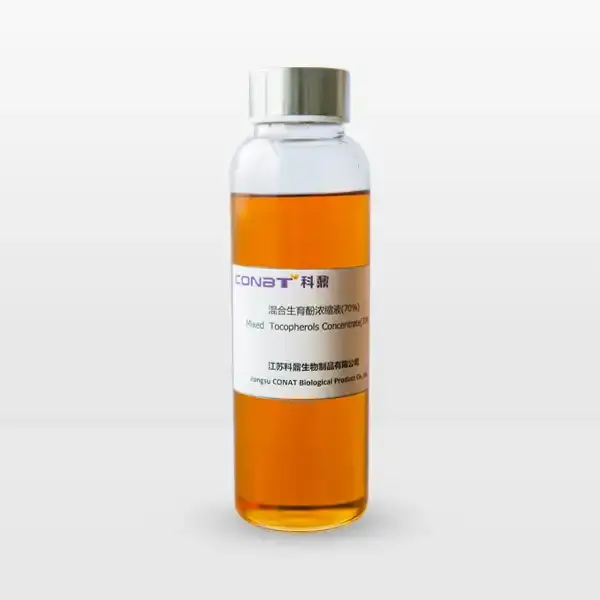
Main Uses and Benefits of Mixed Tocopherols in Industry
With uses ranging from food protection to medicine formulations, mixed tocopherols have become indispensable ingredients in a wide range of industries.
Food and Beverage Applications
Mixed tocopherols are natural preservatives used in the food business to increase shelf life without altering nutritional value. They keep flavors from going bad, keep oils and fats from going sour, and keep nutrients from going bad due to oxidation. Functional food makers like these substances a lot because they can be used as stabilizers and nutritional boosters at the same time.
As an option to manufactured antioxidants, the clean-label trend has made a lot more people want natural mixed tocopherols. Food scientists like how stable they are during processing and how they can keep their antioxidant activity even when the temperature and pH change. Because of these qualities, they work great in drinks that are enhanced, healthy snacks, and high-end foods that are aimed at health-conscious customers.
Dietary Supplement and Nutraceutical Sector
Mixed tocopherols are used by supplement companies as active ingredients in vitamin E products and as protection for other nutrients that are more easily damaged. Because the human body's transport proteins prefer the natural d-forms that are found in these mixes, research suggests that mixed tocopherols demonstrate better bioavailability compared to alpha-tocopherol alone.
For their part in lowering exercise-induced oxidative stress and promoting healing, mixed tocopherols have gained popularity in the sports nutrition market. Their natural origin fits with consumers' preferences for supplements with clean labels, and their proven effectiveness backs up claims that they protect cells from damage and boost antioxidant levels.
Pharmaceutical and Medical Applications
Pharmaceutical uses need the purest forms of mixed tocopherols, which often have concentrations above 95% and strict controls on impurities. These chemicals are used to keep drug mixtures stable and as active ingredients in medical diet products made for certain health problems.
The safety and effectiveness of mixed tocopherols in a variety of therapeutic applications have been proven through clinical study. Their part in neonatal nutrition has been studied a lot, and controlled dosing methods have been set up for preterm babies to make sure they get enough vitamin E while also avoiding the problems that can come from getting too much.
Mixed Tocopherols vs Other Vitamin E Forms: Key Comparisons for Procurement Decisions
Procurement workers can make smart choices based on application needs and quality standards when they know the differences between mixed tocopherols and other kinds of vitamin E.
Natural vs Synthetic Tocopherols
The bioactivity of natural mixed tocopherols, called d-forms, is much higher than that of their manufactured cousins, dl-forms. The natural forms are about 1.36 times more powerful in biological systems because the way their molecules are arranged matches up with human metabolic processes.
When it comes to purchasing, natural mixed tocopherols are more expensive but work better. Their security, acceptance by regulators, and popularity with consumers make them worth the investment for companies that want to reach high-end customers. In situations where cost is a concern and the greatest bioactivity is not necessary, synthetic options may be a good choice.
Alpha-Tocopherol vs Mixed Tocopherols
Alpha-tocopherol is the most popular vitamin E supplement because it has the highest biological activity. However, mixed tocopherols offer more antioxidant defense because their chemical structures are different. Gamma-tocopherol is found in large amounts in mixed mixtures and has special properties that alpha-tocopherol can't handle. It can neutralize harmful nitrogen species.
When buying something, you should think about how it will be used and what benefits you want it to bring. Mixed tocopherols are the best way to protect against free radical damage and keep food fresh. Alpha-tocopherol concentrates may be a better choice for vitamin E supplements that are meant to fix a deficit.
Concentration and Purity Considerations
Mixed tocopherol concentrates come in different concentrations, usually between 50% and 95% total tocopherol content. The price is higher for higher concentrations, but they work better in formulas that need small dose volumes.
Quality marks are very important when buying things. GMP compliance, organic licensing, non-GMO proof, and kosher/halal approvals all have an effect on how suppliers are chosen and how prices are set. These licenses make sure that regulations are followed and that the market is accepted in a wide range of areas.
Procurement Guide: Sourcing Mixed Tocopherols for Bulk Purchase
To make sure you always get high-quality products when you buy mixed tocopherols, you need to know a lot about how the market works, what quality standards are, and what your suppliers can do.
Supplier Evaluation Criteria
A successful procurement process starts with a careful evaluation of the supplier, focused on their production skills, quality systems, and compliance with regulations. A company's production capability, analytical skills, certification status, and track record of serving similar market groups are some of the most important things that are looked at when judging it.
Manufacturing sites should show that they follow GMP by getting the right licenses for the places they want to sell to. ISO 9001 quality management systems give you even more peace of mind that processes will be uniform and that things will keep getting better. Suppliers should keep thorough records that can be used for government filings and customer checks.
Quality Specifications and Testing Requirements
Important quality factors should be listed in the procurement requirements. These should include the tocopherol's composition, purity levels, moisture content, and contamination limits. Analysis methods should be in line with well-known standards, like USP or Ph. Eur uniform papers, to make sure that they are accepted by regulators.
Full compositional profiles, microbiological tests, and heavy metals analysis should be part of the standards for an analysis certificate. Suppliers should give batch-specific paperwork to help with tracking from raw materials to finished goods. This paperwork is very important for following the rules and looking into quality issues.
Pricing and Contract Considerations
The price of mixed tocopherol depends on the cost of the raw materials, how hard the process is, and how the market's demand changes. Since soybean oil is the main ingredient in most industrial production, its prices have a big effect on how much things cost. The terms of the contract should include ways for prices to change to account for changes in the prices of raw materials.
For normal grades, the minimum order quantity is usually between 100 and 500 kg. For custom formulas, it's higher. At certain tonnage levels, volume savings become available, which makes merging appealing for bigger buyers. Payment terms and delivery plans should work with the needs of production planning while also taking into account how they will affect cash flow.
Conclusion
Mixed tocopherols are useful and flexible ingredients that offer better antioxidant protection in a wide range of food, vitamin, pharmaceutical, and industrial settings. They come from nature, work across a wide range of conditions, and be safe. This makes them important ingredients for companies that want to make clean-label products and improve their performance. Knowing what they are made of, how they work, and what to think about when buying them helps you make smart decisions about the best sourcing methods. Mixed tocopherols are a strategic ingredient for businesses that want to appeal to health-conscious customers and high-end market groups due to the rising demand for natural antioxidants and ingredients with clean labels.
FAQ
Q1: What distinguishes mixed tocopherols from standard vitamin E supplements?
Standard supplements only have alpha-tocopherol, but mixed tocopherols have four different kinds of vitamin E: alpha, beta, gamma, and delta. This more varied mix gives better antioxidant defense and more closely matches the vitamin E balance found naturally in foods.
Q2: How should mixed tocopherols be stored to maintain potency?
Mixed tocopherols should be kept away from direct light and heat in a cool, dry place. Temperatures between 15°C and 25°C and relative humidity below 60% are good for keeping. Oxidation can't happen in sealed containers, so the antioxidant action stays the same over time.
Q3: Are mixed tocopherols suitable for organic product formulations?
Yes, you can get mixed tocopherols that are labeled organic from reputable sellers. Without going against certification rules, these goods meet organic standards and can be used as natural antioxidants in organic food, supplements, and cosmetics.
Q4: What concentration levels are typically available for commercial procurement?
Most commercial mixed tocopherol concentrates have between 50% and 95% total tocopherol. The choice relies on the purpose. For example, bigger concentrations are better for pharmaceutical uses, while middle concentrations are good for keeping food fresh.
Partner with CONAT for Premium Mixed Tocopherols Supply
Leading producers trust CONAT as their trusted source for mixed tocopherols because they always get great service and quality products. Our wide range of products is suitable for many uses, from preserving food to making medicines. All of them are backed by strict quality control and foreign approvals. Our experienced team can help you reach your product development goals by giving you technical advice and adaptable solutions, whether you need standard concentrates or unique formulas. Get in touch with our experts at sales@conat.cn to talk about your mixed tocopherols needs and find out how CONAT's quality ingredients can improve your formulations while making sure they meet legal standards and do well in the market.
References
1. Brigelius-Flohe, R., & Traber, M. G. (1999). Vitamin E: function and metabolism. The FASEB Journal, 13(10), 1145-1155.
2. Wagner, K. H., Kamal-Eldin, A., & Elmadfa, I. (2004). Gamma-tocopherol--an underestimated vitamin? Annals of Nutrition and Metabolism, 48(3), 169-188.
3. Bramley, P. M., Elmadfa, I., Kafatos, A., Kelly, F. J., Manios, Y., Roxborough, H. E., ... & Wagner, K. H. (2000). Vitamin E. Journal of the Science of Food and Agriculture, 80(7), 913-938.
4. Yoshida, Y., Niki, E., & Noguchi, N. (2003). Comparative study on the action of tocopherols and tocotrienols as antioxidant: chemical and physical effects. Chemistry and Physics of Lipids, 123(1), 63-75.
5. Traber, M. G. (2007). Vitamin E regulatory mechanisms. Annual Review of Nutrition, 27, 347-362.
6. Sen, C. K., Khanna, S., & Roy, S. (2006). Tocotrienols: Vitamin E beyond tocopherols. Life Sciences, 78(18), 2088-2098.
YOU MAY LIKE