
What information is important on natural Vitamin E succinate supplement labels?
When purchasing workers look at the labels of natural vitamin E succinate supplements, they should pay attention to a few key factors that affect the quality and compliance of the products. It must be clear on the label whether the ingredient is natural (d-alpha tocopheryl succinate) or synthetic (dl-alpha). It must also show manufacturing certifications like GMP and ISO standards, list purity percentages, and batch numbers so that the product can be tracked, and give dosage suggestions and how to use it correctly. By understanding these label elements, you can be sure that the products you buy are real and of high purity. They must also meet legal requirements and help you reach your formulation goals while building trust throughout the supply chain.
Understanding Natural Vitamin E Succinate and Its Importance on Labels
Natural Vitamin E succinate is a stable form of alpha-tocopherol. It is made up of a vitamin molecule attached to succinic acid. This chemical change makes the vitamin E more stable during production and storage, but it doesn't change the biological activity that makes vitamin E such a useful element. In the body, the succinate form changes back into active alpha-tocopherol. This gives cells strong antioxidant benefits that keep them from getting damaged by oxidation.
The Chemical Distinction That Matters
There are big changes in how the body handles natural and synthetic forms because of the way their molecules are structured. Natural d-alpha tocopheryl succinate is made up of a single stereoisomer that is recognized by certain proteins in the liver and moved around the body more efficiently. Japanese researchers found that 300 mg of manufactured vitamin E was needed to get the same amount of vitamin E into the blood as 100 mg of natural vitamin E did in healthy women. Because of these three benefits, correct labeling is very important for formulators who need to know how well their products will work.
Regulatory Standards Drive Label Requirements
Labeling methods must be clear in order to follow FDA rules and foreign standards. When buying products for functional foods or dietary supplements, business-to-business buyers must make sure that the labels meet certain standards set by regulatory authorities. These rules protect customers and make sure that companies can back up any health claims they make about their finished goods. Labels must be correct because they are the main source of evidence during checks and regulatory reports.
Building Supply Chain Confidence
Labels that are clear make everyone in the supply chain responsible. Labels that make it clear where the food came from, naturally, how pure it is, and who made it make it easier for buying teams to do their research. This openness lowers the chance of tampering, guarantees stability from batch to batch, and helps build long-term relationships with suppliers based on quality standards that have been checked.
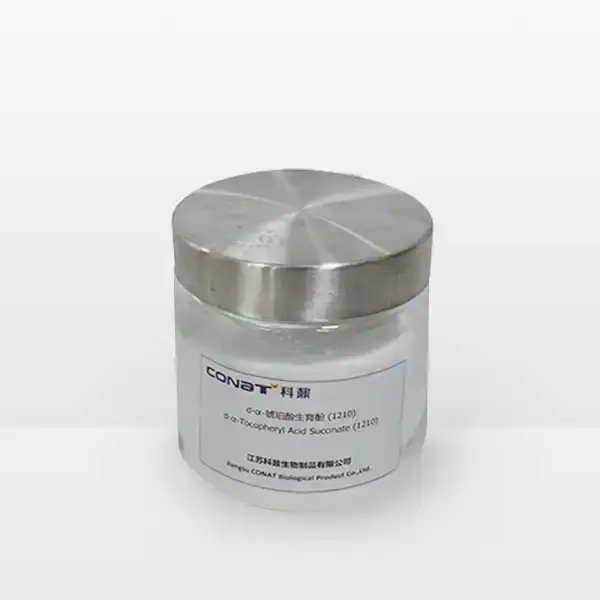
Key Label Components to Verify for Natural Vitamin E Succinate Supplements
To properly evaluate a label, you need to pay close attention to certain types of information that show the reliability and quality of the product.
Ingredient Specification and Purity Declaration
Labels should clearly say "d-alpha tocopheryl succinate" instead of using general terms like "vitamin E." This name confirms the natural stereoisomer instead of man-made replacements. Purity rates are very important. For example, 98% pure or higher is usually needed for pharmaceutical-grade applications, while slightly lower levels may be fine for food-grade applications. The lack of a "dl-" beginning tells the difference between natural and manufactured forms, which has a direct effect on bioavailability and regulatory classification.
Manufacturing Certifications and Quality Assurances
Certifications that can be seen on packages give you instant information about how the product was made, such as the inclusion of natural vitamin E succinate. A GMP (Good Manufacturing Practices) approval shows that strict quality control rules are followed during production. ISO 9001 shows that you are committed to regular quality management systems, and ISO 22000 is all about managing food safety. By meeting religious food needs, kosher and halal approvals open up more markets. These credentials aren't just for show; they mean that the company has been audited to make sure it meets widely known standards that lower the risk of purchasing things.
Batch Identification and Traceability Information
Every supplement label should have batch or lot numbers that make it possible to track everything from where the raw materials come from to how they are packaged. Dates of production and expiration help with planning, storage, and rotating supplies. When dealing with quality concerns or product issues, this knowledge becomes very important. Buyers should make sure that providers keep full records of each batch, linking these numbers to the results of scientific tests.
Dosage Forms and Concentration Details
Labels must make it clear whether the product comes in powder, oil, pills, or some other form, such as natural Vitamin E succinate. It is possible to make correct formulation estimates with concentration information, which is usually given as IU (International Units) per gram or as a percentage by weight. Knowing whether you're buying a pure ingredient or one that has already been weakened, like natural Vitamin E succinate, can help you avoid making mistakes that cost a lot of money when making a product.
Health Claims and Usage Guidelines
Different places have very different rules about what health claims are allowed. Labels that meet FDA rules in the US are not the same as labels that meet European Food Safety Authority rules. Make sure that any claims you make about antioxidants, immune support, or other benefits are legal in the places you want to sell to. Manufacturers and end users are both protected by usage labels that explain the right people to use the drug, any possible interactions, and the highest amount that should be taken.
Comparing Label Information: Natural Vitamin E Succinate vs. Other Vitamin E Forms
Knowing how the different types of vitamin E show up on packages helps people who buy things choose the best ingredient for each job.
Natural vs. Synthetic Label Distinctions
It makes all the difference if one letter is there or not. The prefix "d-" (natural vitamin E succinate) is used for natural forms, while "dl-" (dl-alpha tocopheryl acetate) is used for manufactured forms. This apparently small difference is actually caused by basic differences in the way molecules are put together. There are eight stereoisomers in synthetic alpha-tocopherol, but only one of them is the same as the wild form. At East Tennessee State University, researchers found that natural vitamin E levels in the blood were twice as high as manufactured levels at the same amounts. During pregnancy, the levels in the umbilical cord were three times higher than those in the blood.
Comparing Acetate and Succinate Forms
Acetate and succinate are both esterified forms of vitamin E that make it more stable. Labels that list these types show that the goods are made for certain uses. In some situations, the succinate form is better than the other types, but both turn into active alpha-tocopherol in the body. When choosing between types, you should think about how stable they need to be during production, how well they work with other ingredients, and how they are supposed to be delivered.
Delivery System Indicators
Labels tell you if a product is made to be taken by mouth, put on the skin, or used in factories to make food healthier. Powder types are usually good for use as bulk ingredients in useful food or drink recipes. Oil-based mixtures work well in soft-gel pills or liquid vitamins. Knowing these differences from label information will make sure that it works with your business needs.
Practical Guidelines for B2B Buyers When Assessing Supplement Labels
Creating an organized review method makes the buying process easier and lowers the risk of quality issues.
Supplier Credential Verification Checklist
First, make sure that the labels have the correct registration numbers, contact information for the maker, and building addresses, along with natural vitamin E succinate. Compare claims about certifications against the authorities that issued them. Ask for certificates of analysis (COA) that match the labels’ batch numbers. Check to see if providers’ certifications are still valid and haven’t expired, as this could mean that the quality system isn’t working properly. This extra work keeps you safe from fake goods and sellers who aren’t qualified.
Analytical Data and Quality Documentation
Even if full data doesn't show up on the package itself, labels should still talk about available analytical tests. You can ask for details about heavy metals, microbial pollution, herbicide residues, and other toxins. High-performance liquid chromatography (HPLC) tests can show that natural vitamin E succinate meets strict purity standards. Label claims and supporting documents show if providers really control quality or if they're just making claims that sound good.
Economic Considerations and Value Assessment
Labels with information about box sizes and amounts make it possible to compare prices accurately. To find the real value, figure out the price per kilogram of active chemical instead of per bottle. When comparing suppliers, you should look at the amount of certification they have. Higher-quality certifications often explain higher prices because they lower the risk of not following the rules and ensure better consistency. The total cost of ownership is affected by the storage needs listed on labels, which change the size of the building and how long the goods are kept.
Regional Compliance Verification
The documents needed to export goods are very different from one country to the next. Labels that meet U.S. norms might need to be changed for markets in Europe or Asia. Make sure that the languages, measurement units, and legal statements on the labels are in line with what is needed in the target country. Labels should already be set up for the countries you want to ship to from suppliers who have experience with foreign trade. This will make customs approval faster and lessen delays.
How Correct Labeling Supports Your Business Goals and Product Success?
Labeling that is accurate and complete has real company benefits that go beyond just following the rules.
Strengthening Customer Confidence and Retention
When your sellers give you carefully labeled ingredients, you get proof to back up what you say about your end product. This ability to track back ensures that quality standards are always met for all of your users, whether they are B2B buyers or end shoppers. As openness moves from being a nice-to-have feature to a market standard, being able to track ingredients through their entire supply lines becomes a more important competitive differentiator.
Enabling Optimized Formulations
Labels with exact details about purity, form, and concentration give R&D teams the trust they need to make goods. If you know exactly what you're buying, you don't have to guess, which can lead to recipe fails or inconsistent batch performance. Natural Vitamin E succinate that has been tested and found to be 98% pure works as expected, which speeds up product development and cuts down on the cost of reformulation.
Supporting Credible Marketing Claims
More and more, health-conscious customers are looking closely at the quality of ingredients. Natural Vitamin E succinate that is properly labeled in products backs up marketing boasts about "natural ingredients" and "bioavailable nutrients" that appeal to the target audience. These claims are supported by supplier paperwork that is linked to information on the label. They can survive review from regulators and challenges from competitors.
Practical Success Example
A medium-sized nutritional supplement company changed the ingredients in their most popular antioxidant supplement from man-made to natural vitamin E succinate after checking the label and finding problems with the supplier's reliability. The new provider gave labels with full information, including GMP certification, batch-specific purity tests, and easy-to-read natural form labeling. Within six months, the company had 23% more satisfied customers and three new OEM contracts because they could show that ingredients could be tracked back to their source through detailed labeling paperwork. The original investment in high-quality natural vitamin E succinate, with correct labels, paid off by creating more market possibilities and improving the brand's image.
Conclusion
The information on the labels of Natural Vitamin E succinate tablets is the best way to check the quality of the ingredients, make sure they follow the rules, and make the supply chain clearer. Procurement professionals keep their companies safe from quality risks and help make sure that product formulations work well by regularly checking labels to see if they list natural d-alpha tocopheryl succinate, show the right certifications, include batch traceability information, and meet regional regulatory requirements. Because correctly identified natural forms are more bioavailable than manufactured ones, labels should be carefully read. Spending time reviewing all of the labels when choosing a provider is worth it because it leads to consistent product performance, regulatory trust, and stronger customer relationships based on verified ingredient quality.
FAQ
1. How can I definitively confirm a product contains natural rather than synthetic vitamin E?
Carefully read the label's name and meaning. Natural forms are named "d-alpha tocopheryl succinate" or "d-alpha tocopherol," with the "d-" prefix suggesting the natural stereoisomer. "dl-alpha" is shown on synthetic forms, with the two-letter start showing a mix of stereoisomers. Ask sources for reports of analysis that include the results of stereoisomer testing. Reputable makers easily provide this paperwork, while vague answers could mean that the product isn't real. The difference in molecule structure isn't just a technicality; it leads to the three-fold bioavailability advantage seen in clinical trials.
2. What certifications should appear on labels for pharmaceutical-grade applications?
As a minimum, pharmaceutical uses need GMP approval, which proves that production follows strict quality standards. Keep an eye out for ISO 9001 for quality management systems and USP, EP, or JP-specific pharmacopeial compliance statements. Labels should say that each batch has been tested against standards for heavy metals, levels of microbes, and pure levels of 98% or higher. There needs to be more information than what is on the labels to back up regulatory reports, so make sure that sellers keep full natural vitamin E succinate quality dossiers.
3. Do concentration measurements on labels directly compare across different forms?
When comparing concentrations, it's important to keep measurement standards in mind. International Units (IU) are a common way to measure potency, but weight amounts change depending on the molecular form. The chemical weight of natural d-alpha tocopheryl succinate is not the same as that of d-alpha tocopherol or acetate. To get exact value estimates when comparing suppliers, make sure that all of the specs are converted to the same unit, which is usually IU per gram. If labels use different ways of measuring, ask providers for adjustment factors.
Partner with CONAT for a Premium Natural Vitamin E Succinate Supply
CONAT is an expert at making natural vitamin E succinate that is very pure. Their products come with clear labels that meet international standards and a lot of quality paperwork. Our factory has GMP, ISO 9001, and ISO 22000 certifications, which make sure that every batch is of the same high quality. You can check this with full certificates of analysis. We know that procurement professionals need more than just product specs. You need people you can trust who will help you meet your compliance needs and reach your product development goals.
Our natural Vitamin E succinate is 98%+ pure and has been fully checked for stereoisomer defects. It gives your products the absorption benefits they need. Each package comes with batch-specific paperwork that shows how the raw materials were processed, as well as labels that are made to meet the rules in the places you want to reach. Our expert team works with your R&D team to make sure that the details of the ingredients you use meet the needs of your application, whether you're making dietary supplements, functional foods, or pharmaceutical preparations. Send an email to sales@conat.cn to get example labels, technical datasheets, and certification paperwork that show why top names choose CONAT as their natural Vitamin E succinate provider.
References
1. Sheppard, A.J., Pennington, J.A.T., and Weihrauch, J.L. (1993). "Analysis and Distribution Patterns of Vitamin E in Human Tissues." Journal of Nutritional Science and Vitaminology, Vol. 39, No. 3, pp. 245-261.
2. Kiyose, C., Muramatsu, R., Kameyama, Y., Ueda, T., and Igarashi, O. (1997). "Biodiscrimination of Alpha-Tocopherol Stereoisomers in Humans After Oral Administration." American Journal of Clinical Nutrition, Vol. 65, No. 3, pp. 785-789.
3. Burton, G.W. and Traber, M.G. (1990). "Vitamin E: Antioxidant Activity, Biokinetics, and Bioavailability." Annual Review of Nutrition, Vol. 10, pp. 357-382.
4. Horwitt, M.K., Elliott, W.H., Kanjananggulpan, P., and Fitch, C.D. (1984). "Serum Concentrations of Alpha-Tocopherol After Ingestion of Various Forms of Vitamin E." American Journal of Clinical Nutrition, Vol. 40, No. 2, pp. 240-245.
5. Acuff, R.V., Thedford, S.S., Hidiroglou, N.N., Papas, A.M., and Odom, T.A. (1994). "Relative Bioavailability of RRR- and All-Rac-Alpha-Tocopheryl Acetate in Humans." Journal of Nutritional Biochemistry, Vol. 5, No. 10, pp. 437-444.
6. Institute of Medicine (US) Panel on Dietary Antioxidants and Related Compounds (2000). "Dietary Reference Intakes for Vitamin C, Vitamin E, Selenium, and Carotenoids." National Academies Press, Washington DC, Chapter 6: Vitamin E, pp. 186-283.
YOU MAY LIKE