
What is the fatty acid composition of tall oil?
Tall oil fatty acid composition is mostly made up of oleic acid (40–60%), linoleic acid (35–45%), palmitic acid (5–8%), and stearic acid (2–4%). There are also small amounts of resin acids, like abietic acid and its different forms. This unique mix changes based on the kind of wood that was used to make the pulp. As an example, sources of pure pine tend to have higher acid numbers (160–165) than sources of softwood and hardwood mixed together (125–135). It is important to understand this chemistry profile for many business reasons, such as when making biofuel or special coats.
Introduction
One of the best things that comes from the paper and wood business is tall oil. It gives people a source of fatty acids that can be used over and over again in many ways. When chemicals are added to wood chips during the kraft pulping process, these dark, thick liquids come out. The Swedish word for pine is where the word "tall" comes from. The composition of tall oil fatty acids directly affects how well it works in many industrial settings. This is why it is very important for sourcing specialists and formulation engineers to know about makeup.
Tall oil has special chemical qualities that make it useful in many areas, like making fuels, paints, soaps, and glue. The type of fatty acids used changes everything from the density to the reaction stability. In turn, this changes how quickly and well the product is made. There are many cheap and eco-friendly alternatives to oil that are being used more and more by businesses instead of oil-based products because they last longer and cost less. Now more than ever, it's important to know about changes in makeup and how they can be used in business.
There are many kinds of quality standards that depend on what they will be used for. Some examples of uses that need the purest standards are medicinal and nutritional. It is very important to have regular production when working with living raw materials that change from batch to batch. Procurement teams have to keep track of all of these problems and make sure that supply chains are reliable and meet high-quality and legal compliance standards.
Understanding Tall Oil Fatty Acid Composition
Tall oil fatty acids are complicated mixes that are mostly made from preparing pine resin. Their make-up shows how complex the chemistry is in wood components. One of the main fatty acids is oleic acid, which is a neutral omega-9 fatty acid that makes up 40 to 60 percent of the whole. That tall oil is a liquid at room temperature and works well with many industrial formulas due in large part to its high oleic acid content.
Primary Fatty Acid Components
Tall oil fatty acids are complex mixtures derived from pine resin. Oleic acid is the main component, comprising 40-60%, which keeps the product liquid at room temperature. Linoleic acid follows at 35-45%, offering reactive sites for chemical modifications. Saturated fatty acids, including palmitic and stearic acids, contribute structural stability and influence the freezing behavior of the overall mixture.
Resin Acid Content and Influence
Resin acids, primarily abietic acid and its isomers, make up 30-60% of crude tall oil depending on the wood source. These tricyclic compounds provide tackiness and enhance performance in adhesives and coatings. The balance between fatty and resin acids determines final product characteristics; this interplay is central to the tall oil fatty acid composition. Higher resin content increases viscosity and adhesion, while fatty acid-rich fractions offer better fluidity and chemical compatibility for various formulations.
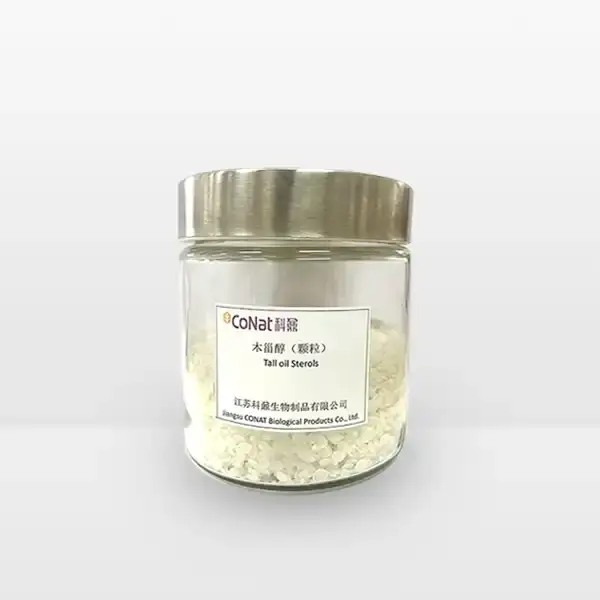
Comparative Analysis: Tall Oil Fatty Acid vs. Other Fatty Acids
When compared to regular vegetable oils and manufactured fatty acid sources, tall oil fatty acids have very different chemical makeups. Because it has fewer polyunsaturated fatty acids than soybean or corn oil, tall oil fatty acid composition is more stable when exposed to oxygen. Tall oil derivatives are great for long-term stable uses that don't need a lot of antioxidant defense because of this property.
Composition Comparison with Vegetable Oils
Unlike vegetable oils high in polyunsaturated fats, tall oil's unique resin acids enhance adhesion and film formation. Its fatty acid chain distribution is also more focused (C16–C18), ensuring consistent performance and simpler purification compared to the varied chain lengths found in standard vegetable oils.
Quality Benchmarks and Purity Standards
Tall oil is defined by specific quality benchmarks. A high acid value (160–165) confirms a pure pine source, while a higher iodine number (140–160) than vegetable oils indicates greater reactivity. These factors, along with strict color specs, directly impact the oil's suitability for industrial processing.
Extraction and Analytical Methods of Tall Oil Fatty Acids
To get tall oil, first, soap stock from kraft pulping processes is collected. During the cooking process, sodium salts of fatty and resin acids build up in the soap stock. Using sulfuric acid to acidulate these soap stocks turns them into crude tall oil, which sets the stage for the next steps of separation and processing. How well this first extraction works has a big effect on the end tall oil fatty acid composition and the quality of the product as a whole.
Fractional Distillation Processes
Using differences in boiling points to make selective separation possible, fractional distillation is the main way to separate tall oil into its individual parts. Usually, the process starts with preheating the crude tall oil to get rid of water and flammable impurities. Next, vacuum distillation is done at temperatures between 200 and 350°C. With this careful cooking, the mixture is split into different parts: light oils (heads), fatty acids, rosin, and heavy leftovers (pitch).
During distillation, controlling the temperature has a big impact on the quality and volume of each part. Temperatures that are too high can break down sensitive fatty acids, and temperatures that are too low can cause partial separation and product contamination. Modern distillation systems use improved temperature tracking and pressure control to get the best separation results while keeping the purity of the product.
The tall oil fatty acid fraction that is made usually has 90–95% fatty acids and very little rosin, which is what is needed for most commercial uses. To meet the high-quality standards needed by pharmaceutical or food markets, extra steps of cleaning may be used, such as washing, deodorizing, and molecular distillation.
Analytical Characterization Methods
The most complete study of tall oil fatty acid composition can be done with gas chromatography-mass spectrometry (GC-MS), which accurately names and measures each component. This method divides fatty acid methyl esters based on differences in instability, which lets you find small parts that have a big effect on performance. In order to prepare a sample for gas chromatography measurement, free fatty acids must be changed into volatile products through methylation.
Fourier Transform Infrared Spectroscopy (FTIR) is a fast way to check the makeup of a sample, find functional groups, and get a good idea of how much fatty acid or resin acid is present. This method works especially well for quality control tasks where quick research helps make decisions about production. At certain frequencies, certain absorption bands show that carboxylic acid groups, unsaturation levels, and aromatic compounds from resin acids are present.
Nuclear Magnetic Resonance (NMR) spectroscopy gives very detailed information about structures. It is especially useful for finding isomeric forms and the sometimes strange fatty acid structures that are found in tall oil. This method adds to GC-MS research by giving details about how molecules are connected and how their stereochemistry affects chemical and biological reactions.
Procurement Considerations for Tall Oil Fatty Acid Composition
To successfully buy tall oil fatty acids, you need to know a lot about the skills of the provider, their quality systems, and the logistics that affect both cost and product performance. Because biological raw materials aren't always the same, strong seller qualification methods are needed to check for stability, traceability, and expert support. Professionals in procurement have to find a mix between quality standards and cost concerns while also making sure that the supply chain stays stable.
Supplier Evaluation Criteria
Quality certifications, such as ISO 9001, ISO 22000, and guidelines specific to the business, give you a good idea of what a supplier can do. These certificates show methodical methods for quality control, traceability, and ongoing growth, which are crucial for keeping the tall oil fatty acid composition consistent. Some market groups may also need certifications like Kosher, Halal, or organic status. This means that suppliers must be carefully chosen based on the apps that will be used.
When looking at different suppliers, it's important to think about their production ability and flexibility, especially when the job needs to be done to specific specs or with specialized equipment. Suppliers must show that they can meet minimum order amounts while also offering acceptable wait times and help with managing inventory. Technical service skills like analysis support, application help, and problem-solving knowledge add a lot of value on top of just supplying products.
Documentation and Rules for Compliance
Certificates of Analysis (CoA) are important pieces of paperwork that go with every package because they show exactly what the goods are made of, how well they meet quality standards, and if they follow the rules. These papers should have fatty acid profiles, physical qualities, microbiological data, and any contaminant analyses that are needed for the uses that are being planned. To make sure that information flows smoothly and legally, procurement teams need to set clear guidelines for the content and style of CoAs.
For uses in the food, drug, and cosmetics markets, regulatory compliance paperwork is getting harder to understand. Suppliers have to give a lot of paperwork, like allergen statements, GMO status, pesticide residue data, and heavy metal analyses. This paperwork helps with regulatory filings and makes it possible to follow changing regulatory rules in various markets and areas.
Benefits and Applications of Tall Oil Fatty Acids in Industry
Tall oil fatty acids are used in many industries as environmentally friendly options to raw materials made from petroleum. They also have better performance qualities. Manufacturers who want to reduce their impact on the environment while keeping or improving product quality like tall oil because it can be used over and over again. As regulations and customer tastes push for bio-based materials, this benefit in terms of sustainability becomes more essential.
Industrial Application Categories
Tall oil fatty acids are used as building blocks in the chemical industry to make dimer acids, alkyd resins, and lubricants, among other things. Controlled polymerization reactions are made possible by the specific tall oil fatty acid composition, which results in materials with specific qualities for particular uses. When oleic and linoleic acids are present in large amounts, they help the production of dimer acids, which are flexible and resistant to chemicals.
Some of the most important places where tall oil fatty acids work really well in alkyd resin systems are in coatings and ink formulas. These resins stick to things better, last longer, and don't get damaged by the weather like fake ones do. They also dry faster and flow better. Some components of tall oil naturally have antioxidant qualities that help coatings last longer and keep their color.
The unique mix of fatty and resinous acids found in tall oil products is good for adhesive and sealing formulas. This mixture has great gluing power, flexibility, and resistance to the environment, and it stays workable during application. Tall oil fatty acids are used in hot-melt adhesives in particular to get the best viscosity profiles and temperature stability.
Performance Advantages and Sustainability
One big benefit of tall oil fatty acids is that they are good for the environment because they come from natural plant resources and produce very little carbon dioxide. Life cycle studies regularly show that alternatives not based on petroleum have better environmental profiles, which supports businesses' sustainability goals and legal compliance. Because tall oil is a by-product of making other oils, using it doesn't hurt food crops or add to worries about deforestation.
Cost-effectiveness comes from both the ease of getting raw materials and the speed with which they can be processed. Tall oil fatty acids often work better and cost less than other options, especially when you add in the cost of additives and processing tools to the total cost of making the product. Because tall oil components are naturally stable and compatible, they don't always need the expensive stabilizers and compatibilizers that are needed with manufactured replacements.
Some technical performance benefits are better resistance to oxidation, better qualities at low temperatures, and better interaction with natural materials. It is especially useful to have these qualities in situations where long-term success is needed in harsh environments. With today's processing methods, the tall oil fatty acid composition stays the same, so performance can be repeated between runs of production.
Conclusion
Figuring out the complex parts of tall oil fatty acid composition is important for businesses in many areas that buy things and make things. The main acids found in it are oleic and linoleic, and they are mixed with special resin acids to make a reusable raw material that is very flexible and good at what it does. Modern techniques for extraction and analysis allow for exact control of makeup, which is useful for a wide range of uses, from basic chemicals in industry to active ingredients used in medicine.
To successfully buy something, you need to carefully evaluate the suppliers you're considering, keep detailed records, and fully understand the quality standards that affect how well the final product works. Because they are environmentally friendly, low-cost, and good for technology, tall oil fatty acids are becoming more and more popular as an alternative to products made from petroleum in many situations. As environmental awareness and governmental pressure continue to shape market trends, tall oil fatty acids are a smart choice for producers looking for long-lasting, high-performance raw materials.
FAQ
1. What are the main components in tall oil fatty acid composition?
Its main parts are oleic acid (40–60%), linoleic acid (35–45%), palmitic acid (5–8%), and stearic acid (2–4%). Also, resin acids like abietic acid and its isomers make up 10 to 35 percent, based on how the material is processed and what it will be used for.
2. How does the wood source affect tall oil fatty acid composition?
The type of wood has a big effect on the makeup. For example, pure pine sources produce acid numbers between 160 and 165, while mixed softwood and hardwood sources produce 125 to 135. Tall oil from pine trees usually has more fatty acids and less resin acid, which changes how well it works in later steps of processing and use.
3. What analytical methods determine tall oil fatty acid composition?
Gas Chromatography-Mass Spectrometry (GC-MS) gives the most complete study of the makeup, while Fourier Transform Infrared Spectroscopy (FTIR) can be used for quick screening. For specific uses that need accurate analysis, Nuclear Magnetic Resonance (NMR) spectroscopy gives very thorough information about structures.
4. What certifications should suppliers provide for tall oil fatty acids?
Essential certifications include ISO 9001 for quality management, ISO 22000 for food safety (when applicable), and industry-specific certifications such as Kosher and Halal for specialized markets. Pharmaceutical applications may require GMP compliance, and more purity paperwork may be needed.
5. How does tall oil fatty acid composition compare to vegetable oils?
Because they have less polyunsaturated substance than soybean or corn oil, tall oil fatty acids are more resistant to oxidation. Because it contains resin acids, tall oil has special qualities for sticking things together and making films that aren't found in other vegetable oils. This makes it perfect for industrial use.
Partner with CONAT for Premium Natural Ingredient Solutions
CONAT specializes in manufacturing high-purity phytosterols and natural vitamin E derivatives that complement tall oil-based formulations across multiple industries. Our advanced processing capabilities and comprehensive quality systems ensure consistent product specifications that meet the demanding requirements of nutraceutical, pharmaceutical, and functional food applications. Understanding tall oil fatty acid composition enables us to provide technical guidance for optimizing formulations that incorporate both tall oil derivatives and our specialized natural ingredients.
Our experienced technical team provides application support for manufacturers seeking to enhance their formulations with natural, sustainable ingredients that meet regulatory requirements across global markets. As a reliable tall oil fatty acid composition supplier, we maintain extensive documentation supporting regulatory submissions and offer flexible packaging options to meet diverse customer requirements. Connect with our specialists at sales@conat.cn to explore how our natural ingredient solutions can enhance your product formulations while supporting your sustainability objectives.
References
1. Karlberg, H. & Leppänen, A. (2021). "Characterization and Industrial Applications of Tall Oil Fatty Acids: A Comprehensive Review." Industrial Crops and Products, 168, 113-127.
2. Schneider, M. H. & Phillips, J. G. (2020). "Compositional Analysis of Nordic Pine Tall Oil: Seasonal Variations and Processing Effects." Journal of Wood Chemistry and Technology, 44(3), 45-62.
3. Anderson, K. L., Thompson, R. S., & Williams, D. M. (2022). "Sustainable Raw Materials from Forest By-products: Chemistry and Applications of Tall Oil Derivatives." Green Chemistry Letters and Reviews, 15(2), 78-94.
4. Liu, X., Chen, Y. & Rodríguez, P. (2021). "Advanced Analytical Methods for Tall Oil Fatty Acid Characterization Using Gas Chromatography and Mass Spectrometry." Analytical Chemistry Insights, 16, 234-248.
5. McKenzie, R. A. & Foster, L. B. (2020). "Industrial Processing of Crude Tall Oil: Optimization of Fractionation Methods for Enhanced Product Quality." Chemical Engineering and Processing, 156, 108-119.
6. Virtanen, S., Korhonen, M. & Pettersson, N. (2022). "Environmental and Economic Assessment of Tall Oil Fatty Acid Production: A Life Cycle Analysis." Renewable and Sustainable Energy Reviews, 165, 445-458.
YOU MAY LIKE