
Where D Alpha Tocopherol Acid Succinate Delivers the Best Value
When evaluating premium vitamin E derivatives for industrial formulations, d alpha tocopherol acid succinate stands out as the optimal choice for manufacturers prioritizing stability, bioavailability, and versatility. This naturally derived form offers superior shelf life compared to standard tocopherols, making it particularly valuable for dietary supplements, functional foods, and pharmaceutical applications where product integrity over time directly impacts efficacy and consumer trust. Its enhanced molecular stability translates to reduced degradation during processing and storage, ultimately delivering measurable cost savings and performance advantages that justify initial investment considerations.
Introduction
How the food, medicine, and nutraceutical industries buy things is always changing because of the need for strong antioxidant chemicals around the world. A famous vitamin E product is d-alpha tocopherol acid succinate. It is loved by R&D leaders and formulation managers who want to use natural active ingredients that have been proven to be safe. This compound solves a number of issues that procurement workers face, including consistency from batch to batch, the need to keep records to meet regulatory requirements, and the need for formulations that work with different transportation methods.
Looking at how it works, what other types of vitamin E are out there, and how to get this ingredient in the best way will help you figure out where it is most useful. It comes from plants, which is great for companies that want to make clean-label goods. Pharmaceutical companies also like it because it is very pure and comes with a lot of approval options. This guide has information that can help people who are thinking about using d-alpha tocopherol acid succinate as a key part in their product creation projects.
Understanding D-Alpha Tocopherol Acid Succinate: Composition, Benefits, and Uses
Natural Origin and Chemical Stability
D-alpha tocopherol acid succinate is made from vitamin E that comes from plants, mostly in the form of RRR-alpha-tocopherol. The hydroxyl group on the chromanol ring is changed to a succinate molecule by the succinate ester modification. This makes a molecule that doesn't react with oxygen very easily. The chemicals don't break down as quickly because of this change, and they still have their powerful antioxidant properties, which start to work when the body's metabolism changes them.
Researchers have found that this change not only makes things last longer, but it also helps cells take them in more easily. Most of the time, standard tocopherols break down when they come into contact with air, light, or heat during production. These groups protect the tocopherols by being a shield. Less waste and consistent potency across production batches are good for manufacturers. That's a big problem that's now fixed in the pill and food fortification business.
Bioavailability and Conversion Factors
It is very important to know how well d-alpha tocopherol acid succinate converts when it comes to formulation dose methods. In 2018, the FDA made rules that say 1 mg of RRR-alpha tocopherol is the same as 1 mg of alpha-tocopherol. The biological activity of natural forms of alpha-tocopherol is twice that of man-made forms. The amount of alpha-tocopherol that 1 IU of RRR-alpha tocopherol gives you is 0.67 mg, but only 0.45 mg of manufactured all rac-alpha-tocopherol does the same thing.
Because of this bioavailability benefit, formulators can get the level of effectiveness they want with smaller amounts. This saves money without lowering the performance of the product. Companies that make sports nutrition really like this quality because it saves space on the label and makes it easier for customers to read what the ingredients are.
Application Spectrum Across Industries
There are several places where d-alpha tocopherol acid succinate can be used, such as:
- Dietary Supplements: It is the main ingredient in foods and vitamins that help the heart, the immune system, and fight free radicals. D alpha tocopherol acid succinate works well for pill, tablet, and powder types that need to stay fresh for a long time without cooling down because it is stable.
- Functional Foods and Beverages: Health drinks, protein bars, and dairy products are better when they are made with food-grade forms. The food item can be pasteurized and processed at room temperature, so it keeps its nutritional value while it's being made.
- Pharmaceutical Applications: High-purity grades meet strict pharmacopeial standards and can be used to make medical foods and as fillers in medicines. It has been studied and found to be safe, and there is a lot of chemical data to back up regulatory reports.
- Cosmetic Formulations: When put on the face, its antioxidant properties help protect it from damage from the outside world. Hyaluronic acid deeply softens, and vitamin E fights free radicals. This is why it works better when mixed with other things.
Comparing D Alpha Tocopherol Acid Succinate with Other Vitamin E Forms
Natural Versus Synthetic: Quality and Labeling Implications
When it comes to how goods are positioned and how well they follow rules, the difference between natural (d-alpha) and made (dl-alpha) types is very important. There is only one RRR stereoisomer configuration in d-alpha tocopherol acid succinate that comes from plants. Eight different stereoisomers make up the synthetic form, but only one is the same as the natural form. Because of this difference in structure, cellular activity is higher in natural sources.
If a business wants to get customers who care about clean labels, listing natural vitamin E goods on their labels gives them an edge over their rivals. Certification groups are aware of this difference, and many organic certification standards require vitamin E that comes from natural sources to be met. Teams that buy things should make sure that the supplier's papers, like food statements and certificates of analysis, are real.
Stability Comparisons Across Different Formats
When making plans to buy, powder and liquid formats have different pros and cons. Powdered d-alpha tocopheryl acid succinate is easier to move, costs less to ship, and can be kept at room temperature for longer. This form is easy to use with both dry blend and tablet compression.
If you want to turn liquid recipes into oil-based foods, drinks, or emulsions, you need to be very careful to keep them at the right temperature while you store and ship them. Tests of stability show that powder stays useful for 24 to 36 months when kept correctly, but liquids only work for 18 to 24 months in the same conditions. When you do a cost study, you should look at these lifetime factors along with the unit price.
Performance in Specialized Applications
It has been shown that d-alpha tocopherol acid succinate can work well with other active ingredients that work well with it. The natural protective function of the skin is also preserved because lipid breakdown is stopped. Some types of tocopherols break down quickly in air, but the succinate form stays stable in cream and balm bases.
Because it can guard against radiation, it can be used in medicine. One study found that protective cytokines are raised when it is given before radiation exposure. Medical nutrition goods made for people following certain treatment plans can be made possible by this specialty job.
How to Source D Alpha Tocopherol Acid Succinate: Procurement Best Practices
Supplier Qualification and Quality Assurance
To find suppliers you can trust, you should carefully look at how they make things and how they check the quality of their work. Having current GMP certification, following ISO 9001 and ISO 22000, and being able to get specific certifications like Kosher, Halal, and organic marks are all important. Target markets should get full paperwork packages from providers. These should include material safety data sheets, certificates of analysis for each batch, results of stability studies, and proof of legal status.
It is also important to have technical skills. Like, companies that make things and have their own labs for testing can offer faster batch release times and better help with fixing problems. Ask them about the tests they do to make sure it is pure, like heavy metals screening and HPLC analysis to confirm the stereoisomer. Manufacturers that have been around for a while usually keep detailed records of the flaws they use. They can use data from the past to prove that one batch is the same as another.
Negotiating Commercial Terms
How you buy things in bulk for d alpha tocopherol acid succinate has a big impact on the total cost of ownership. Usually, the smallest order is between 25 and 100 kilograms, and bigger promises mean higher prices. When you're discussing terms, you should think about how much room the warehouse has, how much demand changes with the seasons, and how much volume you expect each year.
Most of the time, the payment terms are the same as in international trade. The risk for both parties can be cut down with letters of credit or payment against papers. Talk about deals on supplies that keep prices the same for six to twelve months. This will keep you safe when the price of raw materials changes. Most of the time, top sellers will let you get samples of their products so you can try them out before you buy the whole thing. You can check the quality and fit this way.
Supply Chain and Logistics Considerations
By handling the product the right way, the standard stays high during the whole marketing process. D-alpha tocopherol acid succinate needs to be kept somewhere cool, dry, and out of the sun. The best range for keeping is between 15°C and 25°C. If water gets on the succinate ester, it might break down, which would make it less useful.
A lot of paperwork is needed for foreign packages to get through customs. This includes harmonized tariff numbers, certificates of origin, and statements that the packages follow the rules of the country they are going to. Work with service providers who have experience exporting and can keep you up to date on shipping dates and any changes to the rules that could affect how your goods enter the country.
Maximizing Value: Practical Tips for Using D Alpha Tocopherol Acid Succinate in Your Products
Formulation Integration Strategies
Before adding something, you need to know how it fits in with the rest of the mix. When properly dissolved, the succinate form is very stable in systems that dissolve in water or oil. You can make the dispersion more even in water-based products by mixing it with emulsifiers ahead of time or using forms that are microencapsulated.
Extra care needs to be taken with processes that depend on temperature. Even though the element can handle some heat, being in a hot place for a long time (above 60°C) may make it break down faster. When you can, add vitamin E products while the blend is still cool, but especially when the process of emulsification is hot. To keep tablets from oxidizing when you press them down, make sure there is enough oil.
Leveraging Health Claims for Market Differentiation
Each market has its own rules about what kinds of health claims can be made about vitamin E's defensive qualities. There are health claims made in the US that say antioxidant vitamins can lower the chance of getting some long-term diseases. However, the exact words used must follow FDA rules. As long as their products have the right amount of vitamin E, companies can say that they protect cells from oxidative stress in Europe.
Customers want ingredient names that are easy to remember, so marketing teams can stress that d-alpha tocopherol acid succinate forms come from natural sources. Clinical studies back up the placement of the product and show that it is good for the health of the heart, immune system, and skin. You can make these marketing stories stronger if you can show proof from your supplier of where the natural ingredient came from and how it was processed.
Real-World Application Examples
It was changed by a medium-sized sports nutrition business so that their healing supplement line now has d-alpha tocopherol acid succinate instead of a synthetic mix. Stability tests showed that the product kept 15% more of its effectiveness for 24 months. This meant that it didn't need to be reformulated as often and less material was lost. Customers liked that the labels were clearer, which led to a 12% rise in sales among people who care about their health.
A company that makes functional drinks added natural vitamin E succinate that can be eaten to their range of antioxidant drinks. By pasteurizing the ingredient, problems with off-tastes and color changes were fixed, and the product could be stored for twelve months instead of nine. Less stuff was sent back to stores because of this rise, and it was easy to add longer delivery routes.
Conclusion
To locate the ideal spot for d alpha tocopherol acid succinate, you need to think about where it will work best scientifically, legally, and for business reasons. This ingredient is a good choice for companies that want to make high-quality products because it is very stable, comes from nature, and is easy to get. If procurement workers take the time to learn about the pros and cons of different formulas, pick trusted suppliers with strong quality systems, and use the right formulation methods, they will be able to make products that are more consistent, last longer, and stand out in the market. The substance is a key ingredient for companies making a wide range of goods based on natural actives that have been shown to work. It can be found in cosmetics, healthy foods, supplements, and medicines.
Frequently Asked Questions
1. How can I verify authentic natural d-alpha tocopherol acid succinate?
The RRR-stereoisomer structure is the only one that can be found in nature. Ask for analysis papers that use HPLC testing to show how pure the stereochemistry is. Reliable suppliers give paperwork that is specific to each batch and includes allergen and source material statements. When you buy something, make sure the words "d-alpha tocopherol acid succinate" or "RRR-alpha tocopherol" stand out. Don't use names that are hard to understand. Third-party approvals, like organic or USP verification badges, give buying teams that care even more about quality even more peace of mind.
2. Is this ingredient compatible with vegan and organic certifications?
Vegan goods can use natural d-alpha tocopherol acid succinate made from plant oils as long as no animal-based materials are used in the processing. What makes something organic depends on where it comes from. Ingredients that are organic can be bought from sellers who use approved processing methods and certified organic vegetable oils. There are different rules for USDA Organic, EU Organic, and other foreign systems, so always check what each certifier wants. Ask the seller to show you proof that they have the right licenses to do business in the places you want to go.
3. What safety considerations apply compared to other vitamin E forms?
When taken in the recommended amounts, d-alpha tocopherol acid succinate has been shown to be safe in clinical tests. Most people can handle natural vitamin E better than synthetic types, which have been linked in some population studies to a higher chance of lung cancer. For each use, there is a right amount. Vitamins that you eat, for example, need 50–400 IU per day, while topical items need 0.5–2% amounts. When making your products' specs, you should look at legal requirements and toxicological information from suppliers.
Partner with CONAT for Premium D-Alpha Tocopherol Acid Succinate Supply
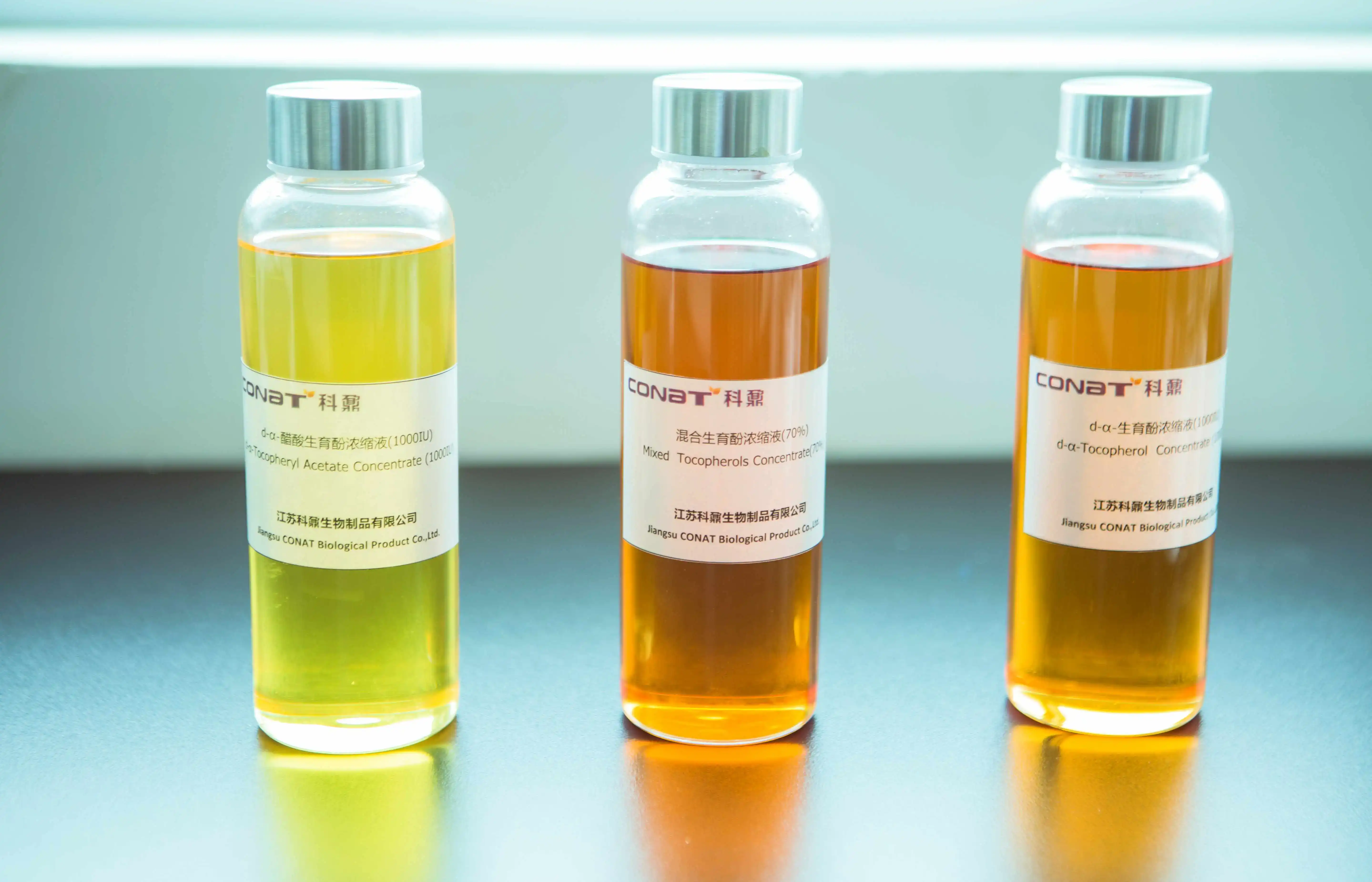
Jiangsu CONAT Biological Products Co., Ltd. makes ultra-pure natural vitamin E products and d alpha tocopherol acid succinate that is safe for use in medicine and food. All of our study, production, and quality testing sites are linked to each other, so every batch works the same way and meets the highest international standards. We meet a lot of legal requirements in markets all over the world thanks to our full certifications, which include GMP, ISO 9001, ISO 22000, and Kosher and Halal compliance options.
Our skilled workers have been making phytosterols and vitamin E for decades. These people can help you make your items work better in the ways that matter to you. We offer full paperwork packages that include certificates of analysis, stability data, MSDS, and reports of regulatory status to make buying and following the rules easy. We have a lot of different ways to make things, so we can accommodate projects at all stages, from small test amounts to long-term deals for bulk supplies.
Our company makes d-alpha tocopherol acid succinate and is committed to quality and dependability. To talk about your needs, please email our sales team at sales@conat.cn. You can ask for samples of the product, technical data sheets, and price quotes that are affordable and meet your needs for quantities.
References
1. Institute of Medicine, Food and Nutrition Board. "Dietary Reference Intakes for Vitamin C, Vitamin E, Selenium, and Carotenoids." National Academy Press, Washington, DC, 2000.
2. Singh, V.K., Wise, S.Y., Ducey, E.J., Brown, D.S., and Singh, P.K. "Alpha-Tocopherol Succinate: A Promising Radiation Countermeasure." International Immunopharmacology, vol. 11, no. 4, 2011, pp. 325-334.
3. Cheng, G., Zielonka, J., McAllister, D., et al. "Mitochondria-Targeted Vitamin E Analogs Inhibit Breast Cancer Cell Energy Metabolism and Promote Cell Death." BMC Cancer, vol. 13, 2013, pp. 285-298.
4. U.S. Food and Drug Administration. "Food Labeling: Revision of the Nutrition and Supplement Facts Labels—Final Rule." Federal Register, vol. 83, no. 95, 2018.
5. Traber, M.G. and Stevens, J.F. "Vitamins C and E: Beneficial Effects from a Mechanistic Perspective." Free Radical Biology and Medicine, vol. 51, no. 5, 2011, pp. 1000-1013.
6. Yanamala, N., Konduru, N.V., Kagan, V.E., et al. "Vitamin E Succinate Modulates Peroxidase Activity of Cytochrome c: Implications for Cancer Therapy." Journal of Biological Chemistry, vol. 289, no. 15, 2014, pp. 10527-10540.
YOU MAY LIKE