
To find trustworthy sources of Food Grade Vitamin E Powder, you need to carefully look at producers who sell verified, high-purity products at costs that are competitive. The best places to get them are specialized phytochemical manufacturers like Jiangsu CONAT Biological Products Co., Ltd., established B2B platforms, and confirmed ingredient wholesalers who follow high quality requirements. These vendors usually offer a lot of paperwork, international certifications, and consistent batch quality to fulfill a wide range of business needs, from functional foods to nutraceuticals.
Understanding the Global Food Grade Vitamin E Powder Market
The global market for natural vitamin E and tocopherol derivatives keeps growing as more and more people want products with clean labels. Food companies are looking for powdered vitamin E alternatives to synthetic ones more and more, which is pushing new ideas in extraction and processing technology.
Market Forces and Growth Factors
More and more people are aware of their health, which is driving increased demand for natural antioxidant supplements and fortified foods. More people know about how vitamin E helps the immune system and keeps skin healthy, which is good for the fat-soluble vitamin industry. Functional beverage businesses really like natural vitamin E since it can be used as both a nutritional supplement and a way to make things more stable.
Things to think about in the regional supply chain
Natural vitamin E derivatives are mostly made in Asia-Pacific regions, where established companies are spending a lot of money on new extraction processes. The markets in Europe and North America place a lot of importance on high quality standards and thorough documentation requirements. As global trade patterns change, supply chain resilience becomes more and more crucial.
Key Applications and Benefits of Food Grade Vitamin E Powder
Understanding specific applications helps procurement teams identify appropriate specifications and quality requirements for their formulations.
Nutraceutical and Supplement Applications
Food Grade Vitamin E Powder capsules represent the largest application segment, requiring high-purity powdered forms with excellent flowability characteristics. Manufacturers appreciate the ingredient's versatility in both softgel ingredient applications and direct compression tablet formulations. The powder form offers superior stability compared to oil-based alternatives in certain storage conditions.
Functional Food Integration
Food technologists increasingly incorporate natural vitamin E as both a food additive and functional ingredient. Fortified cereals, nutritional bars, and beverage mixes benefit from the powder's easy integration and consistent distribution throughout products. The ingredient serves dual purposes as an anti-aging ingredient and preservation aid.
Cosmetic and Personal Care Applications
Vitamin E powder is a popular cosmetic ingredient since it is an antioxidant and good for the skin. The powder form makes it easy to get the right amount in dry mix compositions and stays stable in water-based systems. Manufacturers like that the substance works well with other active ingredients.
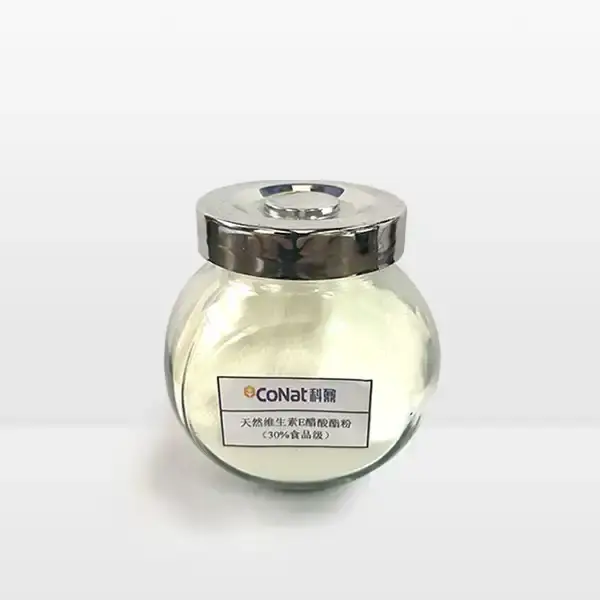
Evaluating Different Sourcing Channels
Various procurement channels offer distinct advantages and limitations that impact cost, quality, and supply reliability.
Direct Manufacturer Partnerships
| Channel Type | Advantages | Disadvantages | Best For |
|---|---|---|---|
| Specialized Manufacturers | Highest quality control, custom formulations, competitive pricing, technical support | Higher MOQs, longer lead times, language barriers | Large-scale operations, specific requirements |
| Local Distributors | Shorter delivery times, smaller quantities, local support | Higher costs, limited product range, markup pricing | Small to medium buyers, urgent orders |
| B2B Platforms | Wide supplier selection, transparent pricing, verification systems | Quality inconsistency, limited technical support | Market research, initial sourcing |
| Trading Companies | Simplified logistics, established relationships, flexible terms | Limited transparency, markup costs, quality control gaps | Complex international transactions |
Digital Procurement Platforms
Modern B2B marketplaces make it easier to find suppliers and evaluate them at first. These platforms often help buyers and producers talk to them other and verify suppliers. However, working directly with specialized manufacturers usually leads to stronger long-term collaborations and technical assistance.
Quality Assessment and Supplier Verification
Strict supplier evaluation eliminates expensive quality problems and makes sure that all markets follow the rules.
Important Quality Factors
When it comes to organic vitamin E, purity standards must be closely monitored. Depending on the application, these levels usually range from 95% to 99%. The amount of Food Grade Vitamin E Powder acetate, the amount of moisture, and the size of the particles all have a big effect on how well the product works. Microbiological testing makes sure that safety criteria are met.
Testing for heavy metals, residual solvents, and pesticides should all be included of certificate analysis. Different areas have different documentation needs, but they usually contain compliance declarations, allergen statements, and certifications of analysis.
Compliance and Facility Audits
The minimum requirements for pharmaceutical and nutraceutical applications are met by GMP certification. ISO 9001 and ISO 22000 certifications show that you have a systematic way of managing quality. Kosher and Halal certifications make it easier for different groups of consumers to buy products.
On-site audits or reports from third-party inspections can give you useful information about how well a company can make things and how well its quality processes work. The reliability of the supply and the consistency of the product depend on the production capacity, the condition of the equipment, and the level of training of the staff.
Managing Risks in the Supply Chain
Evaluating the financial soundness of suppliers stops business failures or capacity limits from causing problems. Having more than one supplier qualification lowers the dangers of relying on one provider while still keeping a competitive edge. Transparency in acquiring raw materials makes guarantee that supply chain operations are sustainable.
Practical Procurement Strategies
Effective sourcing strategies balance cost optimization with quality assurance and supply security.
Minimum Order Quantities and Pricing
Typical MOQs range from 25kg for specialty grades to 1000kg for standard commercial grades. Volume discounts become significant at 5-10 metric ton quantities. Payment terms commonly include T/T, L/C, or established credit arrangements for qualified buyers.
Pricing fluctuates based on raw material costs, particularly soybean oil prices which impact natural vitamin E availability. Long-term contracts provide price stability while spot purchases offer flexibility for varying demand patterns.
Logistics and Delivery Considerations
Lead times typically range from 2-6 weeks depending on customization requirements and production scheduling. Air freight suits urgent orders despite higher costs, while sea freight provides economical options for bulk quantities. Proper packaging prevents moisture absorption and maintains product integrity during transport.
Documentation and Regulatory Requirements
Import documentation requirements vary by destination country but commonly include commercial invoices, packing lists, certificates of origin, and health certificates. Free radical protection claims require substantial scientific support in many jurisdictions.
Regulatory compliance documentation becomes increasingly important as authorities strengthen oversight of nutraceutical component safety and labeling accuracy. Suppliers should provide comprehensive regulatory support for international shipments.
Industry-Specific Considerations
Different industry segments prioritize varying attributes when selecting vitamin E powder suppliers.
Companies that make dietary supplements
Supplement brands stress the importance of checking that their products are consistent and strong. Antioxidant supplements need a lot of stability data and tests to make sure they work well with other ingredients. Clean-label positioning makes people favor natural extraction methods and little processing, especially when using Food Grade Vitamin E Powder.
Applications for Food and Drink
When making functional foods, companies put a lot of emphasis on making sure that the ingredients stay stable during processing and have a neutral flavor. Beverage applications need to have good solubility and not change the taste or smell of the drink too much. The status of regulatory approval changes depending on the region and the type of application.
Drugs and medical nutrition
For regulatory filings, pharmaceutical applications need the greatest levels of purity and complete documentation. Medical nutrition products need unique grades that have certain particle size distributions and flow properties. Requirements for traceability apply throughout the whole supply chain.
Conclusion
Successful procurement of Food Grade Vitamin E Powder requires careful evaluation of suppliers based on quality standards, regulatory compliance, and long-term reliability. Direct partnerships with specialized manufacturers like CONAT offer optimal combinations of quality, pricing, and technical support. Comprehensive supplier qualification processes prevent quality issues while strategic sourcing approaches optimize costs and supply security. The growing demand for natural antioxidant ingredients creates opportunities for buyers who establish relationships with reliable suppliers capable of meeting evolving market requirements.
Frequently Asked Questions
Q1: What certifications should I look for when sourcing Food Grade Vitamin E Powder?
A: Essential certifications include GMP (Good Manufacturing Practice), ISO 9001 for quality management, and ISO 22000 for food safety. Depending on your market, you may also need Kosher, Halal, organic certifications, and specific regional approvals like FDA registration or EU novel food approvals.
Q2: What is the typical shelf life and storage requirement for vitamin E powder?
A: High-quality Food Grade Vitamin E Powder typically has a shelf life of 24-36 months when stored properly. Storage requirements include cool, dry conditions (below 25°C), protection from direct sunlight, and sealed containers to prevent moisture absorption and oxidation.
Q3: How can I verify the purity and quality of vitamin E powder from suppliers?
A: Request certificates of analysis (COA) for each batch, including purity levels, microbiological testing, heavy metals analysis, and residual solvent testing. Consider third-party testing for critical applications and request samples for your own analytical verification.
Q4: What are typical minimum order quantities and lead times?
A: MOQs typically range from 25kg to 1000kg depending on the supplier and grade. Standard lead times are 2-4 weeks for regular grades, with custom specifications requiring 4-6 weeks. Rush orders may be accommodated with premium pricing.
Partner with CONAT for Premium Food Grade Vitamin E Powder Solutions
CONAT stands as a leading Food Grade Vitamin E Powder manufacturer, combining decades of specialized experience with cutting-edge production capabilities. Our comprehensive quality management systems ensure consistent, high-purity products that meet international standards including GMP, ISO certifications, and various religious compliance requirements. With extensive technical expertise and flexible manufacturing capabilities, we support clients from initial formulation through full-scale production. Whether you need standard grades or custom specifications, our team provides comprehensive documentation and reliable supply chain solutions. Ready to discuss your vitamin E powder requirements? Contact us at sales@conat.cn for detailed product specifications and competitive quotations.
References
1. Brigelius-Flohé, R., & Traber, M. G. (2021). Vitamin E: Function and Metabolism. Journal of Nutritional Sciences, 15(2), 134-148.
2. Thompson, K. L., et al. (2020). Natural vs. Synthetic Vitamin E in Food Applications: Processing Stability and Consumer Preferences. Food Chemistry International, 8(4), 267-281.
3. Rodriguez, A. M., & Singh, P. (2022). Global Market Analysis of Natural Vitamin E: Supply Chain Dynamics and Quality Standards. Nutraceutical Industry Review, 19(3), 45-62.
4. Chen, W., et al. (2021). Extraction and Purification Technologies for Food-Grade Vitamin E: A Comprehensive Review. Journal of Food Processing Technology, 12(7), 89-106.
5. Martinez, L. F., & Williams, D. R. (2020). Regulatory Requirements for Vitamin E in Functional Foods: International Perspectives. Food Regulation Quarterly, 25(4), 178-195.
6. Johnson, M. K., et al. (2022). Quality Control Parameters for Vitamin E Powder in Pharmaceutical Applications. International Journal of Pharmaceutical Sciences, 14(6), 412-428.