
What Is D-Alpha Tocopheryl Succinate Used For?
Natural vitamin E in the form of D-alpha tocopheryl succinate is of high quality and stability. It is used in many products, meals, dietary supplements, and drugs. Because it is made up of D-alpha tocopherol and succinic acid, this esterified version is more stable and better at fighting free radicals than other types of vitamin E. Medicinal goods that need to stay strong and work longer, anti-aging skin care products, food storage, heart health supplements, and pharmaceutical goods all use this chemical.
Understanding D-Alpha Tocopheryl Succinate: Definition and Core Properties
Molecular Structure and Chemical Composition
A complex esterified form of natural vitamin E called D-alpha tocopheryl succinate is made when D-alpha tocopherol reacts chemically with succinic acid. This esterification process changes the molecular stability profile in a basic way, making it much more resistant to oxidation and breakdown than free forms of tocopherol. The compound that was made keeps the cellular activity of vitamin E while making it more stable on the shelf, which is what commercial uses need.
In its natural form, called RRR-alpha-tocopherol or d-alpha-tocopherol, it comes from crop oils like rapeseed and soybean. Because it comes from nature, it is different from manufactured options that have eight different stereoisomers that have different biological effects. The natural form is more bioavailable; tests have shown that 2 mg of manufactured all-rac-alpha-tocopherol is biologically equivalent to 1 mg of natural alpha-tocopherol.
Enhanced Stability Characteristics
Because the esterification process makes d-alpha tocopheryl succinate very stable, it is very useful for goods that need to last a long time. Free tocopherol quickly loses its effectiveness when it comes into contact with air, light, and heat. But the succinate ester form stays effective even when stored in difficult circumstances. This stability immediately leads to benefits in manufacturing, as formulators can more correctly predict how the product will work along the entire supply chain.
When this stabilized vitamin E derivative is used in manufacturing, waste is cut down, and batch accuracy is better. The compound can handle normal temperatures used in food preparation and stays active in a range of pH settings. This means it can be used to solve a wide range of formulation problems in many industries.
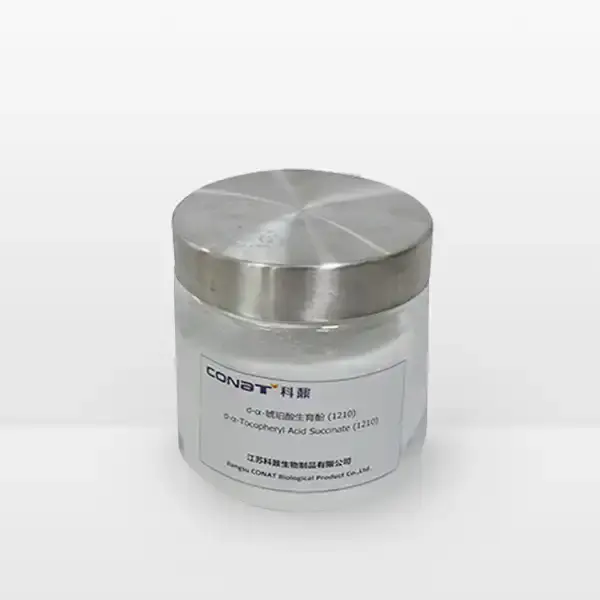
The Uses and Health Benefits of D-Alpha Tocopheryl Succinate
Pharmaceutical and Nutraceutical Applications
A lot of the pharmaceutical business counts on d-alpha tocopheryl succinate as a vitamin E supplement because it is consistently bioavailable and absorbed well. A clinical study shows that the body breaks down and uses the succinate ester form quickly and easily, turning it into active alpha-tocopherol in the digestive system. This process makes sure that the vitamin E gets to the right place and keeps its safety benefits while it is being stored and shipped.
This substance is often found in cardiovascular health products because it is known to help keep arteries healthy and improve circulation. The antioxidants help protect cell membranes from oxidative stress, and the stable ester form makes sure that the product stays effective over its entire lifecycle. Companies that make sports nutrition products really like these traits because they are important for keeping ingredients stable in a variety of storage settings for protein drinks and performance supplements.
Cosmetic and Personal Care Industries
When compared to other vitamin E forms, d-alpha tocopheryl succinate is much more stable, which is very helpful for skin care products. The compound gets through the skin's defenses well and protects against external factors for a long time. Anti-aging goods use these qualities to help cells grow back and protect against damage caused by UV light.
Chemists who work with cosmetics like this chemical because it can be used in both water-based and oil-based systems without changing the properties. The lower risk of rancidity helps keep the look and performance of the product, which are important for high-end beauty brands that have to compete in tough markets.
Functional Food and Beverage Enhancement
Food scientists add d-alpha tocopheryl succinate into functional foods to give them health benefits that have been proven in clinical trials while keeping the products stable during processing and storage. The chemical can handle normal temperatures used to process food, like those used in scalding and cleaning, without losing much of its effectiveness. Because it is durable, it is perfect for drinks with added vitamins and minerals, nutrition bars, and prepared foods that need to last longer.
Natural vitamin E substitutes, such as d-alpha tocopheryl succinate, are appealing because they don't have a lot of extraneous ingredients. This is good for marketing claims and setting your product apart in a competitive food market.
Comparing D-Alpha Tocopheryl Succinate With Other Vitamin E Derivatives
Antioxidant Potency and Bioavailability Analysis
Because it is better than tocopherol and tocopheryl acetate forms, d-alpha tocopheryl succinate is the best vitamin E product for commercial use. When compared to acetate esters, the succinate ester has better membrane penetration qualities that make it easier for cells to take it up. Researchers have found that succinate types are better at protecting cells from oxidative stress, especially in harsh settings.
Studies on bioavailability show that the body can change both succinate and acetate esters into active tocopherol, but the body absorbs and changes them in very different ways. The succinate form keeps plasma levels more stable over time, which means it has longer-lasting antioxidant activity that helps both the vitamin work and the beauty work.
Formulation Stability Considerations
When you compare the security of different vitamin E molecules, you can see important differences that help product development teams make decisions. To keep it from going bad, standard alpha-tocopherol needs to be handled carefully and stored in a certain way. Tocopheryl acetate, on the other hand, is only slightly better. However, d-alpha tocopheryl succinate is better than both options when it comes to resistance to oxidation and heat stability. This makes it the best choice for tough uses.
These qualities of stability are especially helpful in manufacturing settings because they allow for longer working times without affecting the purity of the ingredients. When quality control tests are done, succinate esters give more reliable results for potency than less stable options.
Cost-Benefit Analysis for Industrial Applications
The cost of d-alpha tocopheryl succinate as a raw material is usually higher than the cost of synthetic options, but the overall cost of ownership usually favors the premium element. Overall, production productivity is improved by less waste from oxidation, more consistent batches, and better product performance. Also, being able to make bigger claims on the package and charge higher prices often makes the investment in ingredients worth it.
Stable products, such as those formulated with d-alpha tocopheryl succinate, are also better for the supply chain because they lower the chance of quality problems during storage and shipping. This dependability is especially useful for global markets that are served by foreign delivery networks.
Procurement Guidance: How to Source Quality D-Alpha Tocopheryl Succinate for Your Business?
Quality Certification and Documentation Requirements
The quality systems and documentation procedures of suppliers must be thoroughly evaluated in order to successfully buy d-alpha tocopheryl succinate. Some important certifications are ISO 9001 for quality management systems, GMP compliance for pharmaceutical uses, and food safety certifications like ISO 22000 for products that are meant to be eaten. Also, kosher and halal approvals make more types of products available in more markets.
The paperwork for a Certificate of Analysis (COA) must have specifics for amounts of purity, moisture content, heavy metal limits, and microbiological factors. Material Safety Data Sheets (MSDS) give important information about how to handle and store things that is needed for safety rules and following the law.
For pharmaceutical-grade buying, these are the main types of paperwork that are needed:
- Full test results that include descriptions of identity, purity, and impurities according to pharmacopeial standards
- Stability data showing how long something will last in storage under certain situations
- Regulatory compliance paperwork, such as FDA registration numbers and approvals from other countries
- Traceability records that show where raw materials came from and the history of each production batch
- Quality assurance standards explain how to control production and test products.
These standards for paperwork protect the integrity of the product and help with government submissions in multiple areas, giving makers and end users trust.
Supplier Evaluation and Partnership Development
To build trusting supply relationships, manufacturing skills and quality processes need to be carefully looked at. Site checks show how much can be produced, how to stop contamination, and how much scientific knowledge is available, all of which affect the stability of the product. Established companies with dedicated vitamin E production lines usually have better batch-to-batch stability than sites that are used for more than one thing.
Geography affects the dependability of the supply chain. Well-established manufacturing areas have better facilities and know the rules better. For long-term partnerships to work, suppliers need to be able to keep their finances stable and plan for business survival, especially when it comes to important product formulas.
Logistics and Storage Optimization
Following the right handling instructions will protect the quality of a product from the time it is made until it is used. To keep their effectiveness, storage conditions must include controlled temperature and humidity, as well as safety from light. Inert atmosphere filling and moisture-resistant cases that are right for the shelf life should be included in the packaging requirements.
When shipping goods internationally, you need to think about things like temperature tracking devices and paperwork for customs clearance. Managing the cold chain is especially important for top types like d-alpha tocopheryl succinate that need to keep their potency for as long as possible for them to work.
Conclusion
D-alpha tocopheryl succinate is a high-quality vitamin E product that works well in food, medicine, supplements, and cosmetics because it is very stable and easily absorbed by the body. It is the best choice for demanding industrial uses that need steady performance and long shelf life because it is more resistant to oxidation and works better with more formulations. The chemical comes from nature and has a clean label, which is in line with market trends toward ingredients that are easy to recognize. Its therapeutic benefits also support strong product positioning. When buying, pros buy high-quality d-alpha tocopheryl succinate; the investment pays off in a big way: better product performance, less waste in the manufacturing process, and more competitiveness in the market.
FAQ
1. What makes d-alpha tocopheryl succinate superior to other vitamin E forms?
When compared to free tocopherol or acetate esters, d-alpha tocopheryl succinate is more stable against oxidation. The esterification with succinic acid makes it more resistant to heat, light, and air while still keeping its high solubility. This stability means that the product will last longer, keep its strength more consistently, and work better in tough formulation conditions.
2. How does the body absorb and utilize d-alpha tocopheryl succinate?
D-alpha tocopheryl succinate is effectively hydrolyzed by the gut system, turning it into active alpha-tocopherol that the body can absorb. According to research, this change happens easily in the intestines. The bioavailability is the same as free tocopherol, but the esterified form is better for storage and preparation.
3. What quality certifications should buyers look for when sourcing this ingredient?
Some important licenses are ISO 9001 for quality control, GMP compliance for pharmaceutical uses, and ISO 22000 for food safety. Getting more licenses, like Kosher and Halal, opens up more market possibilities. Full paperwork packages should have COA reports, stability data, and tracking records to show that they follow the rules.
4. What are typical dosage ranges used in supplement formulations?
Most normal supplements give you 100 to 200 IU of vitamin E, while supplement formulations usually give you 67 to 400 mg. The natural d-alpha form is more effective than manufactured versions, so formulators can use smaller amounts to get the nutrition levels they want. Doses should be based on government rules and the health promises that are being made.
5. How should d-alpha tocopheryl succinate be stored to maintain quality?
For the best keeping, things need to be kept cool, dry, and out of the light. Keeping the temperature between 15 and 25°C and the relative humidity below 60% helps the medicine stay effective for a longer time. For luxury types that need to be as stable as possible, the packaging should have moisture shields and inert atmosphere filling.
Partner With CONAT for Premium D-Alpha Tocopheryl Succinate Solutions
The d-alpha tocopheryl succinate that CONAT sells is of medicinal grade and comes with a number of quality certifications and decades of experience making specialty products. Our modern production facilities meet international standards like ISO 9001, GMP, Kosher, and Halal certifications to make sure that the quality of each batch is the same. We offer full paperwork packages to support regulatory compliance across international markets as a top producer of d-alpha tocopheryl succinate. Our expert team can help you with formulation and make specs that are specific to your application needs. Get in touch with our purchasing experts at sales@conat.cn to talk about your needs and find out how our high-quality vitamin E alternatives can help your product formulas.
References
1. Traber, M.G. (2013). "Mechanisms for the prevention of vitamin E deficiency: regulation of 伪-tocopherol metabolism." Journal of Nutritional Biochemistry, 24(6), 874-884.
2. Institute of Medicine Food and Nutrition Board. (2000). "Dietary Reference Intakes for Vitamin C, Vitamin E, Selenium, and Carotenoids." National Academy Press, Washington, DC.
3. Packer, L., Weber, S.U., & Rimbach, G. (2001). "Molecular aspects of 伪-tocotrienol antioxidant action and cell signalling." Journal of Nutrition, 131(2), 369S-373S.
4. Burton, G.W., & Ingold, K.U. (1989). "Vitamin E as an in vitro and in vivo antioxidant." Annals of the New York Academy of Sciences, 570(1), 7-22.
5. Brigelius-Flohö, R., & Traber, M.G. (1999). "Vitamin E: function and metabolism." FASEB Journal, 13(10), 1145-1155.
6. Azzi, A., & Stocker, A. (2000). "Vitamin E: non-antioxidant roles." Progress in Lipid Research, 39(3), 231-255.
YOU MAY LIKE