
Why D α Tocopheryl Acetate Remains an Industry Standard
D α tocopheryl acetate holds its position as the industry standard because it delivers unmatched stability, superior bioavailability, and consistent performance across dietary supplements, functional foods, and pharmaceutical applications. Unlike free tocopherol forms that oxidize rapidly, the acetate ester protects the active vitamin E molecule during manufacturing, storage, and distribution. This structural advantage translates directly into longer shelf life, reduced formulation failures, and predictable product efficacy—critical factors for R&D directors and procurement teams managing batch-to-batch consistency.
Understanding D-α Tocopheryl Acetate: Chemical and Functional Insights
The Molecular Design Behind Stability
The phenolic hydroxyl group can't work as a pro-oxidant in packing because of the acetate ester structure in this form of vitamin E. This chemical change makes the raw material last 18 to 24 months longer than unesterified alpha-tocopherol, which breaks down in six months under the same storage conditions. Formulation managers like this flexibility, especially when they have to keep track of ingredient stocks across multiple production cycles.
Biological Activity and Absorption
The biological action of natural D-alpha configurations is about twice that of manufactured DL-alpha configurations. Nutritional biochemistry journals have released research that proves human liver cells have special transport proteins that can only recognize the natural D-isomer. When you eat it, your body's enzymes cut the acetate group, producing biologically active alpha-tocopherol at the site of absorption. This process makes sure that supplements give people the daily suggested amount of 33.3 IU, which is 15 mg. The plasma concentration curves are also predictable.
Safety Profile for Formulation Development
Toxicological tests done by many different regulatory bodies all agree that this substance is safe when used within the dose limits that have already been set. This track record of safety is important to clean-label brands, especially when they are trying to get approvals like Non-GMO Project Verified, Kosher, or Halal. The acetate form doesn't interact badly with other parts of the formula, so it can be used with mineral blends, phytosterol complexes, and omega-3 fatty acids that are common in multivitamins.
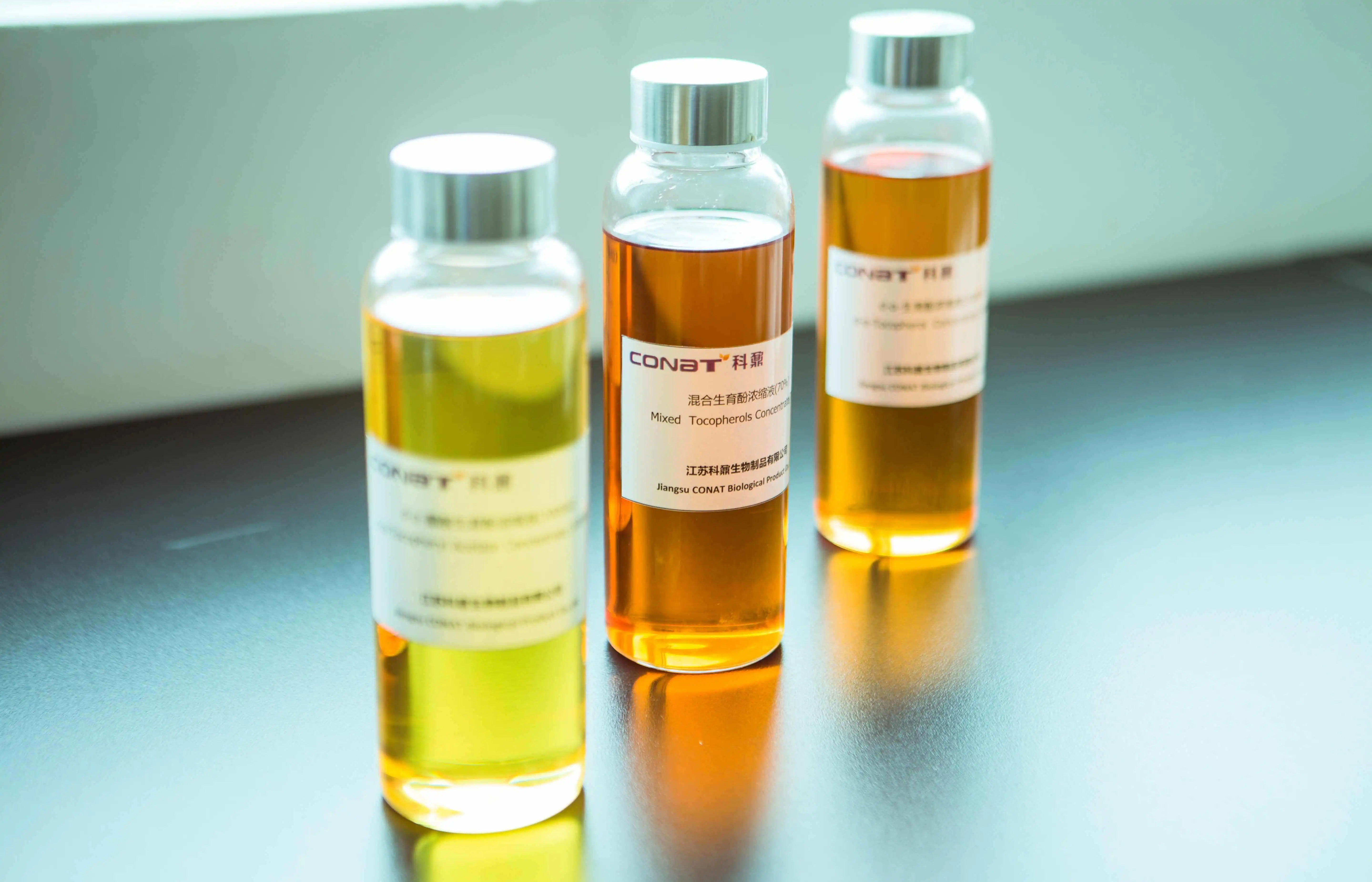
Comparing D-α Tocopheryl Acetate with Other Vitamin E Forms
Chemical Stability Across Processing Conditions
The acetate form is better at withstanding heat stress when it comes to making tablets, capsules, and adding to drinks than the tocopherol succinate or free tocopherol oils. Comparative stability studies show that acetate forms keep 95% of their potency after six months at 40°C and 75% relative humidity. However, succinate forms lose 87% of their potency, and liquid tocopherols lose 78% when the same accelerated aging conditions are used. This resistance to heat during pasteurization and UHT processing is especially helpful for food scientists who work with functional drinks.
Bioavailability and Formulation Flexibility
Both acetate and succinate forms change into active tocopherol in the body, but acetate works better in powder forms that can be mixed with cold water. With micro-encapsulation technology, the molecule that dissolves in oil is turned into a powder that can flow freely and has a bulk density of 0.4 to 0.6 g/mL, making it perfect for volumetric dose systems. Succinate forms work well in pill form, but they aren't flexible enough for ready-to-mix protein shakes or fizzy mixes aimed at the sports nutrition market.
Sourcing Considerations and Quality Variance
The non-GMO soybean or sunflower oil that natural d α tocopheryl acetate comes from is molecularly distilled to get a purity level above 98%. Chemical synthesis creates synthetic DL-alpha variants with eight stereoisomers, but only one of them matches the natural configuration. Teams in charge of buying things should check that the supplier has proof that their products are non-GMO and have been processed in a way that leaves behind less than 10 parts per million of soy proteins.
Market Demand and Procurement Considerations for D-α-Tocopheryl Acetate
Certification Requirements Driving Supplier Selection
Global business-to-business buyers prefer providers who offer full quality paperwork, such as Certificates of Analysis showing standardization of strength at 500 IU/g, 700 IU/g, or 950 IU/g concentrations. The right way to handle things must be explained in Material Safety Data Sheets, and regulatory support files must include comments that they are in line with FCC, USP, or EP monographs. Distributors who work with pharmaceutical companies need GMP audit reports and change control paperwork to back up their regulatory applications to the FDA, EMA, or Health Canada.
Price Dynamics and Volume Commitments
Pharmaceutical-grade material costs between $45 and $85 per kilogram on the market, but the exact price depends on the amount ordered, the desired potency, and the need for certification. When bulk buyers negotiate annual contracts for more than 5,000 kilograms, they often get prices at the lower end of this range and are guaranteed a supply during busy manufacturing times. To get the most out of container operations and cut down on per-unit freight costs, importers should make sure that their minimum order numbers are between 500 and 1,000 kilograms per shipment.
Evaluating Manufacturing Standards
Closed-loop nitrogen purging devices that stop oxidation during esterification processes should be checked by facility inspectors, and inline spectroscopy should be used to confirm real-time strength tracking. Leading makers keep separate production lines for processing natural D-alpha so that there are no risks of mixing it with manufactured DL-alpha batches. Traceability systems that connect finished goods to specific crop harvests make the supply chain clear, which is what clean-label brands need when they sell "from farm to formula" stories.
Why D-α Tocopheryl Acetate Remains the Industry Standard: The Rational Choice
Empirical Evidence from Long-Term Use
A lot of safety and effectiveness evidence has been gathered over many years of clinical use in areas like immune support, cardiovascular health, and antioxidant supplements. Because they have been used in research protocols since the 1980s, acetate forms of vitamin E are always mentioned in meta-analyses that look at vitamin E supplements. This historical information gives regulatory experts strong source support when they are writing notices for new dietary ingredients or decisions that something is generally safe.
Stability Across Diverse Formulation Environments
The chemical in d α tocopheryl acetate stays active in pH levels between 3.5 and 8.5, which includes sports drinks that are acidic, neutral pill fills, and protein shakes that are alkaline. Compatibility testing shows that it can live together safely with ascorbic acid, citric acid, and natural flavorings, which usually break down vitamins faster. This ingredient can be used in beverage formulas without the need for special buffering agents or protective coating technologies, which make the formulas more complicated and cost more.
Future-Ready for Clean-Label Trends
Because people want easy-to-recognize ingredient names, this form of vitamin E is better than synthetic options that need complicated chemical names on packages. According to market research, 67% of supplement buyers in the U.S. actively seek "natural" vitamin E sources. This gives brands that stress non-GMO and allergen-free D-alpha tocopheryl acetate specs a competitive edge. Regulatory environments are favoring ingredients with well-established safety profiles more and more. This lowers the chance of having to change the recipe as standards change.
Application Insights: How to Maximize the Benefits of D α Tocopheryl Acetate in Your Products
Optimal Concentration Ranges for Different Applications
Dietary supplements usually have between 15 and 400 IU per serving, which is a balance between claims of effectiveness and the higher intake amount of 1,000 mg per day for people. In functional food applications, lower concentrations (10 to 50 IU per serving) are used to back up antioxidant claims without requiring mandatory labeling for fortification in some places. Animal feeding products need 20 to 200 IU per kilogram of feed, with the amount changing depending on the metabolic rate and oxidative stress profile of each species.
Solubility Parameters and Ingredient Compatibility
At up to 30% w/w, the acetate form dissolves easily in vegetable oils, medium-chain triglycerides, and medicines made from ethanol. If you mix cold-water dispersible powders with hydrocolloids like guar gum or xanthan gum at 0.5% inclusion rates, they spread out evenly in water-based systems. When combined with ferrous sulfate or other transition metal ions in liquid form, they speed up oxidation reactions that break down both the vitamin and the other ingredients in the formula.
Stability Maintenance Through Packaging and Storage
Keep bulk materials safe in clear, nitrogen-flushed containers that are kept below 25°C and 60% relative humidity to keep them flowing smoothly and stop them from clumping. Amber glass bottles, high-barrier PET, or aluminum-laminated package packs that stop UV light below 400 nm wavelengths are good for finished goods. Desiccant sachets rated for the container volume should be included in secondary packing to keep the moisture level inside below critical levels while it is being shipped to different temperature zones.
These application strategies help formulators keep the product's effectiveness over the 24-month shelf life predictions while still meeting the label claim requirements at the end of the shelf life testing. Technical help from sources with a lot of experience can give formulation-specific advice on how to deal with the unique stability problems that come up with new delivery systems or combination goods.
Conclusion
The fact that d α tocopheryl acetate has stayed on top in the nutrition, medicinal, and functional food industries shows how well it works biologically and in different formulations. Procurement workers benefit from supply chains that have been around for a while and offer stable quality, full certifications, and low prices that help both new brands and well-known manufacturers. As regulations get stricter and customer expectations rise toward openness, this form of vitamin E has a history of reliability that makes it a solid base for product growth plans for the next ten years.
Frequently Asked Questions
1. What distinguishes natural D-alpha from synthetic DL-alpha forms?
Natural D-alpha tocopheryl acetate only has the RRR stereoisomer, which human transport proteins bind to very well. This means that natural DL-alpha mixtures with seven additional stereoisomers are about twice as bioavailable. Clinical pharmacokinetic studies show that natural forms are better for prenatal products because they have three times higher rates of transfer between the mother and the baby.
2. How should powder forms that are sensitive to wetness be handled during manufacturing?
Keep the relative humidity below 50% in processing areas and purge incoming hoppers with nitrogen before they are used to stop electrostatic charge from building up. Instead of high-shear equipment that generates frictional heat above 35°C, use ribbon or paddle mixers to mix powder forms. Install linear moisture testers to make sure that the amount of water activity stays below 0.3 aw during the compounding process.
3. Which documentation should suppliers provide for pharmaceutical applications?
Ask for Drug Master Files or Certificates of Suitability that show they follow pharmacopeial standards and stability studies that were done under ICH Q1A conditions. Suppliers should give you records of each batch of production, methods for validating important process parameters, and reference standard certificates that can be linked to real comparison materials. Regulatory support letters confirming that the product is free of TSE/BSE and GMOs finish off the necessary paperwork packages.
Source Premium D-α Tocopheryl Acetate from an Experienced Manufacturer
With ISO9001, ISO22000, and GMP standards, CONAT specializes in natural vitamin E products that are safe for use in pharmaceuticals. Our factory uses molecular distillation to make d α tocopheryl acetate that is set at 500, 700, and 950 IU/g strengths and has less than 2% batch-to-batch difference. We keep separate processing lines for allergen-free and non-GMO materials to meet the needs of Kosher and Halal certification. Technical teams help with formulation, support stable testing, and create legal documents that are specific to your market needs. Get in touch with our team at sales@conat.cn to talk about bulk supply deals and get COA samples that show how good our products are.
References
1. Traber, M.G. "Vitamin E Regulatory Mechanisms." Annual Review of Nutrition, vol. 27, 2007, pp. 347-362.
2. Brigelius-Flohé, R., and Traber, M.G. "Vitamin E: Function and Metabolism." FASEB Journal, vol. 13, no. 10, 1999, pp. 1145-1155.
3. Institute of Medicine, Food and Nutrition Board. "Dietary Reference Intakes for Vitamin C, Vitamin E, Selenium, and Carotenoids." National Academy Press, 2000.
4. Papas, Andreas M. "The Vitamin E Factor: The Miraculous Antioxidant for the Prevention and Treatment of Heart Disease, Cancer, and Aging." HarperCollins Publishers, 1999.
5. Packer, L., and Fuchs, J. "Vitamin E in Health and Disease." Marcel Dekker, Inc., 1993.
6. Zingg, J.M. "Vitamin E: A Role in Signal Transduction." Annual Review of Nutrition, vol. 35, 2015, pp. 135-173.
YOU MAY LIKE